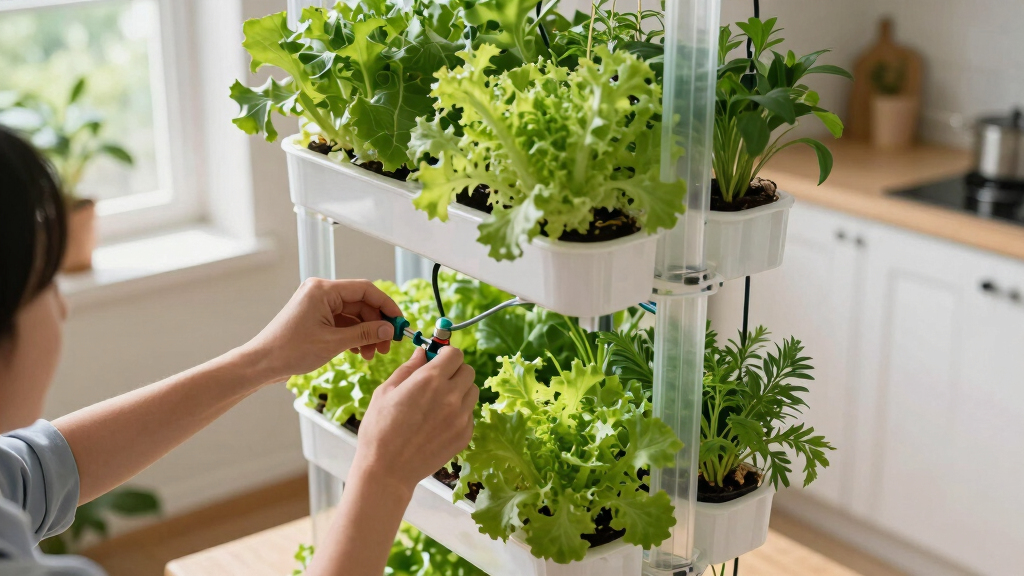

Choosing the best large hydroponic tower garden requires balancing capacity, complexity, and intended use. The WooRoot Max stands out for its enormous 148-pod capacity and automation, making it ideal for commercial growers or serious hobbyists. Meanwhile, the GX Hydroponic Tower offers a space-efficient, self-watering system perfect for indoor gardeners seeking organic produce. For those wanting a versatile, mid-sized option, the 14-layer system provides a high yield with automated circulation, but requires some setup effort. Each of these options offers unique tradeoffs in cost, ease of use, and scale, which I’ll explore more deeply below.

Get garden gear delivered free with Prime
- Fast, free delivery on millions of items
- Prime Video, Amazon Music and more included
- Member-only deals all year
Complete the kit


Key Takeaways
- Capacity varies widely, from 36 to 148 pods, impacting suitability for small or large-scale growing.
- Automation features like water circulation and lighting significantly reduce maintenance but increase complexity and cost.
- Indoor-only systems tend to be more compact and easier to set up compared to larger, commercial-grade models.
- Material quality and build durability differ, affecting long-term reliability and initial investment.
- Setup complexity can range from straightforward assembly to more involved configurations, influencing suitability for beginners.


| large hydroponic tower garden | Material | Water Tank Capacity |
|---|---|---|
| GX Hydroponic Tower Vertical P | Food grade | — |
| Hydroponic Growing System Vert | Food-grade, eco-friendly | 8 gallons |
| 14-Layer Hydroponic Tower Grow | Inert media | 20 liters |
| Hydroponics Growing System | ABS | 7.92 gallons |
| Large Hydroponics Growing Syst | — | — |
More Details on Our Top Picks
GX Hydroponic Tower Vertical Planter System Kit with 24 Net Pots and LED Grow Lights
The GX Hydroponic Tower shines as a versatile, space-saving solution with a self-watering, self-lighting design. Its durable, leak-proof construction and included LED grow lights with timers support continuous, low-maintenance growth, making it ideal for those who want organic produce indoors. Compared with larger models, it offers less capacity but excels in efficiency and organic compatibility. Setup can be complex for newcomers, and the initial cost is higher due to included components, but its compact footprint is perfect for small spaces.
Pros:- Efficient vertical design saves space
- Self-watering and lighting reduce daily maintenance
- Made with durable, leak-proof materials
Cons:- Setup complexity may challenge beginners
- Higher initial cost
- Requires electricity for lights and pump
Best for: Small indoor growers seeking organic produce with minimal maintenance
Not ideal for: Large-scale commercial operations or those preferring simple, manual setups
- Material:Food grade
- Number of Pots:24
- Lighting:LED grow lights with timer
- Watering System:Self-watering, recycles water
- Tower Thickness:2mm
- Dimensions:Less than 3 sq ft for 24 plants
Our verdict“A highly efficient, space-conscious system suited for dedicated indoor growers willing to handle a moderate setup”
Hydroponic Growing System Vertical Garden Tower with Automatic Timer, 36 Pods
This system offers a balanced approach with 36 pods and an automatic watering timer, making it suitable for users who want consistent results without daily oversight. Its compact design fits well in small indoor and outdoor spaces, and the complete kit simplifies setup. Compared to larger models, it sacrifices capacity but compensates with ease of use and eco-friendly materials. Customer reviews are generally positive, but some note assembly takes effort, and durability over years is not fully established.
Pros:- Space-efficient design
- Automatic watering promotes healthy growth
- Complete kit with all necessary parts
Cons:- Assembly may require effort
- Unclear long-term durability
Best for: Indoor or outdoor gardeners seeking a manageable, automated system
Not ideal for: Large-scale growers needing more than 36 plants or commercial setups
- Dimensions:20.8 x 20.79 x 65 inches
- Weight:20.2 pounds
- Number of Pods:36
- Water Tank Capacity:8 gallons
- Material:Food-grade, eco-friendly
- Watering Intervals:5, 15, 30 min
Our verdict“A smart choice for small spaces that want automation without complexity, though durability is yet to be proven long term”
14-Layer Hydroponic Tower Growing System Kit with 70 Slots, 20L Water Tank and Pump
The 14-layer system offers a significant capacity with 70 plant slots across multiple layers, ideal for growers aiming for higher yields without the scale of commercial setups. Its automated water circulation and large reservoir make for low-maintenance operation, although setup can be intricate for beginners. It suits those who want a mid-sized, soil-free system capable of handling a variety of plants, but it’s less suitable for small spaces or casual growers.
Pros:- High capacity with 70 plant slots
- Automated water and nutrient circulation
- Low-maintenance, soil-free system
Cons:- Setup complexity
- Requires electricity for pump
- Limited to small/medium plants
Best for: Serious hobbyists or small commercial growers seeking moderate scale
Not ideal for: Total beginners or those preferring simple, manual systems
- Layers:14
- Plant Slots:70
- Water Tank Capacity:20 liters
- Pump:Included
- Material:Inert media
- Use:Indoor/outdoor
Our verdict“A well-rounded choice for growers wanting larger yields with automation, but less ideal for total novices or small spaces”
Hydroponics Growing System, 36 Pods Large Vertical Hydroponic Growing Tower with Climbing Trellis, 9-Tier Indoor Gardening System for Herbs, Vegetables, Fruits (Black, 36 Pods)
This tower features 36 pods and a climbing trellis, making it ideal for indoor growers who want to maximize space for herbs, vegetables, or fruits. Its automatic circulation and mobility with wheels simplify indoor gardening. Compared to larger commercial models, it’s more manageable but less suited for outdoor use or large-scale production. Assembly can be straightforward if instructions are followed carefully, though it does not include seeds or nutrients, which adds to initial costs.
Pros:- Growing up to 36 plants indoors
- Automatic water circulation
- Mobility with wheels
Cons:- Requires additional purchase of seeds and nutrients
- Indoor-only design
- Assembly instructions may be detailed
Best for: Indoor gardeners wanting a flexible, space-efficient system with support for climbing plants
Not ideal for: Outdoor or commercial growers needing high capacity or durability
- Color:Black
- Material:ABS
- Plant Holes:36 (9 tiers)
- Water Tank Capacity:7.92 gallons
- Product Size:53*172 cm
- Assembly:Required
Our verdict“An excellent indoor system for space-conscious growers looking for versatility and support for climbing plants, with some additional setup costs”
Large Hydroponics Growing System, 148-Pod Vertical Hydroponic Tower Garden
The WooRoot Max offers an impressive 148 pods across a 5-tier structure, making it a standout for commercial or large-scale home growers. Its full-spectrum 100W LED lighting, automated irrigation, and misting system with sensors support continuous, year-round production. The setup can be complex, and the investment substantial, but it provides a professional-grade solution with minimal manual intervention. This model is best suited for those who need maximum capacity and automation in a relatively small footprint.
Pros:- Space-efficient with 148 pods
- Automated lighting, irrigation, and misting
- Suitable for year-round indoor farming
Cons:- Complex initial setup
- Higher cost typical of commercial systems
- Indoor-only due to specialized equipment
Best for: Commercial growers, educational institutions, or serious hobbyists needing high capacity
Not ideal for: Casual gardeners or those with very limited indoor space
- Pod Count:148
- Tiers:5
- Lighting:100W full spectrum LED
- Reservoir Capacity:34L
- Automation:Full sensors and controls
- Application:Indoor, commercial
Our verdict“A prime choice for large-scale, automated hydroponic growing, providing significant capacity with professional features”

How We Picked
Our selection process focused on identifying large hydroponic tower gardens that offer substantial capacity, reliable automation, and flexibility for different users. We examined key features like pod count, water and light management, ease of assembly, and build quality. Tradeoffs such as price, complexity, and intended use were critical—higher-capacity systems often demand more setup effort and investment, while smaller, more user-friendly options prioritize ease of use. Our goal was to find a balanced mix that caters to hobbyists, serious growers, and commercial operators alike.
| large hydroponic tower garden | Material |
|---|---|
| GX Hydroponic Tower Vertical P | Food grade |
| Hydroponic Growing System Vert | Food-grade, eco-friendly |
| 14-Layer Hydroponic Tower Grow | Inert media |
| Hydroponics Growing System | ABS |
| Large Hydroponics Growing Syst | — |
Factors to Consider When Choosing Best Large Hydroponic Tower Garden
When selecting a large hydroponic tower garden, it’s important to consider the scale of your growing space, your budget, and how much automation you want. Larger systems often mean higher initial costs and more complex setups, but they also provide the capacity for abundant harvests or commercial production. Think about whether you want a system primarily for indoor or outdoor use, and how much maintenance you’re willing to handle. Balancing these factors will help you choose the right model for your needs.
Capacity and Scale
Determine how many plants you want to grow and whether you need a system that can handle a few dozen or hundreds of plants. Smaller systems like the GX Tower or the 36-pod models are ideal for personal use or small-scale projects, while the 148-pod WooRoot Max is suited for professional or educational settings.
Automation and Ease of Use
Consider how much automation you desire. Models with automatic watering, lighting, and climate controls reduce daily effort but come at a higher price. Simpler systems may require more manual intervention but are often easier to set up and maintain for beginners.
Indoor vs. Outdoor
Most high-capacity systems are designed for indoor use to control environmental variables and maximize year-round growth. Outdoor models are generally more suited for less automated, larger-scale gardening, though some systems are versatile enough for both environments.
Build Quality and Durability
Look for systems made from high-quality, food-grade, and weather-resistant materials. This impacts longevity and safety, especially in commercial or outdoor applications. Be aware that more complex, automated systems tend to be more fragile and require careful handling.
Frequently Asked Questions
Can I grow all types of plants on a large hydroponic tower?
Most large hydroponic towers support a wide variety of plants, including herbs, leafy greens, small vegetables, and even some fruits. However, some plants may require specific conditions or more space, so it’s best to check the system’s capacity and support for particular crop types before planting.
How much maintenance is involved with these large systems?
Maintenance varies depending on the system’s automation features. Fully automated models with water circulation, lighting, and climate controls will require less daily attention but still need periodic checks of water levels, nutrient solutions, and system components. Simpler systems may need manual watering and feeding more frequently.
Are these systems suitable for outdoor use?
Most large hydroponic towers are designed primarily for indoor use, especially those with electrical components and automated features. Some smaller or specifically weatherproof models can be used outdoors, but it’s important to verify the manufacturer’s recommendations for outdoor placement.
What is the typical setup time for these large systems?
Setup times vary from a few hours for smaller, simpler systems to several days for larger, more complex kits. Read the assembly instructions carefully and allocate sufficient time for initial setup, especially for automated or multi-tier systems that require precise configuration.
Are these systems energy-efficient?
Energy consumption depends on the system’s automation features, such as LED grow lights and water pumps. While they do consume electricity, many models incorporate timers and energy-efficient components to reduce power use. It’s worth considering your energy costs when choosing a larger, more automated system.
Conclusion
For those with limited space or just starting out, smaller systems like the GX Hydroponic Tower or the 36-pod indoor tower make excellent entry points. Serious hobbyists or educational institutions aiming for higher yields should consider the 14-layer system, which balances capacity and automation. Commercial growers or research facilities will find the WooRoot Max the best fit, offering maximum capacity with full automation. Ultimately, your choice hinges on your space, budget, and how much control you want over your hydroponic environment.