The best traditional greenhouse overall in this roundup is the AMERLIFE 12 × 10 × 8 ft Hybrid Polycarbonate Greenhouse, which pairs generous growing room with a practical panel-and-frame design. For a more classic wood appearance, the Jocisland 10 x 13.2 ft Wooden Greenhouse stands out, while the Backyard Discovery Bellerose XL adds a pergola for gardeners who want a more prominent garden feature. The main tradeoffs are growing space versus footprint, wood’s visual appeal versus its upkeep, and panel thickness or structure versus ease of assembly. Smaller options can suit tight yards but may limit access and crop capacity. Read on for the full comparison and advice on matching a greenhouse to your garden.

Get garden gear delivered free with Prime
- Fast, free delivery on millions of items
- Prime Video, Amazon Music and more included
- Member-only deals all year
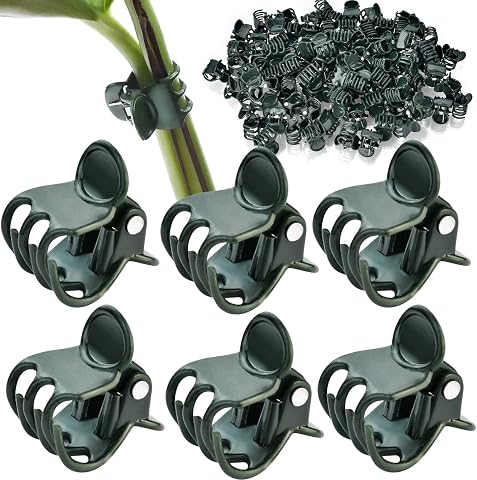
Complete the kit


Key Takeaways
The AMERLIFE is the roundup’s strongest all-around choice because its 12 × 10 ft footprint provides more room to work than the compact 6 × 4 and 6 × 8 ft models.
The wooden options serve different priorities: the Jocisland 10 x 13.2 ft favors a substantial classic structure, while the Modern Shade and Bellerose XL add design features that may matter more than maximum growing area.
Panel construction varies meaningfully: the Rotihom’s 9 mm polycarbonate panels make it a distinct choice for shoppers prioritizing panel thickness, while several other models emphasize size or walk-in access.
Ventilation and monitoring are not interchangeable: the Jocisland 6 x 12 ft has two roof vents, while the 6 x 4 ft model includes a hygrometer; neither feature alone replaces a plan for managing temperature and humidity.
Frame material points to different ownership demands: wood brings a traditional garden look but calls for more attention to maintenance, while the Jocoevol galvanized steel model offers a metal-frame alternative in a moderate footprint.
| AMERLIFE 12 × 10 × 8 ft Hybrid Polycarbonate Greenhouse |  | Best for Weather-Readiness | Dimensions: 12 × 10 × 8 ft | Usable volume: 435 cu. ft. | Weight: 245 lb | VIEW LATEST PRICE | See Our Full Breakdown |
| Jocisland 10 x 13.2 ft Wooden Greenhouse |  | Best Cedar-Framed Greenhouse | Dimensions: 10 × 13.2 ft | Wall height: 5.45 ft (166 cm) | Peak height: 7.68 ft (234 cm) | VIEW LATEST PRICE | See Our Full Breakdown |
| Modern Shade 6.5 x 10 ft Cedar Wood Greenhouse with USB Charging Ports |  | Best Equipped Growing Workspace | Dimensions: 6.5 × 10 ft | Peak height: 8 ft | Frame material: FSC-certified cedar wood | VIEW LATEST PRICE | See Our Full Breakdown |
| 6 x 4 ft Greenhouse with Hygrometer | 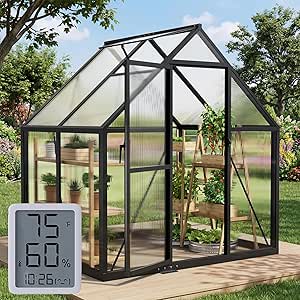 | Best Compact Pick | Dimensions: 6 × 4 ft | Frame: Reinforced aluminum alloy | Panel material: Double-wall polycarbonate | VIEW LATEST PRICE | See Our Full Breakdown |
| Jocisland 6 x 12 ft Walk-In Polycarbonate Greenhouse with Two Roof Vents |  | Best for Long, Narrow Gardens | Dimensions: 6 × 12 × 6.4 ft | Frame material: Aluminum | Panel material: 4 mm polycarbonate | VIEW LATEST PRICE | See Our Full Breakdown |
| Backyard Discovery Bellerose XL Cedar Wood Greenhouse with Pergola |  | Best Premium Traditional Greenhouse | Dimensions: 13 ft × 11 ft | Interior space: 143 sq ft | Materials: Cedar wood and four-wall polycarbonate | VIEW LATEST PRICE | See Our Full Breakdown |
| Coumy 8 × 14 ft Walk-In Greenhouse with Polycarbonate Panels |  | Best Value for a Large Aluminum Greenhouse | Dimensions: 160.98 × 87.8 × 85 in | Frame material: Reinforced aluminum | Panel material: UV-blocking polycarbonate | VIEW LATEST PRICE | See Our Full Breakdown |
| Rotihom 7 × 8 ft Wooden Greenhouse with 9 mm Polycarbonate Panels |  | Best for Traditional Wood-and-Polycarbonate Construction | Size: 7 × 8 ft | Dimensions: 93.3 × 84.6 × 80.3 in | Weight: 226 lb | VIEW LATEST PRICE | See Our Full Breakdown |
| Jocoevol 6 x 8 ft Galvanized Steel Greenhouse |  | Best Compact Metal Greenhouse | Dimensions: 95.59 × 70.86 × 77.16 in | Frame material: Metal | Cover material: Double-layer polycarbonate | VIEW LATEST PRICE | See Our Full Breakdown |
| traditional greenhouse | Dimensions | Frame material | Ventilation | Doors |
|---|---|---|---|---|
| AMERLIFE 12 × 10 × 8 ft Hybrid | 12 × 10 × 8 ft | Aluminum | — | 2 swing doors |
| Jocisland 10 x 13.2 ft Wooden | 10 × 13.2 ft | Cedar | — | 2 |
| Modern Shade 6.5 x 10 ft Cedar | 6.5 × 10 ft | FSC-certified cedar wood | Four fans in a front-to-back configuration | — |
| 6 x 4 ft Greenhouse with Hygro | 6 × 4 ft | — | Adjustable roof vents | — |
| Jocisland 6 x 12 ft Walk-In Po | 6 × 12 × 6.4 ft | Aluminum | — | 1 swing door |
| Backyard Discovery Bellerose X | 13 ft × 11 ft | — | Temperature-activated exhaust fan and 2 windows | — |
| Coumy 8 × 14 ft Walk-In Greenh | 160.98 × 87.8 × 85 in | Reinforced aluminum | 4 adjustable windows | 2 lockable doors |
| Rotihom 7 × 8 ft Wooden Greenh | 93.3 × 84.6 × 80.3 in | Spruce wood | 1 adjustable roof vent, 19 × 18 in | — |
| Jocoevol 6 x 8 ft Galvanized S | 95.59 × 70.86 × 77.16 in | Metal | Adjustable roof vent | 1 |
More Details on Our Top Picks
AMERLIFE 12 × 10 × 8 ft Hybrid Polycarbonate Greenhouse
The AMERLIFE is my pick for growers who want a large traditional greenhouse with stated weather limits, rather than relying on panel material alone to judge resilience. Its reinforced aluminum frame is rated for winds up to 56 mph and snow loads up to 18 psf, giving buyers concrete figures to weigh against local conditions. The mix of clear and translucent polycarbonate aims to balance light transmission with UV protection, while two roof vents and integrated gutters support airflow and water management. Compared with the Jocisland 10 x 13.2 ft Wooden Greenhouse, AMERLIFE provides more published load information and a metal frame, but gives up the cedar look. The tradeoff is a substantial footprint and a demanding assembly estimate: about six hours for three people.
Pros:- Stated wind resistance up to 56 mph and snow load up to 18 psf
- Reinforced aluminum frame with clear and translucent polycarbonate panels
- Two adjustable roof vents and integrated gutters
- Spacious walk-in interior with double swing doors
Cons:- Large footprint needs substantial outdoor space
- Assembly is described as taking about six hours with three people
Best for: Growers with ample yard space who want a walk-in polycarbonate greenhouse with stated wind and snow-load limits.
Not ideal for: Small-yard owners or solo assemblers who cannot accommodate a 12 × 10 ft structure or a multi-person setup.
- Dimensions:12 × 10 × 8 ft
- Usable volume:435 cu. ft.
- Weight:245 lb
- Frame material:Aluminum
- Cover material:Polycarbonate
- Doors:2 swing doors
- Roof vents:2 adjustable vents
Our verdict“Choose the AMERLIFE if you have room for a large structure and value published weather limits more than a cedar frame.”
Jocisland 10 x 13.2 ft Wooden Greenhouse
The Jocisland suits buyers who want the warmth and natural appearance of a cedar frame without giving up polycarbonate panels or walk-in space. Its 10 x 13.2 ft footprint is longer than the AMERLIFE, and the stated 7.68 ft peak height leaves room for taller plants. Pre-assembled walls, doors, and windows can reduce the amount of component-by-component construction, though the 314-pound weight makes moving and positioning this greenhouse a serious job. Two adjustable vents let growers manage airflow, and the lockable door adds a practical security feature. Compared with the AMERLIFE, this model favors wood character and a longer layout, but AMERLIFE supplies explicit wind and snow-load figures that Jocisland does not. I would skip it where documented weather ratings are a priority.
Pros:- Cedar frame paired with polycarbonate panels
- Long 10 x 13.2 ft footprint and 7.68 ft peak height
- Pre-assembled walls, doors, and windows simplify setup
- Two adjustable roof vents and a lockable door
Cons:- At 314 pounds, handling and positioning require substantial effort
- No detailed wind-resistance or weight-capacity figures are provided
Best for: Gardeners seeking a spacious cedar greenhouse with pre-assembled sections and a natural wood appearance.
Not ideal for: Buyers who need published wind or snow-load ratings, or who must move and assemble the structure without help.
- Dimensions:10 × 13.2 ft
- Wall height:5.45 ft (166 cm)
- Peak height:7.68 ft (234 cm)
- Item weight:314 lb
- Frame material:Cedar
- Panel material:Polycarbonate
- Doors:2
- Roof vents:2 adjustable vents
Our verdict“Pick this Jocisland for cedar character and a roomy, long layout, but choose the AMERLIFE if published load limits matter more.”
Modern Shade 6.5 x 10 ft Cedar Wood Greenhouse with USB Charging Ports
Modern Shade is the most workbench-oriented option here: it combines a cedar frame with built-in shelving, a workspace, a faucet kit, four ventilation fans, and several power outlets. That setup can suit growers who want watering and powered accessories close at hand, rather than adding them piecemeal. Its 8-foot peak height is generous for a greenhouse with a 6.5 x 10 ft footprint, and the 6 mm polycarbonate roof panels add a defined roof specification. Compared with the compact 6 x 4 ft greenhouse, this model offers far more room and integrated equipment, but it also needs more space and includes more systems to accommodate. The listing does not provide wind or snow-load ratings, so buyers in exposed locations may prefer the AMERLIFE, which states limits.
Pros:- FSC-certified cedar frame and 8-foot peak height
- Built-in shelving, workspace, and faucet kit
- Four fans arranged for front-to-back ventilation
- USB, USB-C, and two standard power outlets
Cons:- Larger footprint than the 6 x 4 ft greenhouse and requires more yard space
- No wind-resistance or snow-load figures are provided
Best for: Hands-on gardeners who want a cedar greenhouse with built-in shelving, a faucet, ventilation fans, and power access.
Not ideal for: Buyers seeking a simple, compact structure or published wind and snow-load ratings for a high-exposure site.
- Dimensions:6.5 × 10 ft
- Peak height:8 ft
- Frame material:FSC-certified cedar wood
- Roof panels:6 mm polycarbonate
- Faucet:1/2-inch brass faucet with US-standard hose interface
- Ventilation:Four fans in a front-to-back configuration
- Power ports:USB, USB-C, and 2 standard outlets
- Included features:Built-in shelving and workspace
Our verdict“Choose Modern Shade if an equipped growing workspace matters more than a small footprint or published weather-load ratings.”
6 x 4 ft Greenhouse with Hygrometer
For gardeners with limited space, this 6 x 4 ft greenhouse keeps the traditional walk-in format in a smaller footprint. Its reinforced aluminum alloy frame and 4 mm double-wall polycarbonate panels are described as protection against weather and UV exposure, while the adjustable roof vents let growers release heat. A lockable door adds a useful everyday safeguard. Compared with the Jocisland 6 x 12 ft greenhouse, this is much easier to fit into a small garden, but it gives up the longer growing area and the listed ground stakes and bolts. The kit includes labeled parts, instructions, and tools; still, assembly may take a helping hand, and the product notes that glass glue may be needed to reinforce panel gaps. That extra step makes it less hands-off than its compact size suggests.
Pros:- Compact 6 × 4 ft footprint
- Reinforced aluminum alloy frame with 4 mm double-wall polycarbonate
- Adjustable roof vents and a lockable door
- Includes labeled parts, instructions, and assembly tools
Cons:- Assembly may require a helping hand
- Glass glue may be needed to reinforce panel gaps
- Less growing area than the 6 × 12 ft Jocisland greenhouse
Best for: Gardeners with a small yard or patio area who want a compact, lockable walk-in greenhouse.
Not ideal for: Growers planning long rows of plants or anyone seeking a setup that requires no panel-gap reinforcement.
- Dimensions:6 × 4 ft
- Frame:Reinforced aluminum alloy
- Panel material:Double-wall polycarbonate
- Panel thickness:4 mm
- Panel weight:580 g
- Ventilation:Adjustable roof vents
- Door:Lockable
Our verdict“Choose this model when fitting a walk-in greenhouse into a small space matters more than maximizing planting area.”
Jocisland 6 x 12 ft Walk-In Polycarbonate Greenhouse with Two Roof Vents
The Jocisland 6 x 12 ft makes a strong case for growers who need a long planting run but cannot give over a wide section of the yard. Its reinforced aluminum frame and 4 mm polycarbonate panels keep the structure in the traditional metal-and-panel category, while the panels are stated to block 99.99% of UV rays. Two adjustable roof vents help manage rising heat, and the included stakes and bolts give buyers anchoring hardware from the outset. Compared with the compact 6 x 4 ft greenhouse, this model offers three times the listed floor area, but it needs a longer clear site and a two-person assembly. Wind performance may depend on secure anchoring; unlike the AMERLIFE, it provides no stated wind or snow-load limits. That makes site exposure an important part of the decision.
Pros:- Long 6 × 12 ft walk-in layout
- 4 mm polycarbonate panels stated to block 99.99% of UV rays
- Two adjustable roof vents
- Ground stakes and bolts are included
Cons:- Assembly is specified for two people
- Wind resistance may depend on secure anchoring
- No stated wind or snow-load capacity
Best for: Gardeners with a narrow, elongated outdoor area who want a substantial walk-in growing space and included anchoring hardware.
Not ideal for: Buyers with short or exposed sites who need published wind-load figures or prefer a one-person assembly.
- Dimensions:6 × 12 × 6.4 ft
- Frame material:Aluminum
- Panel material:4 mm polycarbonate
- Doors:1 swing door
- Roof vents:2 adjustable vents
- UV protection:Blocks 99.99% of UV rays
- Assembly:2–3 hours for two people
- Included anchoring:Ground stakes and bolts
Our verdict“Pick this Jocisland for a long, narrow growing area, but favor the AMERLIFE if published weather-load limits are a priority.”
Backyard Discovery Bellerose XL Cedar Wood Greenhouse with Pergola
For a traditional greenhouse that can also serve as a substantial garden workspace, the Bellerose XL offers the most built-in infrastructure in this group. Its 143-square-foot interior includes a workstation, 48 linear feet of staging shelves, and movable hooks, so seed starting and tool storage need less improvisation. Four-wall polycarbonate panels and cedar framing are designed to support heat retention, while a temperature-activated fan and two windows give growers more ways to manage warm conditions than the single roof vent on the Rotihom 7 × 8 ft. The tradeoff is scale: this is a ready-to-assemble structure that needs proper anchoring, and its PowerPort requires a separate power source. Choose it for capacity and working convenience; skip it if you want a compact, simpler build.
Pros:- 143 square feet of interior space with a workstation and 48 linear feet of shelving
- Cedar framing and four-wall polycarbonate panels are designed for durability and heat retention
- Temperature-activated exhaust fan and two windows provide multiple ventilation options
- PowerPort includes three electrical outlets and three USB ports, plus hose connections and movable plant hooks
Cons:- Requires assembly and proper anchoring to meet its stated weather-resistance ratings
- The PowerPort’s power source is not included
- Its 13 × 11 ft footprint may be too large for smaller yards
Best for: Gardeners who want a large cedar greenhouse with dedicated staging, a workstation, and built-in power access for accessories.
Not ideal for: Small-yard growers or buyers seeking a straightforward greenhouse without a large footprint, assembly work, or separate power-source planning.
- Dimensions:13 ft × 11 ft
- Interior space:143 sq ft
- Materials:Cedar wood and four-wall polycarbonate
- Shelving:33 linear ft of lower staging shelves and 15 ft of upper shelves
- Ventilation:Temperature-activated exhaust fan and 2 windows
- PowerPort:3 electrical outlets and 3 USB ports
- Weather resistance:Rated for up to 30 inches of snow and 100 mph winds when properly anchored
- Warranty:5 years
Our verdict“Choose the Bellerose XL if you want a spacious, well-equipped cedar workspace and can accommodate its footprint and setup requirements.”
Coumy 8 × 14 ft Walk-In Greenhouse with Polycarbonate Panels
The Coumy makes a strong case for growers who want a roomy walk-in structure without opting for a wood frame. Its 8 × 14 ft footprint, four adjustable windows, and rain gutters offer practical growing capacity and ventilation, while the reinforced aluminum frame and six ground anchors address outdoor stability. Compared with the Backyard Discovery Bellerose XL, it gives up cedar construction, a built-in workstation, and powered outlets, but keeps the design simpler and supplies two lockable doors for access from either end. The slide-in panels and labeled parts are intended to make assembly more manageable, though the greenhouse still requires setup and arrives in two packages. Panel gaps may need glass glue for a tighter seal, so buyers prioritizing a finished, weather-sealed build should weigh that extra work.
Pros:- Long 8 × 14 ft layout offers generous walk-in growing space
- Reinforced aluminum frame and six ground anchors support outdoor stability
- Four adjustable windows and rain gutters add ventilation and water-management options
- Two lockable doors provide access at both ends
Cons:- Requires assembly and ships in two separate packages
- Panel gaps may need glass glue for added sealing
- Lacks the cedar framing, workstation, and PowerPort included with the Bellerose XL
Best for: Growers who need a long walk-in greenhouse with adjustable ventilation, double-door access, and an aluminum frame rather than a wood structure.
Not ideal for: Buyers who want a cedar greenhouse with included work surfaces, or who are unwilling to assemble panels and address possible gaps.
- Dimensions:160.98 × 87.8 × 85 in
- Frame material:Reinforced aluminum
- Panel material:UV-blocking polycarbonate
- Ventilation:4 adjustable windows
- Doors:2 lockable doors
- Ground anchors:6
- Additional feature:Rain gutters
- Package count:2
Our verdict“Pick the Coumy if you want a large, metal-framed greenhouse with double-door access and are prepared to assemble and seal its panels.”
Rotihom 7 × 8 ft Wooden Greenhouse with 9 mm Polycarbonate Panels
The Rotihom suits gardeners who want a compact wooden greenhouse with practical details already built into the growing area. Its spruce frame and 9 mm polycarbonate panels give it a more substantial panel specification than the basic description of the Jocoevol 6 × 8 ft greenhouse, while metal reinforcements add support at corners and connections. The foldable two-sided shelf can move aside for taller plants, and the tool-hook panel keeps small equipment close at hand. Ventilation is more limited than on the Coumy 8 × 14 ft, which has four adjustable windows: Rotihom lists one adjustable roof vent, with an opening for an exhaust fan that must be purchased separately. Its 226-pound weight may help buyers seeking a substantial structure, but makes moving or positioning it less convenient.
Pros:- Spruce wood frame paired with 9 mm polycarbonate panels
- Adjustable roof vent supports air circulation
- Foldable two-sided shelf can be moved to make room for taller plants
- Metal reinforcements and a tool-hook panel add useful structural and storage details
Cons:- Exhaust fan is not included
- One roof vent offers fewer listed ventilation options than the Coumy’s four windows
- At 226 lb, it may be difficult to move into position
Best for: Home growers who want a mid-size wooden greenhouse with thick polycarbonate panels, flexible shelving, and built-in tool storage.
Not ideal for: Gardeners who need multiple ventilation points, want an included exhaust fan, or need a lightweight structure that is easy to reposition.
- Size:7 × 8 ft
- Dimensions:93.3 × 84.6 × 80.3 in
- Weight:226 lb
- Frame material:Spruce wood
- Panel material:Polycarbonate
- Panel thickness:9 mm
- Ventilation:1 adjustable roof vent, 19 × 18 in
- Exhaust fan opening:11.8 × 11.8 in; fan not included
Our verdict“Choose the Rotihom if you want a compact wooden greenhouse with thick panels and adaptable shelving, and can work around its limited ventilation.”
Jocoevol 6 x 8 ft Galvanized Steel Greenhouse
For a smaller growing area, the Jocoevol pairs a galvanized steel frame with double-layer polycarbonate panels and a restrained set of useful features. Its adjustable roof vent supports airflow, while the sloped roof helps move water away; the panels are specified to block 99% of harmful UV rays. Compared with the larger wooden Rotihom 7 × 8 ft, this greenhouse has a smaller footprint and a metal frame, but provides less listed workspace and no foldable shelf or tool-hook panel. Installation has a specific demand: the bottom frame must sit in a pre-dug trench, so site preparation is part of the job. Instructions and tools are included, but buyers seeking a wood-framed traditional look or a simpler surface installation may prefer another option.
Pros:- Galvanized steel frame with support rods
- Double-layer polycarbonate panels are specified to block 99% of harmful UV rays
- Adjustable roof vent and sloped roof support airflow and water drainage
- Includes a lockable door handle, instructions, and tools
Cons:- Installation requires placing the bottom frame in a pre-dug trench
- Smaller footprint offers less growing and staging space than the Rotihom 7 × 8 ft
- Does not list built-in shelving or tool storage
Best for: Gardeners with limited space who prefer a compact metal-frame greenhouse and can prepare a trench for installation.
Not ideal for: Buyers who want a wooden-frame greenhouse, a larger interior for staging plants, or an installation that avoids ground preparation.
- Dimensions:95.59 × 70.86 × 77.16 in
- Frame material:Metal
- Cover material:Double-layer polycarbonate
- UV protection:Blocks 99% of harmful UV rays
- Doors:1
- Ventilation:Adjustable roof vent
- Drainage:Sloped roof drainage system
- Model:JCGH-260831
Our verdict“Choose the Jocoevol for a compact, UV-protective metal greenhouse if you can handle trench preparation and do not need built-in staging.”
How We Picked
I compared these nine greenhouses on the factors that most affect day-to-day growing: usable floor area, access, glazing and frame materials, ventilation features, and the likely work involved in assembly and upkeep. I also looked at whether each design suits a clear buyer need, such as a compact yard, a traditional timber appearance, walk-in growing space, or a distinctive garden setting. Product names and listed features informed this comparison; I did not treat unprovided claims about weather performance, durability, or ease of assembly as established facts.
The ranking favors options that offer a strong balance of useful growing space, practical design, and broad appeal. The AMERLIFE takes the overall lead for its large footprint and hybrid construction. The Jocisland 10 x 13.2 ft and Bellerose XL follow for buyers who prioritize wood and design, while smaller or more specialized models rank higher for particular needs than for all-purpose use. Since the roundup provides limited detail on warranties, anchoring, and assembly, I recommend checking those specifics before buying.
| traditional greenhouse | Frame material |
|---|---|
| AMERLIFE 12 × 10 × 8 ft Hybrid | Aluminum |
| Jocisland 10 x 13.2 ft Wooden | Cedar |
| Modern Shade 6.5 x 10 ft Cedar | FSC-certified cedar wood |
| 6 x 4 ft Greenhouse with Hygro | — |
| Jocisland 6 x 12 ft Walk-In Po | Aluminum |
| Backyard Discovery Bellerose X | — |
| Coumy 8 × 14 ft Walk-In Greenh | Reinforced aluminum |
| Rotihom 7 × 8 ft Wooden Greenh | Spruce wood |
| Jocoevol 6 x 8 ft Galvanized S | Metal |
Factors to Consider When Choosing Best Traditional Greenhouses
Choosing a greenhouse is a commitment to a growing routine as much as a structure purchase. I would start with the site and the plants you intend to grow, then compare access, climate control, and maintenance demands. These broader checks can prevent a common mismatch: buying more footprint than the yard can support, or choosing a compact model that becomes awkward once shelves and mature plants are inside.
Measure the Whole Site, Not Just the Greenhouse Footprint
Measure the proposed area, then leave room for the door to open, paths to stay clear, and access for cleaning or repairs. A greenhouse’s listed dimensions describe its outside footprint, not necessarily the usable interior after framing and shelving. Check nearby fences, trees, buildings, and overhead branches for shade or obstructions. Also account for drainage and a level base; a tight or uneven site can complicate assembly and everyday access. Larger models such as the AMERLIFE and 10 x 13.2 ft Jocisland need a genuine site plan, while a compact greenhouse may be a better fit where access is restricted. Avoid choosing by growing area alone if you cannot comfortably reach the structure.
Match Glazing to Your Climate and Growing Goals
Panel material affects light, insulation, maintenance, and replacement options, but the product name alone cannot tell you how a greenhouse will perform in a particular climate. Compare panel thickness, framing support, and manufacturer guidance for wind, snow, and UV exposure before ordering. The Rotihom is distinct here because its listing specifies 9 mm polycarbonate panels; that detail is useful, but it does not by itself establish a complete weather rating. Consider whether your main goal is extending the growing season, protecting tender plants, or creating a bright space for seedlings. Ask how panels attach and whether replacements are available, since damage can turn a small repair into a larger project. Do not assume every polycarbonate structure handles severe weather equally well.
Plan Ventilation Before You Plan Heating
Sun can raise greenhouse temperatures quickly, even when outdoor weather feels mild, so ventilation deserves attention before adding heating equipment. Look for the number and placement of vents, how they open, and whether you can reach them easily once benches are installed. The Jocisland 6 x 12 ft lists two roof vents, while the 6 x 4 ft model includes a hygrometer; vents move air, and a hygrometer helps monitor humidity, so they serve different jobs. A thermometer and a reliable way to open vents can matter as much as a built-in accessory. If you expect to grow through hot months, check whether the structure can support additional shade or airflow measures. Avoid assuming that a small greenhouse will stay cool simply because it has less interior volume.
Choose a Frame You Are Prepared to Maintain
Wood creates a traditional appearance and can suit a garden where the greenhouse is part of the landscape, but it may need more routine care than a metal frame. Before choosing timber, check what treatment it has received, what care the maker recommends, and whether the structure can be sealed or repaired with commonly available materials. The Jocisland and Modern Shade models offer wood construction, while the Jocoevol uses galvanized steel for a different maintenance profile. Metal does not remove the need to inspect joints, panels, and anchoring; it simply changes what you will monitor over time. Think about access to replacement parts and your willingness to perform seasonal upkeep. A finish that looks right on day one matters less if the ongoing care does not fit your routine.
Evaluate Access and Interior Layout Before Counting Capacity
Floor area is only useful when you can move through it and reach plants without damaging them. Walk-in designs such as the Jocisland 6 x 12 ft and Coumy 8 × 14 ft offer room for a more substantial growing setup, but shelves, pots, and a central path will reduce planting space. Check door width and height against the items you expect to carry inside, including trays, soil bags, or larger containers. For a smaller model, consider whether you can tend plants from both sides or if the design forces you to reach over them. Sketch a simple layout before buying, including benches and storage, rather than treating the entire floor as planting area. A greenhouse with less nominal capacity can be easier to use if its access is better suited to your routine.
Price the Project Beyond the Structure
The structure is only one part of the setup: a suitable base, anchoring, shelving, watering equipment, shade, and temperature monitoring can add work and cost. Check whether those items are included instead of assuming photos show the complete package. Assembly time and the need for extra help matter too, especially for larger greenhouses with many panels or a timber frame. Ask about delivery access, replacement panels, warranty coverage, and local installation rules before committing. Paying more can make sense when a design offers a feature you will use, such as a larger walk-in layout or a pergola that fits your garden plans; decorative extras do not help if the growing environment is inadequate. Compare the complete setup you need, not only the greenhouse shell.
Frequently Asked Questions
Is a wooden greenhouse or a polycarbonate greenhouse a better choice for a traditional garden?
Choose wood if the greenhouse’s appearance is a major part of the garden design and you are comfortable checking and maintaining the frame. Polycarbonate models can suit buyers who prefer a panel-based structure and want to compare specifications such as panel thickness and ventilation. The Jocisland and Modern Shade wooden options emphasize timber, while the AMERLIFE and Rotihom represent different polycarbonate approaches. Neither material guarantees a particular level of insulation or weather resistance without the manufacturer’s specifications. Compare care requirements, replacement parts, and local climate suitability before deciding.
How much greenhouse space do I need for vegetables and seed starting?
Start by listing the crops, containers, and work surfaces you expect to keep inside, then map them onto the usable interior rather than the outside dimensions. Seed starting can take little floor space but benefits from shelves and room to tend trays; larger fruiting plants need more spacing and access. The 6 x 4 ft model may suit a limited setup, while walk-in choices such as the Coumy or AMERLIFE provide more room for paths and larger plants. Remember that benches and storage reduce planting area. If your plans are uncertain, prioritize access and a flexible layout over filling every available inch.
Do I need roof vents if my greenhouse has a hygrometer?
A hygrometer measures humidity; it does not release heat or bring in fresh air. Roof vents provide an airflow route, so the two features address related but different growing conditions. The 6 x 12 ft Jocisland lists two roof vents, while the compact model lists a hygrometer, making their stated features useful in different ways. You may still need to monitor temperature and have a practical way to open or supplement ventilation. Before buying, check whether vents are adjustable and whether their placement suits your site and planned layout.
Can I set up a traditional greenhouse directly on soil or grass?
Do not assume that a greenhouse can sit securely on an unprepared lawn. A firm, level base helps with alignment and daily use, while anchoring helps keep the structure in place; the right setup depends on the product instructions and local conditions. Some buyers choose a prepared foundation or a suitable framed base, but materials and requirements vary by model. Check the maker’s installation guide for base and anchoring details before purchase. Also confirm that the selected spot drains well, since standing water can make the surrounding area unpleasant and complicate access.
Which features justify choosing a larger or more elaborate greenhouse?
Pay for extra space when it changes how you will grow: room for a central path, benches, taller plants, or separate seed-starting and mature-plant areas can make a larger structure more functional. A pergola or distinctive finish may be worthwhile if the greenhouse also serves as a garden feature, but it does not replace useful ventilation or a sound growing layout. The Bellerose XL adds a pergola, while the larger AMERLIFE and Jocisland models focus more directly on growing footprint. Check the full installation demands and site requirements before selecting a larger build. If you cannot name how you will use the added space or design feature, a simpler model may suit you better.
Conclusion
I would choose the AMERLIFE 12 × 10 × 8 ft as the best overall option for gardeners who want a roomy, versatile structure. For the best value in functional space, the Coumy 8 × 14 ft is a strong candidate for buyers who prioritize a large walk-in layout, while those seeking the most design-forward premium choice should compare the Backyard Discovery Bellerose XL and its pergola with the larger Jocisland wooden model. The 6 x 4 ft greenhouse with hygrometer is the most approachable starting point for a small garden, though its compact footprint limits expansion. For specific needs, I would shortlist the Rotihom for its stated 9 mm panels, the Jocisland 6 x 12 ft for its two roof vents, and the Jocoevol for a galvanized steel frame. Match your final choice to the site, maintenance you can handle, and the growing layout you will actually use.
Halloween Picks
halloween
As an affiliate, we earn on qualifying purchases.