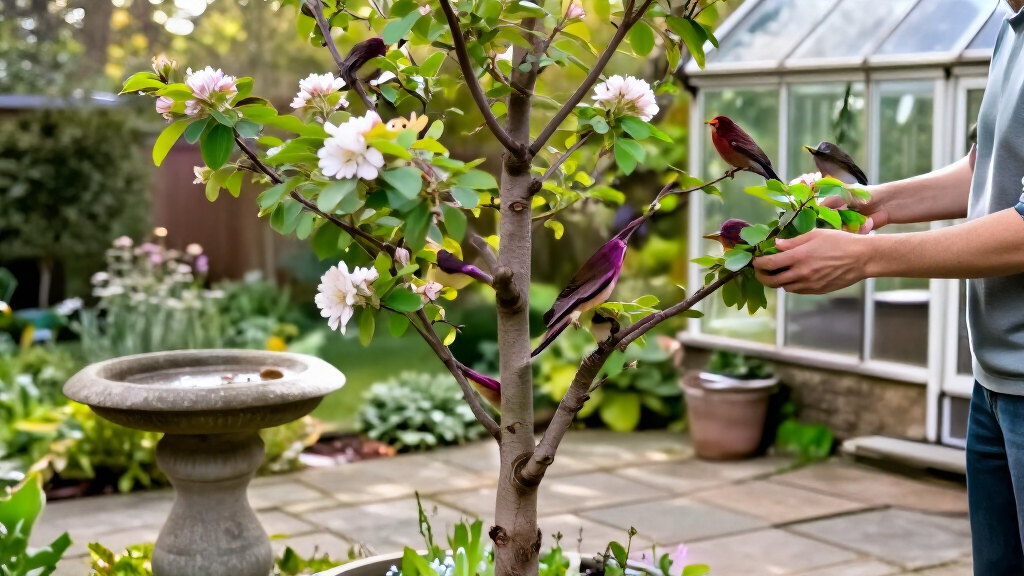

For the best compact trees for attracting birds, I rank White Dogwood first for its balanced mix of seasonal interest, berries, and shelter. American Beautyberry stands out for conspicuous fruit, while Don’s Dwarf Wax Myrtle offers a compact evergreen option for cover. The main tradeoff is whether to prioritize food, year-round refuge, or a smaller footprint—and local climate and mature size can change which plant is the better fit. I also compare hawthorn, crabapple, pink dogwood, and Bird’s Nest Spruce for distinct garden needs. Read on for the full breakdown and help choosing a bird-friendly plant that suits your space.

Get garden gear delivered free with Prime
- Fast, free delivery on millions of items
- Prime Video, Amazon Music and more included
- Member-only deals all year
Complete the kit


Key Takeaways
- White Dogwood ranks first because it offers a more balanced combination of bird food, shelter, and ornamental value than picks aimed at a single benefit.
- American Beautyberry prioritizes fruit; its shrub form can suit a tight planting area, but it does not provide the same evergreen cover as wax myrtle or spruce.
- Don’s Dwarf Wax Myrtle is the compact evergreen choice for buyers who value persistent cover, though evergreen structure alone does not replace seasonal food sources.
- Washington Hawthorn and Sargent Crabapple emphasize fruit, but buyers should weigh their mature spread and site needs rather than judging fit by the supplied tree size.
- Bird’s Nest Spruce adds dense structure rather than a primary berry crop, so it works best as part of a mixed planting rather than as a standalone food source.
| White Dogwood Tree, 1-Gallon Nursery Pot |  | Best Overall for Seasonal Bird Appeal | Plant type: Outdoor tree | Pot size: 1 gallon | Expected plant height: 18 inches | VIEW LATEST PRICE | See Our Full Breakdown |
| American Beautyberry Shrub, Quart Pot, 6–12 Inches Tall |  | Best for Fall and Winter Berry Color | Plant type: Shrub | Quantity: 1 | Pot size: Quart | VIEW LATEST PRICE | See Our Full Breakdown |
| Washington Hawthorn Live Trees, Crataegus phaenopyrum (2 Trees) |  | Best Multi-Season Pair for Wildlife | Species: Crataegus phaenopyrum | Quantity: Title says 2 trees; description says 3 | Light: Partial shade | VIEW LATEST PRICE | See Our Full Breakdown |
| Don’s Dwarf Wax Myrtle, 3-Gallon Plant with Planting Kit | 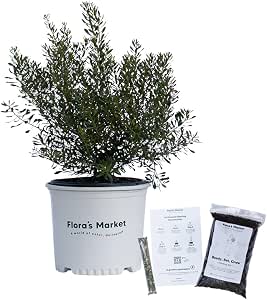 | Best Compact Evergreen | Botanical name: Morella cerifera ‘Don’s Dwarf’ | Container size: 3 gallons | Mature height: 3–4 feet | VIEW LATEST PRICE | See Our Full Breakdown |
| Sargent Crabapple Tree, 10–16 Inches Tall, Quart Pot |  | Best Small-Space Bird Tree | Plant type: Tree | Botanical name: Malus sargentii | Height on arrival: 10–16 inches | VIEW LATEST PRICE | See Our Full Breakdown |
| Pink Flowering Dogwood Live Plant, 2–3 ft Tall, 3 × 6 in Pot |  | Best for Seasonal Bird Food | Plant type: Pink dogwood tree (Cornus florida var. rubra) | Height on arrival: 2–3 ft | Pot size: 3 × 6 in | VIEW LATEST PRICE | See Our Full Breakdown |
| Bird’s Nest Spruce (Picea abies ‘Nidiformis’), 3-Gallon Container |  | Best Compact Evergreen Shelter | Plant type: Evergreen shrub | Container size: 3-gallon trade pot | Mature height: 2–3 ft | VIEW LATEST PRICE | See Our Full Breakdown |
| compact trees for attracting bird | Plant type | Hardiness zones | Pot size | Mature height |
|---|---|---|---|---|
| White Dogwood Tree | Outdoor tree | 5–9 | 1 gallon | 15–25 feet |
| American Beautyberry Shrub | Shrub | 5–10 | Quart | — |
| Washington Hawthorn Live Trees | — | — | — | — |
| Don’s Dwarf Wax Myrtle | — | 7–10 | — | 3–4 feet |
| Sargent Crabapple Tree | Tree | — | Quart | — |
| Pink Flowering Dogwood Live Pl | Pink dogwood tree (Cornus florida var. rubra) | 5–8 | 3 × 6 in | 15–25 ft |
| Bird’s Nest Spruce | Evergreen shrub | 3–8 | — | 2–3 ft |
More Details on Our Top Picks
White Dogwood Tree, 1-Gallon Nursery Pot
I’d choose this dogwood when a small-yard planting can accommodate a tree that grows well beyond its nursery-pot size. Its strongest bird draw is the red berry crop, complemented by white spring flowers and fall foliage in red, purple, or burgundy. Compared with the Sargent Crabapple, which has a listed mature height of about 8 feet, this dogwood offers a larger canopy and shade but needs substantially more room, potentially spreading up to 25 feet. It also suits shadier sites better than the crabapple, which tolerates partial shade but prefers full sun to partial shade. The tradeoff is more demanding soil: I’d skip it where drainage is poor or slightly acidic soil is difficult to provide. It also cannot ship to several states.
Pros:- Red berries provide a food source that can attract birds.
- White spring flowers and vivid fall foliage extend seasonal interest.
- Partial-shade preference suits sites less sunny than those favored by the Sargent Crabapple.
- Hardy across USDA zones 5–9.
Cons:- Mature spread can reach 25 feet, so it is not a tight-space tree.
- Needs well-drained, slightly acidic soil and regular watering.
- Shipping is unavailable to California, Arizona, Alaska, and Hawaii.
Best for: Gardeners in zones 5–9 with partial shade, well-drained acidic soil, and space for a spreading tree that offers flowers, berries, and fall color.
Not ideal for: Small patios or narrow beds, gardeners with poorly drained or alkaline soil, and buyers in California, Arizona, Alaska, or Hawaii.
- Plant type:Outdoor tree
- Pot size:1 gallon
- Expected plant height:18 inches
- Mature height:15–25 feet
- Mature spread:Up to 25 feet
- Light:Partial shade
- Hardiness zones:5–9
- Flowers and season:White, sometimes slightly pink; spring
- Soil and watering:Well-drained, slightly acidic soil; regular watering
Our verdict“Choose this dogwood for a roomy, partly shaded garden where berries and multi-season display matter more than a truly miniature footprint.”
American Beautyberry Shrub, Quart Pot, 6–12 Inches Tall
This beautyberry earns its place for gardeners who want the bird-attracting feature to be especially visible: clusters of purple berries follow summer lavender-pink flowers and can persist into fall and winter. Unlike the Don’s Dwarf Wax Myrtle, it is deciduous rather than an evergreen screen, and its listed mature size of 6–10 feet tall and wide calls for more room than that 3–4-foot shrub. The small quart-pot plant arrives just 6–12 inches tall, so it needs time to establish before making much impact. The listing also says planting in groups can improve berry production; that makes it less straightforward for someone seeking a single compact specimen. I’d check the shipping restriction before ordering, since several states are excluded.
Pros:- Purple fall and winter berries provide a distinctive bird-attracting feature.
- Summer flowers offer interest for pollinators before berries develop.
- Low-maintenance description and moderate water needs suit less intensive gardens.
- Hardy across zones 5–10.
Cons:- Mature size of 6–10 feet tall and wide is larger than the Don’s Dwarf Wax Myrtle.
- Planting in groups is recommended for better berry production.
- Shipping is unavailable to seven listed states.
Best for: Gardeners in eligible states seeking a low-maintenance, multi-season shrub whose purple berries can feed birds and whose flowers also support pollinators.
Not ideal for: Buyers needing a single very compact plant, those wanting evergreen cover, or gardeners in Arizona, California, Colorado, Idaho, Montana, Oregon, or Washington.
- Plant type:Shrub
- Quantity:1
- Pot size:Quart
- Height on arrival:Approximately 6–12 inches
- Mature size:6–10 feet tall with equal spread
- Hardiness zones:5–10
- Flowers and season:Lavender to pink; June to August
- Berry color:Purple
- Sun, soil, and water:Full sun; loam; moderate water
Our verdict“Pick beautyberry if you have room for a broad shrub and want conspicuous purple berries more than evergreen structure or a single compact plant.”
Washington Hawthorn Live Trees, Crataegus phaenopyrum (2 Trees)
Washington hawthorn is the strongest fit here for buyers wanting a pair of bird-attracting trees with seasonal interest beyond fruit alone: the description lists white spring flowers, summer foliage, fall color, and red berries that may persist into winter. Its compact, rounded form is presented as suitable for small yards, borders, and accent plantings, while the White Dogwood can spread up to 25 feet and demands more space. The listing, however, does not provide mature dimensions, hardiness zones, or detailed care needs, so I can’t compare its long-term footprint as confidently as the Sargent Crabapple’s stated 8-foot height. There is also a quantity conflict: the title says two trees, while the description says three. I’d confirm the shipment count before buying.
Pros:- Red berries can attract birds and other wildlife.
- Flowers, foliage, fall color, and persistent fruit provide several seasons of interest.
- Compact, rounded form is described as suitable for small yards and borders.
- Listing describes adaptability to varied soils and climates.
Cons:- Quantity is inconsistent: title lists two trees, while description says three.
- Mature height, spread, and hardiness zones are not provided.
- Care information is limited, making site planning less certain than for the Sargent Crabapple.
Best for: Gardeners seeking multiple accent trees for a border or small yard who value berries, flowers, and seasonal foliage and can verify the quantity before ordering.
Not ideal for: Buyers who need confirmed plant count, mature dimensions, or hardiness information before choosing a tree for a tightly planned site.
- Species:Crataegus phaenopyrum
- Quantity:Title says 2 trees; description says 3
- Light:Partial shade
- Flowers:White spring flowers
- Fruit:Red berries, described as potentially persisting into winter
- Foliage:Green summer foliage with fall color
- Form:Compact and rounded
Our verdict“Consider this hawthorn for a multi-tree wildlife planting only after confirming the quantity and checking local growing suitability.”
Don’s Dwarf Wax Myrtle, 3-Gallon Plant with Planting Kit
For the tightest footprint in this group, I’d look first at Don’s Dwarf Wax Myrtle: its 3–4-foot mature size is far smaller than the White Dogwood or American Beautyberry, and it keeps aromatic foliage year-round. Bluish-gray berries offer bird appeal, though the listing gives less detail about their season or abundance than the Sargent Crabapple’s red fruit, which can attract birds into winter. This is a shrub rather than a tree, so it suits a compact border or evergreen accent better than a buyer seeking a canopy. Its tolerance of drought, salt, and varied soils adds flexibility, while the included planting mix, fertilizer, and guide may help new planters get started. The main limits are its zones 7–10 range and inconspicuous spring flowers.
Pros:- Compact 3–4-foot mature size fits spaces too small for the White Dogwood.
- Evergreen aromatic foliage provides year-round structure.
- Drought and salt tolerance widen its placement options.
- Planting mix, fertilizer, guide, and a 30-day grower guarantee are included.
Cons:- Hardiness is limited to USDA zones 7–10.
- Spring flowers are small and inconspicuous.
- As a shrub, it will not provide the tree canopy or larger seasonal display of the dogwood.
Best for: Gardeners in zones 7–10 who need year-round evergreen structure in a compact 3–4-foot space and want berries that can attract birds.
Not ideal for: Gardeners in colder zones seeking a flowering tree or a larger canopy, and anyone expecting showy spring blooms or detailed berry-season guidance.
- Botanical name:Morella cerifera ‘Don’s Dwarf’
- Container size:3 gallons
- Mature height:3–4 feet
- Mature spread:3–4 feet
- Hardiness zones:7–10
- Light:Full sun to partial shade
- Foliage and fruit:Evergreen, aromatic foliage; bluish-gray berries
- Included items:Fertilizer, planting mix, and planting guide
- Guarantee:30-day grower guarantee
Our verdict“Choose this wax myrtle when compact evergreen cover and bird-attracting berries matter more than a tree form or showy flowers.”
Sargent Crabapple Tree, 10–16 Inches Tall, Quart Pot
The Sargent Crabapple is the clearest choice when “compact tree” means a tree with a stated, manageable endpoint: it is expected to reach about 8 feet tall, notably shorter than the White Dogwood’s 15–25 feet. Fragrant white flowers opening from pink buds bring spring interest, followed by glossy red fruit that can attract birds into winter. Compared with Don’s Dwarf Wax Myrtle, this is a true tree with a more pronounced flowering display, but it loses the myrtle’s evergreen foliage and drought and salt tolerance. The quart-pot plant arrives only 10–16 inches tall, so buyers should be prepared to nurture a young specimen rather than expect an established focal point. Moderate watering and well-drained loamy soil are part of the care commitment.
Pros:- Listed mature height of about 8 feet makes it more space-manageable than the White Dogwood.
- Red fruit can attract birds into winter.
- Fragrant spring flowers open from pink buds.
- Broad light tolerance includes full sun to partial shade.
Cons:- Arrives only 10–16 inches tall and will need time to establish.
- Requires moderate watering and well-drained loamy soil.
- Its approximately 8-foot mature height may be too limited for buyers wanting a larger canopy.
Best for: Gardeners in zones 4–8 who want a true, roughly 8-foot tree with spring flowers and red fruit for birds in a smaller yard.
Not ideal for: Buyers wanting immediate canopy, evergreen foliage, or a drought-tolerant plant that needs little watering.
- Plant type:Tree
- Botanical name:Malus sargentii
- Height on arrival:10–16 inches
- Expected mature height:About 8 feet
- Pot size:Quart
- Hardiness zone:4–8
- Light:Full sun to partial shade
- Bloom season and color:Spring; white flowers from pink buds
- Soil and water:Well-drained loamy soil; moderate watering
Our verdict“Choose the Sargent Crabapple for a genuinely small tree with spring flowers and winter bird appeal, provided you can care for a young plant.”
Pink Flowering Dogwood Live Plant, 2–3 ft Tall, 3 × 6 in Pot
I’d choose this pink dogwood when spring flowers and winter food matter more than keeping the mature tree especially small. Its fruit can feed songbirds, while fiery red autumn foliage and pink spring blooms add seasonal interest that an evergreen such as the Bird’s Nest Spruce does not provide. The tradeoff is scale: although it arrives just 2–3 feet tall, it can reach 15–25 feet, so it suits a yard with room rather than a compact patio. It also needs moderate watering and outdoor conditions in zones 5–8. Plants shipped from October through April may arrive dormant and leafless, which can be a surprise if you expect an immediately leafy specimen. I’d favor it over the spruce for seasonal wildlife value, but not for year-round cover in a tight space.
Pros:- Fruit provides a potential winter food source for songbirds.
- Pink spring blooms and fiery red autumn foliage add seasonal color.
- Adaptable to various soil types.
- Suitable for full sun to partial shade.
Cons:- Mature height of 15–25 feet requires substantial outdoor space.
- May arrive dormant and leafless when shipped from October through April.
- Needs moderate watering and is limited to USDA zones 5–8.
Best for: Gardeners in USDA zones 5–8 with room for a small-to-medium tree who want spring blooms, fall color, and fruit for songbirds.
Not ideal for: Patio gardeners or anyone needing a permanently compact tree, since the dogwood can mature to 15–25 feet.
- Plant type:Pink dogwood tree (Cornus florida var. rubra)
- Height on arrival:2–3 ft
- Pot size:3 × 6 in
- Mature height:15–25 ft
- Hardiness zones:5–8
- Sunlight:Full sun to partial shade
- Water needs:Moderate
- Blooming period:Spring
Our verdict“Choose this dogwood if you have room for a larger tree and want seasonal color alongside fruit that can feed songbirds.”
Bird’s Nest Spruce (Picea abies ‘Nidiformis’), 3-Gallon Container
For a genuinely compact planting, I’d put the Bird’s Nest Spruce ahead of the pink dogwood: it reaches only 2–3 feet tall and spreads 4–5 feet, creating low, persistent evergreen cover that can give birds shelter through the year. Its appeal is habitat structure, not a documented food crop, so it is less compelling for feeding birds than the dogwood’s winter fruit or the Sargent Crabapple, which brings a different fruiting profile to the lineup. The spruce grows slowly, so it won’t fill a bare area quickly, and its broad spread still needs room. It handles zones 3–8 and full sun or partial shade, but planting during frigid winter conditions or drought is discouraged. I’d choose it for a low-maintenance evergreen foundation, not as a stand-alone source of bird food.
Pros:- Compact mature height of 2–3 feet suits low landscape plantings.
- Evergreen foliage provides year-round structure.
- Cold tolerant across USDA zones 3–8.
- Tolerates sandy soil and grows in full sun or partial shade.
Cons:- Slow growth means it takes time to fill its 4–5-foot spread.
- No bird-attracting fruit or other food source is specified.
- Should not be planted during frigid winter conditions or drought.
Best for: Gardeners in zones 3–8 who want a low, spreading evergreen for year-round structure and potential bird shelter rather than fruit.
Not ideal for: Buyers seeking quick coverage or a tree that provides a stated fruit or seed food source for birds; this spruce grows slowly and is described as an evergreen shrub.
- Plant type:Evergreen shrub
- Container size:3-gallon trade pot
- Mature height:2–3 ft
- Mature spread:4–5 ft
- Hardiness zones:3–8
- Sun exposure:Full sun or partial shade
- Soil type:Sandy soil
- Growth habit:Slow-growing and spreading
Our verdict“Pick this spruce for compact, year-round evergreen cover when shelter matters more than a direct food source for birds.”

How We Picked
I ranked these plants by how well their likely garden role matches the goal of attracting birds in a compact space. I gave priority to the combination of potential food, useful shelter, manageable growth habit, and seasonal value, while distinguishing fruit-bearing plants from those that mainly contribute cover. The listed container size or starting height is not the same as mature size, so I treated it as a shipping-stage detail rather than proof that a plant will stay small.
The order reflects breadth of bird habitat value, not a claim that every plant suits every region. White Dogwood leads as the most balanced option in this group; fruit-focused choices follow for buyers with suitable space and climate, while compact evergreen picks serve a narrower cover-first role. I also weighed usability and likely upkeep: a plant that needs a specific climate, room to mature, or a companion planting may be a weaker fit for a small or beginner garden even when it offers a useful wildlife benefit.
| compact trees for attracting bird | Plant type | Light |
|---|---|---|
| White Dogwood Tree | Outdoor tree | Partial shade |
| American Beautyberry Shrub | Shrub | — |
| Washington Hawthorn Live Trees | — | Partial shade |
| Don’s Dwarf Wax Myrtle | — | Full sun to partial shade |
| Sargent Crabapple Tree | Tree | Full sun to partial shade |
| Pink Flowering Dogwood Live Pl | Pink dogwood tree (Cornus florida var. rubra) | — |
| Bird’s Nest Spruce | Evergreen shrub | — |
Factors to Consider When Choosing Best Compact Trees For Attracting Birds
Choosing a bird-friendly plant means planning for the garden it will become, not just the size delivered. I would match the plant’s mature footprint, local growing conditions, and wildlife role to the space available before deciding which listing looks most appealing.
Match mature size to the planting space
A young plant in a quart pot can grow into a much larger shrub or tree, so the package dimensions say little about its final footprint. Check mature height and spread from a reliable regional nursery or extension resource before planting near a fence, path, utility line, or neighboring garden. Compact varieties can still widen over time, and pruning to force a large plant into a small spot may reduce its natural form or flowering. For a narrow bed, compare the expected spread with the usable soil area, not just the open space above it. If the site cannot accommodate the mature plant, choose a naturally smaller selection rather than planning on repeated hard pruning.
Choose food that fits your local bird community
Fruit-bearing plants can attract birds when their fruit is available, but species differ in the foods they use and the seasons they need them. A single fruit crop may be useful for a short window, while a mix of plants with staggered flowering and fruiting can provide a longer sequence of resources. Native plants suited to the region are often a sensible starting point because local birds and insects have evolved alongside them. Ask a local native-plant nursery or extension service which selections support birds in your area. Avoid choosing a plant solely because its fruit is showy to people; wildlife value, ripening season, and local suitability matter more.
Balance food with year-round cover
Birds need places to rest and shelter as well as places to feed. Deciduous fruiting trees can offer seasonal food and branching structure, while dense evergreen plants may give better cover during colder or exposed parts of the year. Neither role fully replaces the other, which is why a small mixed planting can outperform a single specimen for habitat variety. If you can plant only one, decide which gap is greater in your yard: reliable cover or seasonal food. Keep sightlines and access in mind too; a dense plant near a window may be useful for birds but can need thoughtful placement to avoid obstructing a path.
Treat climate and site conditions as selection filters
Sun exposure, drainage, soil type, and winter temperatures can determine whether a plant thrives more than its listed size does. Before buying, check the plant’s hardiness range and preferred conditions against your location, then compare those needs with the actual planting spot. A sunny, dry bed and a shaded, damp corner call for different choices, even within the same bird-friendly category. Poor site matching can lead to weak growth, fewer flowers or fruit, and extra maintenance. If the listing does not give clear regional guidance, use a local nursery or extension resource before ordering.
Plan for maintenance and access
Bird-friendly planting does not have to mean a hands-off garden, but care needs vary. Fruit drop, pruning, watering during establishment, and keeping access around the plant can all affect whether it remains practical in a small yard. Avoid planting where fallen fruit will create a nuisance on a frequently used patio or walkway. Pruning should support the plant’s natural shape rather than remove most of its flowers or fruiting growth. For a lower-maintenance setup, group plants according to similar water and light needs so routine care stays simple.
Decide whether one plant or a small habitat mix is the better buy
One compact tree is easier to place, but a combination of a fruiting plant and a dense shelter plant can provide more varied habitat. The tradeoff is that a multi-plant layout needs more room and may require more watering and care during establishment. Before paying more for a larger specimen or bundled planting kit, check whether it solves a real need, such as faster establishment or easier planting. A smaller starter plant can be a good fit when you have time to let it grow and can meet its care needs. Put the budget toward the plant roles your yard lacks rather than collecting several options that all provide the same seasonal benefit.
Frequently Asked Questions
Which of these choices works best if I can plant only one?
I would start with White Dogwood if its growing conditions and mature size fit your yard, because it ranks highest here for balancing several kinds of bird habitat value. If fruit is your main priority, American Beautyberry or Sargent Crabapple may be a closer match, subject to regional suitability and available space. If your yard already has food sources but lacks cover, Don’s Dwarf Wax Myrtle or Bird’s Nest Spruce may fill that gap better. Check local guidance before deciding, since climate and site conditions can change the answer.
Can a compact shrub attract birds as well as a small tree?
Yes. A shrub such as American Beautyberry can contribute useful fruit and low-level cover, while a tree may add height and a different branching structure. Birds use habitat at different levels, so the best choice depends on what is missing from the yard rather than on whether a plant is technically a tree. In a very small garden, a shrub can be easier to fit and maintain. Pairing plants of different heights can add variety if you have room.
Should I choose fruit or evergreen cover first?
Choose based on the largest habitat gap in your yard. If birds have few seasonal food sources, a fruit-bearing plant may add more value; if the yard is open and exposed, an evergreen option can contribute persistent shelter. Neither role is a complete substitute for the other, and a small combination can provide a broader range of resources. Consider existing trees, shrubs, feeders, and nearby habitat before adding another plant with a benefit your yard already has. Local bird and plant guidance can help identify the most useful gap.
Does the plant’s listed pot size tell me how compact it will stay?
No. Pot size and shipping height describe the plant when sold, not its mature dimensions. A small starter plant may eventually need more room than a compact yard can offer, while a larger container does not necessarily mean the plant will grow larger at maturity. Look up expected height and spread for the named variety and confirm that the information applies to your region. If the listing omits mature dimensions, ask the seller before ordering.
Is one bird-friendly plant enough to attract a range of birds?
One plant can add food or cover, but it is unlikely to meet every habitat need through every season. The options in this roundup differ: some are more fruit-focused, while others mainly add dense evergreen structure. A mix of plants with different heights and seasonal roles can support a wider range of uses, provided the yard has enough space. Water, nearby nesting habitat, and local food sources also affect which birds visit. Start with the role your garden lacks, then add another plant only if it contributes something distinct.
Conclusion
For the best overall choice, I would start with White Dogwood, provided its mature size and local conditions suit the site. Best value for a fruit-focused planting is American Beautyberry when its shrub form fits the space; best premium-style choice is Don’s Dwarf Wax Myrtle for buyers prioritizing compact evergreen cover. For beginners, White Dogwood is the clearest all-around starting point, with local planting guidance helping confirm fit. For a specific need, choose Washington Hawthorn or Sargent Crabapple for a fruit-bearing tree, Pink Flowering Dogwood for a flowering alternative, or Bird’s Nest Spruce when dense structure matters more than fruit. The right pick is the one that fills a real habitat gap without outgrowing its place.