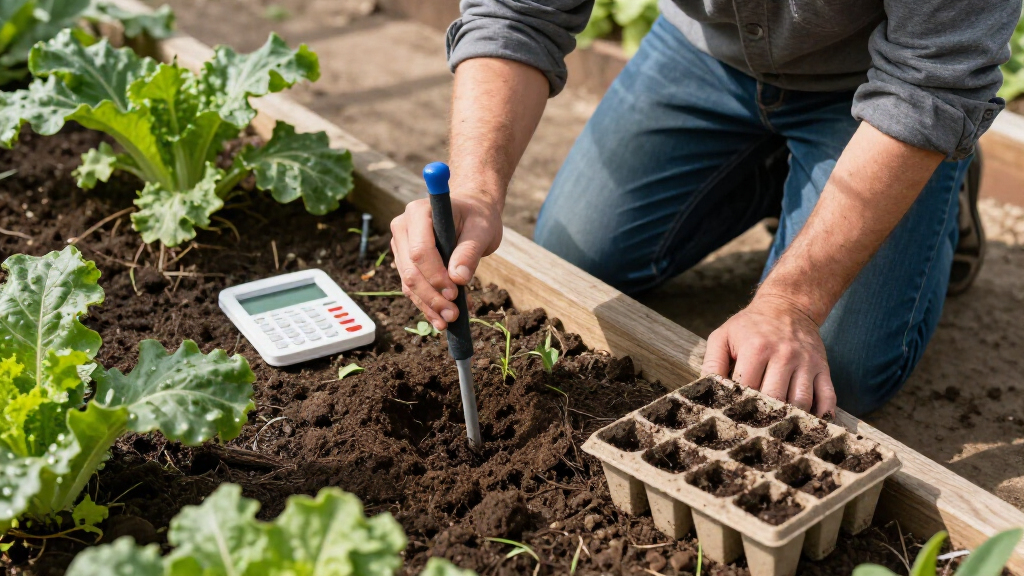

The best garden soil testing kits depend on whether you need reliable nutrient results, a quick pH check, or readings you can take while tending plants. I rank the LaMotte Model EL Turf and Garden Soil Test Kit as best overall for hands-on testing across key soil measures; the Soil Savvy Professional-Grade Soil Test Kit stands out for lab analysis, while the SONKIR MS02 offers a simple way to check moisture, light, and pH. The main tradeoff is between the broader, more actionable results of chemical or lab tests and the speed of probe meters, which do not provide the same nutrient detail. Test counts, included measurements, and how results are interpreted also vary widely. Read on for the full comparison and guidance on choosing a kit that fits your garden and testing habits.

Get garden gear delivered free — and shop member deals
- Fast, free delivery on millions of items
- Access to Prime Big Deal Days deals on October 6–7
- Prime Video, Amazon Music and more included
Complete the kit


Key Takeaways
- The roundup splits into three useful types: chemical kits measure selected nutrients and pH, lab kits provide more detailed analysis, and probe meters prioritize quick readings such as moisture or light.
- LaMotte Model EL leads for broad home testing: it is the most balanced pick for gardeners who want hands-on readings across soil measures rather than a meter-only snapshot.
- Soil Savvy and MySoil serve a different purpose: lab-based analysis with recommendations can be more informative for soil improvement, but it is less immediate than testing at home.
- Large test counts do not automatically mean broader results: compare which measurements a kit covers before choosing based on the number of tests alone.
- Probe meters are best for routine checks, not nutrient planning: the SONKIR and Luster Leaf 1818 add convenience, while chemical or lab tests are better suited to diagnosing fertility needs.
| LaMotte Model EL Turf and Garden Soil Test Kit (5679-01) |  | Best for Detailed Nutrient Testing | Brand: LaMotte | Model: 5679-01 | Nutrient tests: 15 each for nitrogen, phosphorus, and potassium | VIEW LATEST PRICE | See Our Full Breakdown |
| SONKIR MS02 3-in-1 Soil Moisture, Light, and pH Meter |  | Best for Quick Garden Checks | Model: MS02 | Manufacturer: Sonkir | Functions: Soil moisture, pH, and sunlight | VIEW LATEST PRICE | See Our Full Breakdown |
| Luster Leaf 1818 Rapitest 4-in-1 Soil pH, Moisture, Fertility & Light Tester |  | Best for All-in-One Soil Monitoring | Model: 1818 | Functions: Soil pH, moisture, fertility, and light | Probes: Three stainless-steel probes | VIEW LATEST PRICE | See Our Full Breakdown |
| Rapitest Soil Test Kit |  | Best for Beginner Nutrient Testing | Brand: Rapitest | Test types: pH, nitrogen, phosphorus, and potash | Number of tests: 20 | VIEW LATEST PRICE | See Our Full Breakdown |
| Soil Test Kit 3-in-1 Soil Moisture, pH & Fertility Tester – Sleek White |  | Best Compact Pick for Indoor and Outdoor Plants | Functions: Moisture, pH, and fertility | Power: No battery required | Probe depth requirement: At least 4 inches, or more than two-thirds insertion | VIEW LATEST PRICE | See Our Full Breakdown |
| Soil Test Kit – 140 Tests, pH, Nitrogen, Phosphorus, Potassium & Ammonia |  | Best for Broad Nutrient Coverage | Tests included: Up to 140 total, approximately 40 per parameter | Parameters: pH, nitrogen, phosphorus, potassium and ammonia | Test method: Liquid tests | VIEW LATEST PRICE | See Our Full Breakdown |
| 4-in-1 Soil Test Kit – 40 Tests for pH, Nitrogen, Phosphorus & Potassium – Ideal for Gardens, Lawns, and Indoor Plants |  | Best for First-Time Soil Testing | Tests included: 40 total, ten per parameter | Parameters: pH, nitrogen, phosphorus and potassium | Suitable for: Gardens, lawns and indoor plants | VIEW LATEST PRICE | See Our Full Breakdown |
| Rapitest Soil Test Kit for Gardens, Vegetables, Flowers & Lawns |  | Best for Plant-Specific pH Guidance | Tests included: 40 total, ten each for pH, nitrogen, phosphorus and potash | Parameters: pH, nitrogen, phosphorus and potash | Test system: Capsules with color comparators | VIEW LATEST PRICE | See Our Full Breakdown |
| Premium Soil Test Kit – 40 Complete Tests for Lawns, Gardens, and Vegetables (Ammonia Nitrogen, pH, Phosphorus, Potassium) |  | Best for a Ready-to-Use Complete Set | Tests included: 40 total: ten pH, ten nitrogen, ten phosphorus and ten potassium | Listed parameters: pH, nitrogen, phosphorus and potassium | Components: Two bottles of test strips, two test tubes, 40 tablets, dropper, stick, color card and quick guide | VIEW LATEST PRICE | See Our Full Breakdown |
| Garden Tutor Soil pH Test Kit – 100 Strips with AI-Powered Web Reader |  | Best for Frequent pH Checks | Measurement: Soil pH | pH range: 3.5–9 | Strips included: 100 | VIEW LATEST PRICE | See Our Full Breakdown |
| Soil Savvy Professional-Grade Soil Test Kit |  | Best for Detailed Nutrient Guidance | Brand: Soil Savvy | Test method: Mail-in soil sample analysis | Nutrients measured: 14 nutrients, including nitrogen, phosphorus, and potassium | VIEW LATEST PRICE | See Our Full Breakdown |
| MySoil Soil Test Kit – Complete Nutrient and pH Analysis with Custom Recommendations |  | Best Mail-In Kit for Organic or Conventional Plans | Brand: My Soil | Manufacturer: Predictive Nutrient Solutions, Inc. | Nutrients measured: 13 plant-available nutrients | VIEW LATEST PRICE | See Our Full Breakdown |
| AAwipes 4-in-1 Soil Test Kit (pH, N, P, K) – 40 Tests |  | Best for Repeated At-Home Checks | Test types: pH, nitrogen, phosphorus, and potassium | Total tests: 40 | Tests per parameter: 10 | VIEW LATEST PRICE | See Our Full Breakdown |
| Moisture Meter for Plants 7-in-1 Digital Soil Tester Kit |  | Best for Fast Soil Condition Checks | Functions: Moisture, pH, temperature, light intensity, EC, and TDS | Display: Large LCD with white backlight | Power: Four AAA batteries, not included | VIEW LATEST PRICE | See Our Full Breakdown |
| Soil Test Kit 4-in-1 for Lawns & Gardens – 40 Tests (pH, Nitrogen, Phosphorus, Potassium) – Easy Soil Testing Kit for Vegetable Garden, Lawn & Plants |  | Best Straightforward Kit for Lawn and Garden Sampling | Manufacturer: AKSBTEC | Model: 4-in-1 Test | Measurements: pH, nitrogen, phosphorus, and potassium | VIEW LATEST PRICE | See Our Full Breakdown |
More Details on Our Top Picks
LaMotte Model EL Turf and Garden Soil Test Kit (5679-01)
I’d choose the LaMotte Model EL when the goal is to check nutrient levels, not just get a quick general read on soil conditions. It tests nitrogen, phosphorus, potassium, and pH, with 15 tests for each nutrient and 30 for pH. Its manuals, laminated color charts, and lime and fertilizer guidance help turn test results into possible next steps, giving it more interpretive support than the simpler Rapitest Soil Test Kit. The tradeoff is a more hands-on process: results depend on matching colors by eye, which can leave room for judgment. Test quantities are also finite, particularly for nutrient checks. This is a better fit for gardeners who want several targeted tests and guidance than for anyone who prefers a fast probe reading.
Pros:- Measures nitrogen, phosphorus, potassium, and pH rather than relying on a single general-purpose reading.
- Includes 30 pH tests and 15 tests for each of the three nutrients.
- Laminated color charts and handbooks support interpretation and lime or fertilizer decisions.
- Rapid test procedures offer a structured alternative to interpreting probe-meter readings.
Cons:- Manual color matching can make results subjective.
- The 15-test allotment for each nutrient may run short when sampling many garden areas.
- Requires a test-and-interpretation process rather than providing an immediate probe reading.
Best for: Gardeners and students who want to test the main soil nutrients and pH across several beds and use written guidance to interpret results.
Not ideal for: Gardeners who want a quick, low-effort reading or need repeated nutrient tests throughout a large property; color matching is subjective and the kit has 15 tests per nutrient.
- Brand:LaMotte
- Model:5679-01
- Nutrient tests:15 each for nitrogen, phosphorus, and potassium
- pH tests:30
- Included materials:Garden Guide Manual, LaMotte Soil Handbook, and laminated color charts
- Test methods:Rapid test procedures with color-chart comparison
Our verdict“Choose the LaMotte Model EL if nutrient-specific testing and interpretive guidance matter more than quick, effortless readings.”
SONKIR MS02 3-in-1 Soil Moisture, Light, and pH Meter
The SONKIR MS02 suits gardeners who want to check moisture, soil pH, and sunlight while moving around the garden, without preparing separate samples. Its three functions and battery-free operation make it a portable routine-care tool, unlike the LaMotte Model EL, which tests nitrogen, phosphorus, and potassium with a more involved kit. That difference matters: the MS02 can help flag a dry spot or a planting area’s light conditions, but it does not test soil nutrients. Its reading also depends on suitable soil contact; the indicator may not move when the soil is too dry, and its pH function is for soil rather than liquids. I’d treat this as a convenient screening meter, not a substitute for a nutrient test kit when diagnosing poor growth.
Pros:- Combines soil moisture, pH, and sunlight checks in one portable tool.
- Requires no batteries.
- At 2.89 ounces, it is easy to carry between indoor plants and garden beds.
- Supports quick spot checks without the sample-preparation steps of the LaMotte Model EL.
Cons:- Does not measure nitrogen, phosphorus, or potassium.
- The indicator may not move when soil is too dry.
- Its pH function is intended for soil, not liquids.
Best for: Home gardeners who want a lightweight, battery-free way to check soil moisture, pH, and sunlight around houseplants, beds, or lawns.
Not ideal for: Growers troubleshooting nutrient deficiencies or seeking detailed nitrogen, phosphorus, and potassium results; this meter does not test those nutrients.
- Model:MS02
- Manufacturer:Sonkir
- Functions:Soil moisture, pH, and sunlight
- Power:No battery required
- Dimensions:11.5 x 2 x 1.5 inches
- Weight:2.89 ounces
- Color:Green
Our verdict“Pick the SONKIR MS02 for convenient moisture, light, and soil-pH spot checks, but choose a chemical kit if nutrient levels are your concern.”
Luster Leaf 1818 Rapitest 4-in-1 Soil pH, Moisture, Fertility & Light Tester
Where the SONKIR MS02 checks moisture, light, and pH, the Luster Leaf 1818 Rapitest adds a fertility reading, covering four useful indicators with a single battery-free meter. That wider range can help gardeners monitor day-to-day growing conditions without buying a separate light meter or moisture checker. Its three stainless-steel probes and easy-to-read gauges make it a different kind of choice from the Rapitest Soil Test Kit: this is a reusable meter for quick readings, while the kit tests named nutrients and pH through a capsule-and-color process. The limitation is that a fertility reading is not the same as individual nitrogen, phosphorus, and potassium results. It is also designed for soil, so growers using hydroponic or other non-soil systems should skip it.
Pros:- Checks four indicators: soil pH, moisture, fertility, and light.
- Battery-free operation keeps it ready for routine garden checks.
- Three stainless-steel probes provide a reusable alternative to single-use test materials.
- Compact format and gauges support quick readings across soil-grown plants.
Cons:- The fertility reading does not provide separate nitrogen, phosphorus, and potassium results like the Rapitest Soil Test Kit.
- Designed for soil use, not hydroponic or other non-soil applications.
- Readings from a meter offer less nutrient-specific guidance than a chemical test kit.
Best for: Gardeners managing soil-grown houseplants, beds, or containers who want one reusable meter for moisture, light, pH, and a general fertility reading.
Not ideal for: Hydroponic growers or gardeners who need separate nitrogen, phosphorus, and potassium results to guide specific fertilizer changes.
- Model:1818
- Functions:Soil pH, moisture, fertility, and light
- Probes:Three stainless-steel probes
- Power:No batteries required
- Mounting type:Tabletop
- Weight:3.2 ounces
- Color:White
- Upper temperature range:122 °F
Our verdict“Choose the Luster Leaf 1818 for broad, reusable monitoring of soil-grown plants, but use a nutrient-specific kit when you need to diagnose fertilizer needs.”
Rapitest Soil Test Kit
The Rapitest Soil Test Kit is a straightforward way for a new gardener to check pH and the three main nutrients without relying on a probe meter. Its capsule system and plant preference guide help connect results to the needs of more than 450 plants, making it approachable for someone deciding what to grow or whether to amend a bed. Compared with the LaMotte Model EL, it has a smaller total allowance of 20 tests and less included interpretive material, but its capsule format keeps the process focused. Both kits rely on visual color comparison, so neither removes all judgment from reading results. I’d pick Rapitest for occasional home testing; gardeners who want more pH checks, manuals, or a larger nutrient-test allotment should look at the LaMotte instead.
Pros:- Tests pH, nitrogen, phosphorus, and potash in one kit.
- Capsule-based procedure is suited to occasional at-home testing.
- Plant preference guide lists pH preferences for more than 450 plants.
- Provides nutrient-specific results, unlike the Luster Leaf 1818 meter’s general fertility reading.
Cons:- Includes 20 tests total, which limits repeated testing across many garden areas.
- Manual color comparison can make interpretation subjective.
- Provides less pH test capacity and less instructional material than the LaMotte Model EL.
Best for: New home gardeners who want to test pH, nitrogen, phosphorus, and potash and refer to a plant guide when planning beds.
Not ideal for: Gardeners who need frequent tests across many plots or want more pH tests and extended instructional material than a 20-test kit provides.
- Brand:Rapitest
- Test types:pH, nitrogen, phosphorus, and potash
- Number of tests:20
- Test format:Capsule system with color comparators
- Included guide:Soil pH preference list for more than 450 plants
- Origin:Designed and assembled in the USA
Our verdict“Choose Rapitest for occasional, beginner-friendly checks of pH and major nutrients backed by a broad plant guide.”
Soil Test Kit 3-in-1 Soil Moisture, pH & Fertility Tester – Sleek White
This single-probe, battery-free meter is aimed at gardeners who want simple moisture, pH, and fertility checks in one portable device. Its large dial is intended to make readings easy to see, whether checking a houseplant or moving between outdoor beds. Compared with the SONKIR MS02, it trades sunlight measurement for a fertility reading; compared with the Luster Leaf 1818, it has a stated single-probe design rather than three probes. Neither approach gives the separate nutrient measurements available from the LaMotte Model EL or Rapitest kit. The main practical limitation is the insertion requirement: the probe needs at least four inches of depth, which can be awkward in shallow pots or compacted soil. I’d favor it for deeper soil and quick general checks, not for precise nutrient diagnosis.
Pros:- Combines moisture, pH, and fertility readings in one device.
- Requires no batteries.
- Large dial is designed for clear, quick reading.
- Portable single-probe format can be carried between indoor plants and outdoor garden areas.
Cons:- Requires at least four inches of probe depth, limiting use in shallow soil.
- Does not provide separate nitrogen, phosphorus, and potassium measurements like the Rapitest Soil Test Kit.
- Cannot be used to test water or other liquids.
Best for: Plant owners and gardeners with soil deep enough for a four-inch insertion who want a portable meter for routine moisture, pH, and general fertility checks.
Not ideal for: People testing shallow trays, small pots, or hard-to-penetrate soil, and gardeners who need separate nitrogen, phosphorus, and potassium results.
- Functions:Moisture, pH, and fertility
- Power:No battery required
- Probe depth requirement:At least 4 inches, or more than two-thirds insertion
- Probe design:Single probe
- Display:Large dial
- Color:White
- Use:Indoor and outdoor soil
Our verdict“Pick this meter for quick general checks in soil deep enough to accept its probe, but use a chemical kit for specific nutrient results.”
Soil Test Kit – 140 Tests, pH, Nitrogen, Phosphorus, Potassium & Ammonia
For gardeners who want more than the standard pH, nitrogen, phosphorus and potassium check, the Dewilde Soil Test Kit adds ammonia testing and provides up to 140 liquid tests. That extra parameter can help round out a fertility check, while the larger test supply suits repeated sampling better than the 40-test Rapitest Soil Test Kit. It also offers fertilizer recommendations, making results more actionable for growers adjusting soil rather than simply tracking it.
The tradeoff is that the 140 tests are divided among five parameters, so each has about 40 tests—not 140 tests for every measurement. Liquid testing also calls for careful technique; rushed handling can undermine the accuracy the kit is meant to provide. Choose Dewilde for broader, recurring nutrient checks, but skip it if you want a simpler color-comparator routine or laboratory-level analysis.
Pros:- Tests pH, nitrogen, phosphorus, potassium and ammonia
- Provides up to 140 tests, with about 40 for each parameter
- Includes customized fertilizer recommendations
- Offers at-home results without sending samples to a laboratory
Cons:- The 140 total tests are split across five parameters, limiting repeat tests for any one measurement
- Careful handling and technique are needed for reliable results
Best for: Gardeners and small-scale growers who want repeated at-home checks of pH and several nutrients, including ammonia, before adjusting fertilizer.
Not ideal for: People who want the simplest possible test routine or need lab-grade results; liquid tests require careful handling, and the per-parameter supply is limited.
- Tests included:Up to 140 total, approximately 40 per parameter
- Parameters:pH, nitrogen, phosphorus, potassium and ammonia
- Test method:Liquid tests
- Dimensions:3 x 1 x 4 inches
- Item weight:3.52 ounces
- Manufacturer:Dewilde Trading Co
- Model number:DTC-00037
Our verdict“Choose Dewilde if you want broad, repeatable nutrient screening at home, including ammonia, and are comfortable following a careful liquid-test procedure.”
4-in-1 Soil Test Kit – 40 Tests for pH, Nitrogen, Phosphorus & Potassium – Ideal for Gardens, Lawns, and Indoor Plants
The SaySummer 4-in-1 kit is aimed at gardeners who want a guided introduction to soil testing without sorting through extra measurements. It checks pH, nitrogen, phosphorus and potassium, and its instructions and included tools are described as beginner-friendly. With ten tests per parameter, it can support a small garden’s seasonal checks, though larger plots may use up a category quickly.
Compared with the Rapitest Soil Test Kit, SaySummer offers the same four core measurements and a similar total number of tests, while Rapitest adds a plant pH guide covering more than 400 species. SaySummer’s stated advantage is its accessible setup for indoor and outdoor use; its limitation is that the results are less precise than professional laboratory analysis. I’d pick it for a first home garden, not for detailed diagnosis across a large property.
Pros:- Checks pH, nitrogen, phosphorus and potassium in one kit
- Includes ten tests for each parameter
- Instructions and tools are intended to make setup approachable for beginners
- Suitable for indoor and outdoor plant care
Cons:- Ten tests per parameter may not stretch across a large garden
- Results are less precise than professional laboratory analysis
Best for: New gardeners with a modest lawn, vegetable patch or collection of houseplants who want straightforward seasonal checks of four basic soil measures.
Not ideal for: Owners of large properties who need many repeat tests, or growers who require laboratory-grade precision for diagnosing soil problems.
- Tests included:40 total, ten per parameter
- Parameters:pH, nitrogen, phosphorus and potassium
- Suitable for:Gardens, lawns and indoor plants
- Package dimensions:6.89 x 4.88 x 2.05 inches
- Item weight:6.7 ounces
- Manufacturer:SaySummer
Our verdict“Choose SaySummer for a beginner-friendly first check of a small garden, but look to a lab or a higher-capacity kit for extensive or precision-focused testing.”
Rapitest Soil Test Kit for Gardens, Vegetables, Flowers & Lawns
Rapitest earns its place for gardeners who need help connecting a soil result to the plants they grow. Alongside 40 capsule-based tests for pH, nitrogen, phosphorus and potash, it includes instructions and a pH preference guide for more than 400 plant species. That reference makes the kit more useful for choosing where to plant or whether a pH adjustment is worth pursuing than a basic test set with no plant guidance.
Its four measurements and ten tests per category resemble the SaySummer 4-in-1 kit, but Rapitest’s plant guide is the clearer differentiator. The color-comparator system keeps the process straightforward, though readings can be affected by lighting and may not match laboratory precision. The 40-test supply also favors a home garden over repeated, property-wide sampling. Choose it for practical plant-specific context; skip it if your main need is high-volume testing.
Pros:- Tests pH, nitrogen, phosphorus and potash
- Capsule system and color comparators support at-home use
- Plant pH guide covers more than 400 species
- Compact size and no battery requirement make storage simple
Cons:- Forty tests total may run short for large gardens
- Color readings can be affected by lighting
- At-home color comparisons are less precise than laboratory analysis
Best for: Home gardeners choosing soil conditions for a mix of vegetables, flowers and other plants who want a reference for species-specific pH preferences.
Not ideal for: Gardeners testing large areas repeatedly, or anyone who needs highly precise results that are not dependent on visually matching colors.
- Tests included:40 total, ten each for pH, nitrogen, phosphorus and potash
- Parameters:pH, nitrogen, phosphorus and potash
- Test system:Capsules with color comparators
- Plant guide:pH preference guide covering more than 400 species
- Dimensions:5 x 5.91 inches
- Weight:4 ounces
- Battery required:No
Our verdict“Choose Rapitest if a broad plant pH guide will help you interpret results, but choose a higher-capacity option for frequent testing across a large plot.”
Premium Soil Test Kit – 40 Complete Tests for Lawns, Gardens, and Vegetables (Ammonia Nitrogen, pH, Phosphorus, Potassium)
This kit is a practical choice for gardeners who want the testing tools gathered in one package. It includes 40 tests—ten each for pH, nitrogen, phosphorus and potassium—along with test strips, tablets, tubes, a dropper, a stick, a color card and a quick guide. That supplied toolkit is a useful distinction from the Dewilde kit, which offers more total tests and adds ammonia but requires careful liquid-test technique.
The tradeoff is capacity: despite its “Premium” name, this remains a 40-test kit, so extensive sampling will call for another purchase. The description lists ammonia nitrogen in the product title, while the stated test breakdown identifies nitrogen, pH, phosphorus and potassium; buyers should not assume a separate ammonia measurement is included. Its broad indoor-and-outdoor suitability makes it flexible, but the limited test count makes it better for routine checks than a large property’s soil map.
Pros:- Tests pH, nitrogen, phosphorus and potassium
- Includes ten tests per listed parameter
- Supplies include tubes, dropper, stick, tablets, strips, color card and quick guide
- Suitable for lawns, gardens, vegetables and indoor plants
Cons:- Forty tests may be insufficient for extensive or frequent sampling
- The listed test breakdown does not specify a separate ammonia test
- Additional kits are needed once the included tests are used
Best for: Gardeners who want a bundled set of test supplies for occasional checks across a lawn, vegetable beds and houseplants.
Not ideal for: People who need high-volume testing or specifically require a separately identified ammonia test; the listed breakdown covers four parameters and totals 40 tests.
- Tests included:40 total: ten pH, ten nitrogen, ten phosphorus and ten potassium
- Listed parameters:pH, nitrogen, phosphorus and potassium
- Components:Two bottles of test strips, two test tubes, 40 tablets, dropper, stick, color card and quick guide
- Suitable for:Lawns, gardens, vegetables, houseplants, flowers, herbs, trees and shrubs
- Test count per parameter:Ten
- Test format:Strips and tablets
Our verdict“Choose this kit for an all-in-one set of supplies and occasional four-parameter checks, but verify the nitrogen measurement details if ammonia testing is a requirement.”
Garden Tutor Soil pH Test Kit – 100 Strips with AI-Powered Web Reader
Garden Tutor takes a different approach from the nutrient kits in this roundup: it focuses on soil pH rather than N-P-K fertility. Its 100 three-pad strips cover pH 3.5–9 and are designed to produce a result in about 60 seconds. For gardeners checking many beds or tracking pH before adjusting soil, that larger strip supply is a better fit than the 40-test Rapitest kit, but it cannot tell you whether nitrogen, phosphorus or potassium levels are adequate.
The web-based reader can interpret a photo of the strip without an app download, and the included handbook and lime-and-sulfur estimator connect readings to possible adjustments. This makes the kit particularly useful for pH-focused work, not a complete soil fertility assessment. The reader also depends on internet access, so it is less convenient where connectivity is unreliable. Choose it alongside a nutrient test if pH is your main question.
Pros:- Includes 100 strips for repeated pH checks
- Covers a pH range of 3.5–9
- Web-based reader returns digital readings without requiring an app download
- Handbook and lime-and-sulfur estimator help relate results to soil adjustments
Cons:- Tests pH only, not nitrogen, phosphorus or potassium
- Web-based reader requires internet access
- Photo-based digital reading depends on using the reader template and uploading a strip image
Best for: Gardeners who frequently check pH across multiple beds or want guidance for deciding whether lime or sulfur may be appropriate.
Not ideal for: Buyers seeking a single kit for pH plus nitrogen, phosphorus and potassium, or gardeners without reliable internet access for the web reader.
- Measurement:Soil pH
- pH range:3.5–9
- Strips included:100
- Result time:Approximately 60 seconds
- Reader technology:Web-based AI reader; no app required
- Included items:Test strips, full-color handbook, AI reader template and lime-and-sulfur estimator
Our verdict“Choose Garden Tutor for frequent, guided pH monitoring, but pair it with an N-P-K kit if you need a fuller picture of soil fertility.”
Soil Savvy Professional-Grade Soil Test Kit
I’d choose the Soil Savvy Professional-Grade Soil Test Kit when a garden’s fertilizer plan needs more than a quick at-home estimate. Its lab analysis covers soil pH and 14 nutrients, including nitrogen, phosphorus, and potassium, then turns the findings into tailored fertilizer recommendations. That broader nutrient picture can help gardeners avoid adding amendments their soil does not need. Compared with the MySoil Soil Test Kit, Soil Savvy tests one more nutrient, while both rely on sending in a sample rather than giving instant readings. The tradeoff is time: this is not the pick for someone who wants to check a bed while planting. It makes more sense for planned lawn or garden amendments, where detailed results matter more than immediate feedback.
Pros:- Measures soil pH and 14 nutrients, including N, P, and K
- Provides fertilizer recommendations tailored to soil conditions
- Can help limit unnecessary nutrient applications
- Includes the components and instructions needed to prepare a sample
Cons:- Requires mailing a soil sample, so results are not immediate
- Less suited to frequent spot checks than reusable on-site testers
Best for: Gardeners, turf managers, and landscapers who want a broad lab-based nutrient analysis to guide fertilizer choices.
Not ideal for: Gardeners who need immediate on-site readings or want to check soil frequently without mailing samples.
- Brand:Soil Savvy
- Test method:Mail-in soil sample analysis
- Nutrients measured:14 nutrients, including nitrogen, phosphorus, and potassium
- Additional measurement:Soil pH
- Recommendations:Tailored fertilizer recommendations
- Intended users:Home gardeners, turf managers, and landscapers
- Kit contents:Components and instructions for preparing a sample
Our verdict“Choose Soil Savvy if you want a detailed mail-in analysis and tailored fertilizer guidance rather than instant home readings.”
MySoil Soil Test Kit – Complete Nutrient and pH Analysis with Custom Recommendations
The MySoil Soil Test Kit suits buyers who want laboratory results paired with a choice of organic or non-organic fertilizer guidance. It measures 13 plant-available nutrients, including nitrogen, and includes pH analysis; the stated results window is 6–8 days. That makes it a practical fit for gardeners who can plan ahead but do not want to interpret nutrient data alone. Compared with the Soil Savvy Professional-Grade Soil Test Kit, MySoil measures one fewer nutrient, but its recommendations explicitly cover both organic and conventional products. The main limitations are shared by mail-in kits: sample shipping delays feedback, and this package is for one analysis. Choose it for a deliberate seasonal check, not repeated testing across many beds.
Pros:- Analyzes 13 plant-available nutrients and soil pH
- Offers custom organic and non-organic fertilizer recommendations
- Provides a stated results window of 6–8 days
- Includes a prepaid envelope, instructions, and customer support
Cons:- Mailing the sample adds time before results arrive
- One kit covers a single analysis
- Measures one fewer nutrient than the Soil Savvy kit
Best for: Home gardeners who want lab-tested soil results and fertilizer advice that can match either organic or conventional gardening practices.
Not ideal for: Gardeners who need multiple separate analyses from one kit or want instant readings without mailing a sample.
- Brand:My Soil
- Manufacturer:Predictive Nutrient Solutions, Inc.
- Nutrients measured:13 plant-available nutrients
- Additional measurement:Soil pH
- Result time:6–8 days
- Fertilizer recommendations:Custom organic and non-organic recommendations
- Kit quantity:One analysis
- Mailing materials:Prepaid envelope
Our verdict“Pick MySoil for a single lab analysis when you want fertilizer recommendations suited to either organic or conventional inputs.”
AAwipes 4-in-1 Soil Test Kit (pH, N, P, K) – 40 Tests
For gardeners who want to compare several beds or revisit soil through the growing season, the AAwipes 4-in-1 Soil Test Kit offers 40 total tests across pH, nitrogen, phosphorus, and potassium. Its 10 tests per parameter support repeated home checks, and the included tubes, tablets, dropper, stick, and color card provide the basic tools to get started. Unlike the lab-based MySoil Soil Test Kit, AAwipes keeps testing at home and avoids mailing a sample, but it is designed for preliminary guidance rather than professional quantitative analysis. The tradeoff is that color-card results are less suited to decisions that require lab-level detail, and the test supply is finite. I’d favor it for routine garden comparisons, not diagnosis requiring high precision.
Pros:- Tests pH, nitrogen, phosphorus, and potassium
- Provides 40 total tests, with 10 per parameter
- Includes test strips, tubes, tablets, a dropper, a stick, and a color card
- Can be used for indoor and outdoor plants
Cons:- Results are intended for preliminary home use, not professional quantitative analysis
- The kit is limited to 40 tests
- Color-card interpretation may not provide the precision of lab analysis
Best for: Home gardeners who want to check several outdoor beds, houseplants, or lawn areas repeatedly with one kit.
Not ideal for: Growers who need professional quantitative analysis, detailed nutrient coverage beyond NPK, or more than 40 tests.
- Test types:pH, nitrogen, phosphorus, and potassium
- Total tests:40
- Tests per parameter:10
- Included accessories:Two bottles of test strips, two test tubes, 40 tablets, dropper, stick, and color card
- Application:Indoor and outdoor gardening
- Suitable plants:Houseplants, flowers, herbs, trees, shrubs, vegetables, and lawns
- Result format:Color-card comparison
Our verdict“Choose AAwipes for repeated at-home pH and NPK checks, but use a mail-in lab kit when detailed quantitative results matter.”
Moisture Meter for Plants 7-in-1 Digital Soil Tester Kit
The 7-in-1 Digital Soil Tester is the lineup’s pick for gardeners who want quick readings while tending plants, rather than a full nutrient profile. Its probe reports moisture, pH, temperature, light intensity, EC, and TDS on a backlit LCD, with readings available in seconds. Those extra measurements can help with day-to-day care, but this is not a substitute for an NPK test: unlike the AAwipes 4-in-1 Soil Test Kit, it does not directly measure nitrogen, phosphorus, or potassium. Its 10 cm probe also needs soil it can enter, making hard or very dry ground a poor match. Batteries are not included, and the tester cannot measure liquids directly. I’d choose it for quick condition checks, not fertilizer decisions based on nutrient levels.
Pros:- Combines moisture, pH, temperature, light, EC, and TDS readings
- Displays readings on a large backlit LCD
- Returns readings within seconds
- Includes one-button operation and a low-battery warning
Cons:- Does not directly test nitrogen, phosphorus, or potassium
- Requires four AAA batteries, which are not included
- Probe may be difficult to insert into hard or very dry soil and cannot measure liquids directly
Best for: Indoor plant owners and gardeners who want fast moisture, pH, temperature, light, EC, and TDS readings during routine care.
Not ideal for: Gardeners seeking direct NPK nutrient results, liquid measurements, or readings in compacted, very hard, or very dry soil.
- Functions:Moisture, pH, temperature, light intensity, EC, and TDS
- Display:Large LCD with white backlight
- Power:Four AAA batteries, not included
- Probe length:10 cm
- Readout time:Seconds
- Operation:One-button operation
- Battery feature:Low-battery warning
- Liquid measurement:Cannot be used directly to measure liquids
Our verdict“Choose this digital tester for fast, broad plant-condition checks, but choose AAwipes or a lab kit for direct soil nutrient analysis.”
Soil Test Kit 4-in-1 for Lawns & Gardens – 40 Tests (pH, Nitrogen, Phosphorus, Potassium) – Easy Soil Testing Kit for Vegetable Garden, Lawn & Plants
The AKSBTEC 4-in-1 Soil Test Kit takes a direct route to home soil checks: it covers pH and the three main nutrients, with 40 tests split evenly across the four measurements. The included tools and color chart are aimed at making the process accessible without specialist equipment. Compared with the similar AAwipes 4-in-1 Soil Test Kit, it offers the same stated total and per-parameter test counts, so the product details do not establish a clear capacity advantage; AKSBTEC’s listed compact dimensions may appeal to buyers who want a small kit to store. Its main compromise is shared by color-based home kits: readings are subjective and are not presented as lab-level quantitative analysis. The finite supply also limits ongoing monitoring. I’d use it for basic checks across a lawn or vegetable garden, not fine-grained nutrient diagnosis.
Pros:- Tests pH, nitrogen, phosphorus, and potassium
- Includes 40 tests, with 10 per nutrient
- Provides testing tools and an easy-to-read color chart
- Compact listed dimensions make storage straightforward
Cons:- Limited to 40 tests before a refill or replacement is needed
- Color-chart results can be subjective
- Does not provide the broader nutrient analysis of the Soil Savvy Professional-Grade kit
Best for: Beginning or experienced home gardeners who want a compact kit for occasional pH and NPK checks across lawn and garden areas.
Not ideal for: Gardeners who need lab-grade precision, detailed nutrient analysis beyond NPK, or more than 40 total tests.
- Manufacturer:AKSBTEC
- Model:4-in-1 Test
- Measurements:pH, nitrogen, phosphorus, and potassium
- Total tests:40
- Tests per nutrient:10
- Result method:Color-chart comparison
- Dimensions:4.8 x 2 x 7.1 inches
- Weight:7.8 ounces
Our verdict“Choose AKSBTEC for compact, occasional home pH and NPK checks, and choose a mail-in lab kit when accuracy and nutrient detail take priority.”
How We Picked
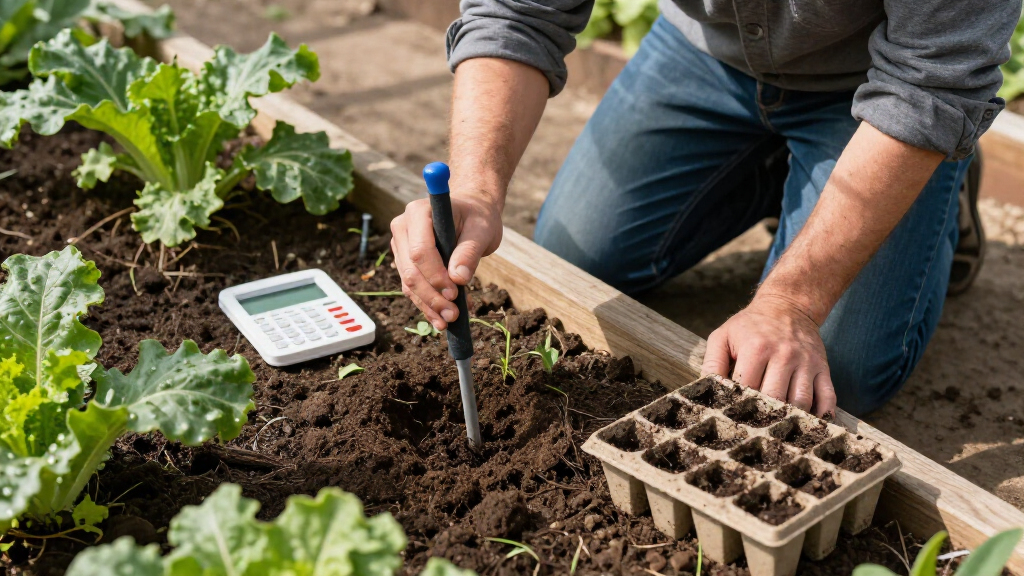
I compared these 15 options by the decisions garden soil tests can actually support: which soil properties they measure, how their testing method fits a home gardener’s routine, and whether the results can help guide the next step. I gave more weight to kits that cover meaningful soil needs—such as pH and nutrient levels—than to meters that read moisture, light, or pH without a comparable nutrient analysis. I also considered ease of use, the number and type of tests included, result interpretation, and whether a product appears suited to repeated checks or a more complete soil assessment.
The ranking reflects usefulness for soil testing first, then convenience and specialization. That puts the LaMotte Model EL ahead as a balanced hands-on option, while Soil Savvy and MySoil rank for buyers who value lab analysis and guidance. Probe meters and strip-based pH tools have their place, but their narrower readings keep them from leading a roundup focused on soil testing as a whole. Kits with similar test formats are separated by their stated scope and intended use; a high test count alone does not move a product above one with more relevant coverage.
Factors to Consider When Choosing Best Garden Soil Testing Kits
Before choosing a kit, decide what you want the result to change: a watering routine, a pH adjustment, or a fertilizing plan. The right format depends on that goal, how often you expect to test, and how much interpretation you want to do yourself.
Match the Test to the Garden Problem
Start with the question you are trying to answer, not the product’s list of features. If plants are wilting, a moisture meter may help you distinguish dry soil from another issue, but it cannot tell you whether nutrient levels are responsible. For a fertilizer decision, look for a kit that reports relevant nutrients such as nitrogen, phosphorus, and potassium. A pH-only strip or meter can help when acidity is your main concern, but it leaves fertility unanswered. Testing every available measure is not automatically useful if you have no plan to act on the results. A focused kit can be a better choice when you already know the garden’s main challenge.
Understand Home Tests Versus Lab Analysis
Home color-change kits and probe meters favor speed and repeat checks, while lab kits generally suit gardeners seeking a more detailed assessment and recommendations. These approaches answer different questions, so a lab option is not automatically the right fit for routine moisture checks, and a quick meter is not a substitute for nutrient analysis. Think about whether you prefer to run the test yourself or collect a sample and wait for results. If you are planning a major soil amendment, more detailed analysis may help prevent unnecessary additions. For quick seasonal monitoring, a simpler method may be easier to use consistently.
Check What “Test Count” Actually Means
A kit advertising dozens or hundreds of tests may offer repeated tests for a limited set of measurements rather than broad coverage of many soil factors. Read the measurement list and confirm what each test can assess before comparing counts. Repeated tests are useful if you manage several beds or want to check changes over time, but they do not add new kinds of information. A smaller kit with the right measurements may be more useful than a larger one focused on tests you will not use. Also check whether the listed count refers to total individual readings or complete soil profiles.
Consider How You Will Interpret Results
Getting a reading is only helpful if you can connect it to a reasonable next step. Some kits are designed for direct interpretation, while others offer recommendations or rely on color comparisons that can take practice. Before buying, ask whether the guidance fits your plants and soil conditions rather than assuming a single reading translates into a universal fertilizer dose. Avoid adding amendments based on one surprising result without checking the instructions and sampling more than one spot. For gardens with persistent problems or a major planting project, expert interpretation may be worth more than a faster test.
Choose a Method You Will Repeat Correctly
Soil results are easier to compare when you collect samples and follow test steps consistently. A probe may be convenient for frequent checks, but the reading can be affected by where and how it is inserted; a chemical kit asks for more preparation but can test specific properties. Consider whether you can follow the required sample depth, soil preparation, and waiting time each time you test. Testing several areas separately can reveal differences that a single sample from one bed would miss. Pick a format that matches your patience and routine, since an unused high-capability kit provides no practical advantage.
Know When to Pay for More Detail
More advanced testing makes the most sense when the result could change a substantial garden plan, such as renovating a lawn, preparing a large vegetable plot, or correcting recurring growth problems. For a small container garden or routine moisture checks, a simpler tool may answer the immediate question with less effort. Do not pay extra solely for digital features or a long list of claims; focus on the additional measurements or guidance those features provide. A lab service can be worthwhile when you need a clearer nutrient picture, while a multi-test home kit may suit gardeners who want repeat access. Match the extra detail to the value of the decision you are making.
Frequently Asked Questions
Can a moisture and pH meter tell me which fertilizer my garden needs?
No. A moisture and pH meter can help check water conditions and acidity, but it does not provide the nutrient profile offered by a chemical or lab test. That means it cannot, on its own, tell you whether nitrogen, phosphorus, or potassium is low. Use a meter when moisture or pH is the question, and choose a nutrient-testing kit when you need to make a fertilizer decision. If you are unsure what is causing poor growth, testing the relevant factors separately can prevent unnecessary treatment.
Should I choose a home kit or send soil to a lab?
Choose a home kit if quick, repeat testing is more useful to you than a detailed report, and select a lab option if you want a broader analysis or tailored recommendations. Home kits can be convenient for checking selected properties, but their scope depends on the specific product. Lab testing adds a sample-collection and wait-time step, so it is less suited to an immediate moisture check. For a new garden or a persistent soil problem, lab guidance may help you make a more informed amendment plan. For routine monitoring, a home test may fit your needs better.
Are kits with more tests always a better choice?
No. A high test count can mean more repeats of the same measurements rather than a wider soil analysis. Check which properties the kit measures and how many complete tests you can run for each one. Repeats can be useful across multiple beds or over a season, but they do not replace missing nutrient or pH information. Choose based on the questions you expect to ask, not the largest number printed in the product name.
Can I use one soil test result for my whole garden?
That may be misleading if your garden has different beds, fill soil, lawn areas, or planting histories. Soil can vary across a small yard, so sample separately when areas have different plants or persistent differences in growth. Follow the kit’s directions for collecting and preparing samples, and avoid mixing unlike areas into one sample if you want to diagnose a specific bed. A single representative result can be useful for a uniform plot, but it should not be treated as a map of every garden area.
How often should I test garden soil before changing fertilizer or pH?
Test when you have a clear reason, such as preparing a new bed, investigating ongoing growth issues, or checking soil before a planned amendment. Avoid changing fertilizer or pH repeatedly based on small fluctuations or readings taken with inconsistent sampling methods. For comparable results, use the same sampling areas and follow the test instructions each time. After an amendment, allow the interval recommended by the product or a soil professional before retesting. If results are unexpected, repeat the test or seek a more detailed analysis before making a major correction.
Conclusion
For most gardeners who want a balanced, hands-on option, I recommend the LaMotte Model EL as best overall. Choose the Soil Savvy Professional-Grade Soil Test Kit or MySoil Soil Test Kit as best premium picks when lab analysis and recommendations matter more than immediate results. The best value depends on the measurements you need: compare the stated test coverage and repeat count rather than choosing by volume alone. Beginners who want simple routine readings may prefer the SONKIR MS02, while gardeners focused on pH can look at the Garden Tutor strip kit. For specific needs, choose a nutrient kit for fertilizer planning, a lab test for a fuller soil picture, or a probe meter for moisture and light checks—the right choice is the one that answers your actual garden question.
Fall yard work Picks
leaf blowers
As an affiliate, we earn on qualifying purchases.