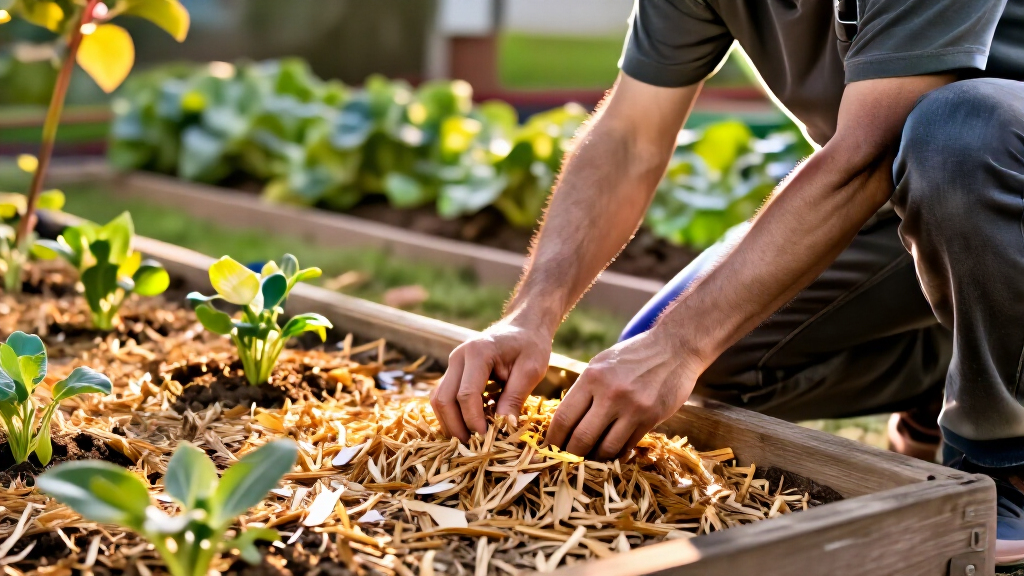

The best mulch alternatives depend on whether you want to protect garden beds, cover paths, support seed germination, or avoid frequent replacement. My best overall pick is Back to the Roots Organic Premium Mulch for buyers seeking a ready-to-spread organic option, while EZ Straw Seeding Mulch with Tack stands out for seeded areas and recycled rubber mulch for long-lasting decorative coverage. The main tradeoffs are longevity versus soil benefits, loose material versus compressed blocks, and convenience versus the work of rehydrating or spreading a product. I compare all 14 options by intended use, handling, upkeep, and practical fit. Continue reading for the full breakdown and help matching a mulch alternative to your garden.

Get garden gear delivered free with Prime
- Fast, free delivery on millions of items
- Prime Video, Amazon Music and more included
- Member-only deals all year
Complete the kit


Key Takeaways
- Ready-to-spread organic mulch is the easiest starting point: Back to the Roots Organic Premium Mulch avoids the expansion step required by compressed coco blocks, though organic material needs replenishing as it breaks down.
- Coconut husk products suit buyers who want a plant-based alternative in several formats: loose chips and compressed blocks differ mainly in storage, preparation, and the amount of handling before use.
- Rice hulls are a small-scale option, not a direct substitute for bulk bed coverage: the RAINFLOW and Soil Sunrise products are better matched to container growing or targeted use than broad landscape areas.
- Straw separates into two distinct jobs: EZ Straw with tack is aimed at seeded ground, while HealthiStraw offers a larger-volume wheat straw option for general garden coverage.
- Recycled rubber favors durability over soil contribution: the brown and black 4-quart options can suit decorative spots, but buyers seeking material that breaks down into the garden should choose an organic alternative.
| Premium Brown Recycled Rubber Mulch, 4 QT |  | Best for Long-Lasting Decorative Cover | Material: Recycled rubber | Color: Brown | Volume: 4 qt | VIEW LATEST PRICE | See Our Full Breakdown |
| RAINFLOW Horticultural Grade Rice Hulls for Plants and Gardening, 10.6 oz |  | Best for Small Potting-Mix Projects | Brand: RAINFLOW | Material: Natural rice hulls | Package weight: 10.6 oz | VIEW LATEST PRICE | See Our Full Breakdown |
| EZ Straw Seeding Mulch with Tack, Biodegradable Processed Straw, 1 cu. ft. |  | Best for Protecting Newly Sown Grass Seed | Material: Processed straw with biodegradable bonding agent | Volume: 1 cu. ft. | Coverage: Up to 250 sq. ft. | VIEW LATEST PRICE | See Our Full Breakdown |
| Plantonix Coco Chips Compressed Coconut Husk Mulch Brick, 10 lb |  | Best for Moisture-Retentive Garden Beds | Brand: Plantonix | Material: Recycled coconut husk chips | Weight: 10 lb (160 oz) | VIEW LATEST PRICE | See Our Full Breakdown |
| Soil Sunrise Organic Horticultural Rice Hulls, 8 Quarts |  | Best Value for Multiuse Rice Hulls | Brand: Soil Sunrise | Material: Organic rice hulls | Volume: 8 quarts (2 gallons / 7.6 liters) | VIEW LATEST PRICE | See Our Full Breakdown |
| Gro-Med Coco Husk Chips for Plants, 10 lb Compressed Block |  | Best for Airy, Moisture-Retentive Beds | Brand: Gro-Med | Weight: 10 lb | Expanded volume: About 65 quarts (up to 16 gallons) | VIEW LATEST PRICE | See Our Full Breakdown |
| PlantBest Compressed Coconut Coir Mulch Block, 9.1 lb |  | Best for Small, Defined Beds | Weight: 9.1 lb (4.1 kg) | Expanded volume: Approximately 16 gallons (60 L) | Coverage: Up to 17.5 sq. ft. at 1.5-inch depth | VIEW LATEST PRICE | See Our Full Breakdown |
| Brut Organic Aspen Mulch, 10 Qt |  | Best Ready-to-Spread Pick | Brand: Brut Worm Farms | Material: Aspen bark | Volume: 10 quarts | VIEW LATEST PRICE | See Our Full Breakdown |
| Back to the Roots Organic Premium Mulch, 25.7 qt |  | Best Peat-Free Blend | Brand: Back to the Roots | Volume: 25.7 qt (1 cubic ft) | Ingredients: Upcycled plant matter or wood fines, yucca extract, dolomitic limestone, gypsum | VIEW LATEST PRICE | See Our Full Breakdown |
| Back to the Roots Organic Coconut Husk Mulch, 2 Cubic Feet |  | Best for Larger Garden Beds | Material: Coconut husk | Weight: 10 pounds | Expanded volume: Over 2 cubic feet | VIEW LATEST PRICE | See Our Full Breakdown |
| PlantBest Compressed Coco Mulch Block, 9.1 lb |  | Best for Moisture-Retentive Bed Coverage | Material: 100% coconut coir | Form: Compressed block | Weight: 9.1 lb (4.1 kg) | VIEW LATEST PRICE | See Our Full Breakdown |
| HealthiStraw All-Natural Wheat Straw Mulch, 3 cu ft |  | Best for Lawn Seeding and Large Beds | Material: 100% non-GMO wheat straw | Volume: 3 cu ft | Weight: 20 lb | VIEW LATEST PRICE | See Our Full Breakdown |
| Premium Black Recycled Rubber Mulch, 4 QT |  | Best for Small Decorative Areas | Brand: Office Roast | Material: Recycled rubber | Color: Black | VIEW LATEST PRICE | See Our Full Breakdown |
| Halatool Organic Coco Husk Chips for Plants, 2-Pack |  | Best for Pots and Small Planting Projects | Brand: Halatool | Pack count: 2 bricks | Total weight: 2.2 lb | VIEW LATEST PRICE | See Our Full Breakdown |
| mulch alternatife | Material | Weight | Brand |
|---|---|---|---|
| Premium Brown Recycled Rubber | Recycled rubber | 2.97 pounds | — |
| RAINFLOW Horticultural Grade R | Natural rice hulls | — | RAINFLOW |
| EZ Straw Seeding Mulch with Ta | Processed straw with biodegradable bonding agent | 10.23 pounds | — |
| Plantonix Coco Chips Compresse | Recycled coconut husk chips | 10 lb (160 oz) | Plantonix |
| Soil Sunrise Organic Horticult | Organic rice hulls | 1.8 pounds | Soil Sunrise |
| Gro-Med Coco Husk Chips for Pl | — | 10 lb | Gro-Med |
| PlantBest Compressed Coconut C | 100% renewable coconut coir | 9.1 lb (4.1 kg) | — |
| Brut Organic Aspen Mulch | Aspen bark | — | Brut Worm Farms |
| Back to the Roots Organic Prem | — | — | Back to the Roots |
| Back to the Roots Organic Coco | Coconut husk | 10 pounds | — |
| PlantBest Compressed Coco Mulc | 100% coconut coir | 9.1 lb (4.1 kg) | — |
| HealthiStraw All-Natural Wheat | 100% non-GMO wheat straw | 20 lb | — |
| Premium Black Recycled Rubber | Recycled rubber | 3 lb | Office Roast |
| Halatool Organic Coco Husk Chi | Coconut husk coir chips | — | Halatool |
More Details on Our Top Picks
Premium Brown Recycled Rubber Mulch, 4 QT
For gardeners who want a mulch alternative that stays put and does not break down like plant-based materials, this recycled rubber mulch is the durable choice in this group. Its brown finish suits beds, tree rings, pathways, and planters, while the weather- and fade-resistant design is intended to keep the surface looking consistent with less replacement. Unlike EZ Straw Seeding Mulch, it is not aimed at protecting newly sown grass seed or decomposing into the soil; it is a decorative covering instead. The tradeoff is the material itself: rubber lacks the organic character and soil-enriching role of rice hulls or straw. Its 4-quart volume also makes it better suited to small areas and touch-ups than covering a large landscape.
Pros:- Designed to resist outdoor weather and fading
- Durable alternative to wood mulch that is not intended to decompose quickly
- Brown color works across flower beds, pathways, tree rings, and planters
Cons:- Recycled rubber is not a natural, biodegradable mulch
- Four quarts is a limited amount for broad garden coverage
Best for: Gardeners covering a small bed, tree ring, pathway edge, or planter who prioritize durable decorative coverage over biodegradable material.
Not ideal for: Buyers mulching a large area or seeking an organic material that breaks down and can be incorporated into the soil.
- Material:Recycled rubber
- Color:Brown
- Volume:4 qt
- Dimensions:9 x 6 x 2 inches
- Weight:2.97 pounds
- Manufacturer:Office Roast
- Model:RM-BRW-4QT
Our verdict“Choose this for small decorative areas where lasting rubber coverage matters more than biodegradability or soil improvement.”
RAINFLOW Horticultural Grade Rice Hulls for Plants and Gardening, 10.6 oz
RAINFLOW rice hulls are the most focused pick here for gardeners adjusting a small amount of potting mix while also wanting a biodegradable mulch option. Their stated uses include aerating soil, improving drainage, loosening compacted mixes, and covering garden beds. That gives them a soil-amendment role that Premium Brown Recycled Rubber Mulch does not offer, though rubber is the better fit when long-lived decorative coverage is the priority. This package can also serve as absorbent animal bedding, adding flexibility beyond garden use. The limitation is scale: at 10.6 ounces, it is a small pack, so it is unlikely to stretch far as outdoor bed mulch. The product data also gives no specific coverage or performance figures, making it harder to plan larger applications.
Pros:- Can help aerate soil and improve drainage in potting mixes
- Usable as organic mulch or animal bedding
- Natural, biodegradable material
- Suitable for both containers and garden beds
Cons:- The 10.6-ounce package is small for bed-scale mulching
- No coverage estimate or specific performance measurements are provided
Best for: Container gardeners who want a small, multipurpose supply of biodegradable hulls for loosening potting mix and light top-dressing.
Not ideal for: Gardeners covering sizable beds who need a stated coverage area or enough material for a substantial mulch layer.
- Brand:RAINFLOW
- Material:Natural rice hulls
- Package weight:10.6 oz
- Item weight:0.33 kg
- Pack count:1
- Uses:Soil amendment, mulch, and animal bedding
Our verdict“Pick this small pack for potting-mix improvements and limited top-dressing, not for covering a large garden bed.”
EZ Straw Seeding Mulch with Tack, Biodegradable Processed Straw, 1 cu. ft.
When the goal is to keep grass seed covered through early growth, EZ Straw Seeding Mulch is more purpose-built than the other options in this batch. Its biodegradable bonding agent helps the processed straw stay in place, supporting protection from wind, washout, and animals while helping soil retain moisture. The stated coverage of up to 250 square feet gives lawn projects a useful planning figure. By comparison, Plantonix Coco Chips are aimed at garden beds and containers, where airflow and moisture retention around established plants matter more than holding seed in place. EZ Straw is less suited to a permanent decorative bed covering, since it is biodegradable and designed around germination support. Packaging may vary, and buyers should match the amount to the seeded area rather than treating it as a long-term landscaping mulch.
Pros:- Biodegradable processed straw with a bonding agent
- Designed to help keep grass seed in place
- Helps retain soil moisture during germination
- One cubic foot covers up to 250 square feet
Cons:- Its seeding-focused design is less suited to permanent ornamental beds
- Packaging may vary
Best for: Homeowners reseeding lawns who need a biodegradable cover that can help protect seed from wind, washout, and animals.
Not ideal for: Gardeners seeking a lasting decorative layer for established beds or a mulch that will not biodegrade.
- Material:Processed straw with biodegradable bonding agent
- Volume:1 cu. ft.
- Coverage:Up to 250 sq. ft.
- Dimensions:19 x 21 x 16 inches
- Weight:10.23 pounds
- Model:MLEZSTRAWMULCH11
Our verdict“Choose EZ Straw for lawn seeding projects where coverage and seed protection matter more than long-term appearance.”
Plantonix Coco Chips Compressed Coconut Husk Mulch Brick, 10 lb
Plantonix Coco Chips stand out for buyers who want a plant-based covering with substantial stated volume after expansion. The compressed brick hydrates into 15 gallons of coconut husk chips, which can be stored compactly before use and spread across beds, landscaping, or containers. The chips are described as helping reduce evaporation and regulate root-zone temperatures while allowing airflow. That makes this a more versatile garden-bed option than EZ Straw Seeding Mulch, which is tailored to protecting grass seed rather than covering established planting areas. The main extra step is hydration: this is not ready to spread straight from the package. Compared with loose rice hulls, the coconut-husk format offers a larger stated volume, but buyers should plan for the prep and storage space needed once the brick expands.
Pros:- Compressed brick expands to 15 gallons when hydrated
- Recycled coconut husk chips help reduce soil moisture loss
- Lightweight chips allow airflow around the soil
- Suitable for beds, landscaping, and containers
Cons:- Must be hydrated before spreading
- Expanded material takes more room to handle and store than the compressed brick
Best for: Gardeners covering beds or containers who want a compact-to-store coconut-husk mulch that expands into a larger volume and helps limit moisture loss.
Not ideal for: Buyers who need mulch ready to spread immediately or prefer a material that requires no hydration preparation.
- Brand:Plantonix
- Material:Recycled coconut husk chips
- Weight:10 lb (160 oz)
- Expanded volume:15 gallons
- Form:Compressed brick
- Model:Coco Chips
- Item type:Soil and soil amendments
Our verdict“Choose Plantonix for moisture-conscious bed and container coverage if you are willing to hydrate the brick before use.”
Soil Sunrise Organic Horticultural Rice Hulls, 8 Quarts
For buyers who want rice hulls for more than one gardening task, Soil Sunrise Organic Horticultural Rice Hulls offer a much larger stated supply than RAINFLOW’s 10.6-ounce pack. The eight-quart bag can serve as mulch or top dressing, but it is also presented for soil amendment, seed starting, terrariums, and chicken bedding. The hulls are described as supporting drainage, aeration, and water retention, giving them a soil-focused role that Premium Brown Recycled Rubber Mulch cannot match. Their natural composition is appealing to gardeners who want an organic alternative, though they are not a lasting decorative surface like rubber. Coverage is the key limit: at two inches deep, the listed estimate is only about 9 square feet, so larger beds may call for several bags.
Pros:- Eight-quart volume is substantially larger than RAINFLOW’s 10.6-ounce pack
- Organic rice hulls are listed without additives or chemicals
- Can support drainage, aeration, and water retention
- Versatile for mulch, top dressing, seed starting, terrariums, and chicken bedding
Cons:- Listed coverage is about 9 square feet at a 2-inch depth
- Rice hulls are not a long-lasting decorative covering like recycled rubber
Best for: Gardeners who want one organic rice-hull supply for small bed top-dressing, potting projects, seed starting, or animal bedding.
Not ideal for: Anyone mulching a broad area at a two-inch depth who wants one package to cover a large bed.
- Brand:Soil Sunrise
- Material:Organic rice hulls
- Volume:8 quarts (2 gallons / 7.6 liters)
- Weight:1.8 pounds
- Coverage:About 9 square feet at 2 inches deep
- Ingredients:Organic rice hulls
- Model:SSKIT262
Our verdict“Choose this for a versatile organic supply across small gardening and bedding tasks, but plan on more material for larger beds.”
Gro-Med Coco Husk Chips for Plants, 10 lb Compressed Block
Gro-Med Coco Husk Chips suit gardeners who want a chunky mulch alternative that also improves airflow around roots. The compressed 10-pound block expands to about 65 quarts after adding water, giving it more stated volume than Brut Organic Aspen Mulch’s 10-quart bag. Its triple-washed, low-EC chips retain up to three times more water than regular bark while helping reduce soil compaction, a useful combination for containers and raised beds that dry out quickly. The tradeoff is preparation: you need about three gallons of water and roughly 20 minutes before spreading it. Expansion figures are also presented as both 65 quarts and up to 16 gallons, so the yield is not perfectly consistent. Compared with PlantBest Compressed Coconut Coir Mulch, Gro-Med emphasizes chunky chips and root aeration rather than a stated coverage area.
Pros:- Expands to about 65 quarts of chips from a compact 10-pound block
- Chunky texture supports root aeration and helps prevent soil compaction
- Retains up to three times more water than regular bark
- Triple-washed, low-EC material is suited to plants and potting mixes
Cons:- Requires about three gallons of water and around 20 minutes to expand
- Listed expansion amounts vary between 65 quarts and up to 16 gallons
- The product is less suited to buyers seeking a stated bed-coverage figure
Best for: Container and raised-bed gardeners who want airy coconut chips, moisture retention, and a compressed block that expands into a substantial amount of material.
Not ideal for: Gardeners who need mulch ready to spread immediately or need a precise, dependable coverage calculation before buying.
- Brand:Gro-Med
- Weight:10 lb
- Expanded volume:About 65 quarts (up to 16 gallons)
- Water needed for expansion:3 gallons
- Expansion time:About 20 minutes
- pH:Balanced
- EC:Low
- Certification:OMRI Listed
- Model:GM101HB
Our verdict“Choose Gro-Med if root aeration and moisture retention matter more than immediate use or a precisely stated coverage area.”
PlantBest Compressed Coconut Coir Mulch Block, 9.1 lb
PlantBest Compressed Coconut Coir Mulch is the clearest choice here when you want a stated coverage estimate rather than a loose volume claim. The 9.1-pound block expands to approximately 16 gallons and covers up to 17.5 square feet at a 1.5-inch depth, making it easier to plan a small bed or group of planters. Its renewable coir helps retain moisture, suppress weeds, and reduce erosion, with an estimated lifespan of up to two seasons. That lifespan and coverage detail give it an advantage over Gro-Med Coco Husk Chips, which focus more on aeration and list inconsistent expansion amounts. The compromise is scale: 17.5 square feet is limited for larger gardens, and the block must be hydrated before use. Compared with the ready-to-spread Brut Aspen Mulch, PlantBest takes more preparation but stores in a compact form.
Pros:- Coverage is stated as up to 17.5 square feet at 1.5 inches deep
- Compressed block is easy to carry and store
- Coir helps retain soil moisture, suppress weeds, and reduce erosion
- Estimated lifespan is up to two seasons
Cons:- Must be hydrated before application
- Stated coverage is limited to 17.5 square feet
- A two-season lifespan may not suit buyers seeking a longer-lasting ground cover
Best for: Small-bed and patio gardeners who want a compact, renewable mulch block with a specified depth and coverage estimate.
Not ideal for: Owners of large beds who want to cover broad areas in one purchase, or gardeners who do not want to hydrate mulch before spreading it.
- Weight:9.1 lb (4.1 kg)
- Expanded volume:Approximately 16 gallons (60 L)
- Coverage:Up to 17.5 sq. ft. at 1.5-inch depth
- Material:100% renewable coconut coir
- Dimensions:12 x 5 x 12 inches
- Estimated lifespan:Up to 2 seasons
- Model number:3056B
- ASIN:B0H73DMZ3K
Our verdict“Pick PlantBest for a small area where a compact block and defined coverage estimate make planning easier.”
Brut Organic Aspen Mulch, 10 Qt
Brut Organic Aspen Mulch is the most straightforward option in this group for gardeners who prefer to open a bag and apply it without hydrating a compressed block. Its fine, lightweight texture suits garden beds, pots, and outdoor planters, while the odor-free material makes it a practical choice near patios or entrances. It is OMRI-listed and contains 30% natural carbon; those details may appeal to organic gardeners seeking a conventional bark-based mulch alternative. The tradeoff is quantity: at 10 quarts, it provides far less material than the expanded blocks from Gro-Med or Back to the Roots Organic Coconut Husk Mulch. The product details also do not state coverage or expected lifespan, making larger projects harder to plan. Compared with PlantBest Coir, Brut is easier to apply immediately but less compact to store and transport.
Pros:- Ready to apply without a hydration step
- Fine, lightweight texture suits pots and planters
- Odor-free material is convenient near outdoor living areas
- OMRI-listed and contains 30% natural carbon
Cons:- 10-quart volume is modest compared with the expanded coconut blocks
- No coverage estimate is provided
- No expected lifespan is specified
Best for: Container gardeners and people maintaining a few small beds who want fine, odor-free mulch that can be applied straight from the bag.
Not ideal for: Gardeners covering broad beds or those who need a stated coverage area or lifespan to plan a larger project.
- Brand:Brut Worm Farms
- Material:Aspen bark
- Volume:10 quarts
- Unit count:192 ounces
- Natural carbon:30%
- Certification:OMRI-listed
- Texture:Fine
Our verdict“Choose Brut for small planting areas where immediate, tidy application matters more than bulk coverage.”
Back to the Roots Organic Premium Mulch, 25.7 qt
Back to the Roots Organic Premium Mulch stands apart from the coconut-based blocks by offering a ready-to-use, peat-free blend in a 25.7-quart package. Its listed ingredients include upcycled plant matter or U.S.-sourced wood fines, plus yucca extract for moisture control, dolomitic limestone for pH balancing, and gypsum to improve water absorption. That ingredient mix makes this a more formulated choice than Brut Organic Aspen Mulch, which is a simpler bark product, while avoiding the hydration step required by PlantBest Coir. The main drawback is uncertainty about the product’s exact intended use: details describe it inconsistently as mulch, raised-bed mix, and potting mix. That ambiguity makes it harder to judge whether it is the right surface layer for a particular bed. I would favor it for buyers prioritizing peat-free ingredients, but not for anyone needing a clearly defined mulch specification.
Pros:- Peat-free formula uses upcycled plant matter or U.S.-sourced wood fines
- Yucca extract is included for moisture control
- Dolomitic limestone and gypsum are listed for pH balance and water absorption
- 25.7-quart volume is ready to use without expanding a compressed block
Cons:- Product details describe it inconsistently as mulch, raised-bed mix, and potting mix
- The listed ingredients vary between upcycled plant matter and U.S.-sourced wood fines
- No coverage or expected lifespan is stated
Best for: Gardeners seeking a peat-free, ready-to-use blend with listed moisture- and pH-related ingredients for general planting projects.
Not ideal for: Buyers who need a clearly specified surface mulch, or who want certainty about whether the product is intended for beds, raised beds, or potting.
- Brand:Back to the Roots
- Volume:25.7 qt (1 cubic ft)
- Ingredients:Upcycled plant matter or wood fines, yucca extract, dolomitic limestone, gypsum
- Peat-free:Yes
- Made in:USA
- Model number:47025
- ASIN:B0F2ZL7XV7
Our verdict“Choose this blend for its peat-free, ingredient-focused formula only if the product’s mixed use descriptions fit your project.”
Back to the Roots Organic Coconut Husk Mulch, 2 Cubic Feet
Back to the Roots Organic Coconut Husk Mulch is the strongest fit in this set for gardeners who want a substantial volume of coconut-based mulch from a compact block. Once hydrated, the 10-pound block expands to over 2 cubic feet, more material than PlantBest Compressed Coconut Coir’s approximately 16 gallons and its stated 17.5-square-foot coverage. The coconut husk is peat-free and OMRI Listed, and the product is described as helping retain moisture and improve aeration in gardens and raised beds. Its stated use as pet bedding adds flexibility, though gardeners focused solely on bed coverage may not value that extra use. Preparation remains the central compromise: it needs water before spreading, unlike Brut Aspen Mulch, which is ready to apply. The listing says it expands in minutes but does not specify a water amount or exact coverage, so planning still requires some estimation.
Pros:- Expands to over 2 cubic feet from a 10-pound block
- Peat-free and OMRI Listed
- Helps retain soil moisture and improve aeration
- Can also be used as pet bedding
Cons:- Requires water to expand before use
- No exact coverage figure is provided
- The amount of water needed for expansion is not specified
Best for: Raised-bed and garden owners who want a compact, peat-free coconut husk block that expands into more than two cubic feet of material.
Not ideal for: Gardeners who need mulch ready to spread immediately or require a precise coverage estimate and expansion-water requirement.
- Material:Coconut husk
- Weight:10 pounds
- Expanded volume:Over 2 cubic feet
- Peat-free:Yes
- Certification:OMRI Listed
- Uses:Gardens, raised beds, pet bedding
Our verdict“Choose this block for larger beds when compact storage and substantial expanded volume matter more than precise coverage planning.”
PlantBest Compressed Coco Mulch Block, 9.1 lb
For gardeners who want a renewable, water-retaining mulch in a compact package, this compressed coir block is a practical alternative to loose bark or straw. Add water and it expands up to sixfold in about five minutes, producing roughly 16 gallons for beds, borders, walkways, or tree rings. Its stated coverage is up to 17.5 square feet at a 1.5-inch layer, so it suits a focused planting area better than a whole-yard project. Compared with HealthiStraw wheat straw, PlantBest is less geared toward broad lawn-seeding coverage, but coir can be easier to contain around established beds. The tradeoff is the prep step: it needs water and room to expand before spreading, and the coverage remains modest for a 9.1-pound block. It can last up to two seasons.
Pros:- Compressed form is lightweight and easy to store before use
- Retains moisture and may help reduce watering frequency
- Helps suppress weeds and limit soil erosion
- Made from 100% coconut coir without dyes or chemicals
Cons:- Requires water and preparation before application
- Coverage is limited at the stated 1.5-inch depth
Best for: Gardeners mulching a few beds or tree rings who want compact storage and moisture retention from a renewable material.
Not ideal for: People covering a large garden or lawn in one go, since the block covers up to 17.5 square feet at the stated depth and must be expanded first.
- Material:100% coconut coir
- Form:Compressed block
- Weight:9.1 lb (4.1 kg)
- Expanded volume:Approximately 16 gallons (60 L)
- Coverage:Up to 17.5 sq. ft. at 1.5-inch depth
- Expansion:Up to 6-fold in 5 minutes
- Use:Gardening and landscaping
- Model number:3056-USA
Our verdict“Choose PlantBest for compact, moisture-retentive coverage around smaller beds; pick HealthiStraw instead when broad seeding coverage matters more.”
HealthiStraw All-Natural Wheat Straw Mulch, 3 cu ft
HealthiStraw is the broad-coverage choice in this group, especially when the job includes lawn seeding. Its 3-cubic-foot compressed bale can cover up to 600 square feet at a thin quarter-inch layer for seed protection, or up to 100 square feet at a 2–3-inch mulch depth. The interlocking straw fibers help the layer resist wind and rain, while the material breaks down and can be composted. That makes it more suited to temporary soil cover than Office Roast recycled rubber mulch, which is decorative and designed to last rather than feed the soil. The tradeoff is that straw may contain some seeds despite filtering, and actual coverage changes sharply with layer thickness. Choose it for open beds and seeding, not when you need a tidy, permanent-looking surface.
Pros:- Covers up to 600 square feet for lawn seeding at a quarter-inch layer
- Helps retain soil moisture and limit erosion
- Interlocking fibers help resist wind and rain
- Breaks down for composting and adds organic matter
Cons:- May contain some seeds despite filtering
- Coverage varies substantially with layer thickness
- A 20-pound compressed bale can be less convenient to store and handle than small blocks
Best for: Homeowners protecting newly seeded lawns or covering larger vegetable gardens and raised beds with a compostable material.
Not ideal for: Gardeners who need seed-free, long-lasting decorative ground cover or cannot accommodate a bulky compressed bale.
- Material:100% non-GMO wheat straw
- Volume:3 cu ft
- Weight:20 lb
- Coverage for mulch:Up to 100 sq. ft. at 2–3 inches
- Coverage for lawn seeding:Up to 600 sq. ft. at ¼ inch
- Color:Tan
- Container type:Compressed bale
- Chemical-free:Yes
Our verdict“Choose HealthiStraw for wide-area seeding and compostable bed cover, but skip it if you need a seed-free or permanent decorative mulch.”
Premium Black Recycled Rubber Mulch, 4 QT
This is the lineup’s low-maintenance decorative option: black recycled rubber chips intended for flower beds, paths, tree rings, and planters. The weather- and fade-resistant design favors a lasting, tidy look, unlike HealthiStraw wheat straw, which breaks down and contributes organic matter but needs replenishing as it decomposes. Rubber’s durability is also a tradeoff: it does not offer the composting benefit of straw or the renewable plant material of PlantBest coir. At just 4 quarts, this package is better suited to a small planter or touch-up than a substantial garden bed. It can be rinsed as needed, but buyers should choose it for decorative coverage rather than soil improvement or broad-area mulching.
Pros:- Made from recycled rubber
- Designed to resist fading and weather
- Suitable for flower beds, pathways, gardens, and outdoor planters
- Low-maintenance surface can be rinsed with water
Cons:- The 4-quart quantity is limited for larger landscaping projects
- Does not break down into compost or add organic matter like HealthiStraw
- Not a plant-based option for buyers prioritizing renewable mulch materials
Best for: People refreshing a small planter, tree ring, or short pathway who want dark, weather-resistant ground cover with little upkeep.
Not ideal for: Gardeners covering large areas or seeking a biodegradable mulch that breaks down and adds organic matter to soil.
- Brand:Office Roast
- Material:Recycled rubber
- Color:Black
- Quantity:4 QT (128 fluid ounces)
- Weight:3 lb
- Features:Decorative, fade resistant, long lasting, low maintenance, weather resistant
- Care:Rinse with water as needed
- Intended setting:Outdoor
Our verdict“Pick this for a small decorative area where durability matters more than soil enrichment or biodegradable ground cover.”
Halatool Organic Coco Husk Chips for Plants, 2-Pack
Halatool’s two small coco-chip bricks are the most flexible pick here for container growers who want a breathable, moisture-holding material that can serve as mulch or a growing medium. Each brick expands to about 7 quarts, so the pair is easier to portion across pots than a large bale, though it still requires water and a container for expansion. The coarse husk chips offer airflow and drainage around roots, setting them apart from PlantBest’s compressed coir mulch, which is specified for landscape coverage and reaches about 16 gallons from one block. Halatool’s smaller total volume makes it less practical for bed-scale mulching. The low-EC and pH-balanced claims may appeal to plant keepers, but exact values are not provided, so buyers needing precise growing-medium specifications should look elsewhere.
Pros:- Two compressed bricks are convenient to store and portion
- Coco husk chips support airflow and drainage around roots
- Helps retain moisture while serving as mulch or growing medium
- Can be used for plants, landscaping, soil conditioning, or pet bedding
Cons:- Requires water and a large container to expand
- Total expanded volume is modest for landscape-scale coverage
- Exact pH and EC values are not specified
Best for: Container gardeners and houseplant growers who want small, portionable coco chips for root airflow, moisture retention, or a light mulch layer.
Not ideal for: People mulching large beds or growers who need documented pH and EC measurements for a tightly controlled growing medium.
- Brand:Halatool
- Pack count:2 bricks
- Total weight:2.2 lb
- Weight per brick:About 1.1 lb
- Expanded volume:Up to 7 quarts per brick
- Brick dimensions:7.87 × 3.93 × 1.97 inches
- Material:Coconut husk coir chips
- Features:Organic, low EC, pH balanced, compressed
- Uses:Growing medium, soil conditioner, mulch, pet bedding
Our verdict“Choose Halatool for flexible, small-batch use in pots and planters; select PlantBest for a larger block intended to cover garden beds.”

How We Picked
I ranked these mulch alternatives by how well each format fits a clear garden need: broad bed coverage, seed protection, container use, decorative finish, or convenient storage. I weighed the practical value of the listed quantity and form, including whether the material is loose, compressed, or supplied in a small package. I also considered likely upkeep, preparation, and how well the product’s material aligns with a buyer’s goal of adding organic matter, reducing repeat replacement, or keeping a tidy appearance.
The ranking favors versatile options that are straightforward to apply and useful across common garden tasks. Products with a more specialized role can still be the better choice for that job, but they rank lower as all-purpose picks. Similar products are distinguished by their format and intended use rather than treated as interchangeable: straw with tack is not the same choice as loose wheat straw, and compact rice hull packages are not comparable to multi-cubic-foot coverage. Since the listed products do not provide a shared coverage rate or application depth, I avoid claiming exact area coverage from package size alone.
Factors to Consider When Choosing Best Mulch Alternatives
Before choosing a material, match it to the job and the conditions in your garden. A mulch alternative that works well around seedlings may be awkward on a walkway, while a durable decorative layer may not provide the soil benefits you want. These factors help narrow the options beyond brand or package size.
Match the Material to the Job
Start by deciding whether the goal is to protect newly seeded ground, cover established beds, improve a container mix, or create a decorative surface. Straw with tack is designed around keeping seed areas covered, while rice hulls and coco chips are more relevant to pots and targeted planting areas. For broad beds, prioritize a product supplied in a practical quantity and form rather than assuming a small package will stretch far. A common mistake is choosing based on the word “mulch” alone and overlooking how the material behaves in its intended setting. If one material must serve several areas, favor versatility over a highly specialized feature. Keep paths, slopes, and windy sites in mind, since lightweight materials may need more attention to stay where placed.
Choose Organic Breakdown or Long Wear
Organic materials such as straw, rice hulls, and coconut husk can break down over time, making them a better fit when soil contribution is part of the goal. That same breakdown means the layer may need refreshing, especially where weather and foot traffic disturb it. Recycled rubber is the contrasting choice: it is intended to remain as a decorative layer rather than become part of the soil. Do not treat durability as an automatic advantage if you expect to amend or replant beds often. Likewise, choose an organic material only if periodic replenishment fits your routine. Your preferred maintenance pattern matters as much as the initial application.
Compare Loose Bags with Compressed Blocks
Loose mulch is ready to spread, which can simplify a small project or help a beginner avoid preparation steps. Compressed coconut products store compactly, but they need to be expanded according to their directions before application. That preparation can be useful when storage space is limited, though it adds labor and calls for water and a suitable mixing area. Avoid comparing a block’s shipping weight directly with a loose product’s volume; those figures do not tell you how much finished coverage you will get. Check the package directions and compare the stated expanded yield when available. If you need material immediately, a ready-to-use format may matter more than compact storage.
Estimate Coverage Before Ordering
Package size alone cannot reliably tell you how much ground a product will cover because coverage depends on the depth you apply and the material’s final volume. Measure the bed area and decide on an application depth suited to the plants and purpose before selecting a package count. Small rice hull packs, for example, make more sense for limited or container use than for covering a large landscape. For compressed blocks, use the manufacturer’s expansion and coverage guidance rather than the block’s dimensions. Buyers often underestimate how much material a broad bed requires, then mix products mid-project. Planning the area first helps keep color, texture, and material consistent.
Think About Handling and Placement
Texture and weight affect how easily a mulch alternative can be spread, moved, and kept in place. Lightweight straw or hulls can be convenient to carry but may be less suitable for exposed areas where wind or runoff can shift them. Chips and larger organic pieces can create a more defined surface, though they may be harder to work into tight spaces. Seeded slopes call for a material intended to help hold coverage in place, rather than a decorative product chosen only for appearance. If you garden in containers, consider how easily you can remove or redistribute the material during repotting. A small trial area can reveal handling issues before you cover an entire bed.
Check Compatibility with Your Garden Routine
Consider how often you plant, fertilize, water, and revise the layout before committing to a material. A persistent layer such as rubber may be inconvenient where you regularly dig, divide plants, or add soil amendments. Organic options are easier to incorporate over time, but repeated additions can alter the look and texture of a bed. Keep mulch clear of plant crowns and stems, and follow package guidance for use around edible crops or seedlings. Buyers often focus on the material itself and forget that installation and later removal are part of its cost in time. The best fit is the one that works with your normal garden tasks, not just the appearance you want on application day.
Frequently Asked Questions
Which mulch alternative is the easiest for a first-time gardener to spread?
A ready-to-use loose product is generally simpler to handle than a compressed block that must be expanded first. Among these options, Back to the Roots Organic Premium Mulch is a practical starting point for broad garden coverage, while rice hulls are better suited to smaller or container-scale jobs. Check package instructions before spreading, especially around young plants. Begin with a manageable section so you can judge the texture and coverage before opening more material. If you prefer a compact product for storage, accept that preparation will add a step.
Should I choose straw with tack or ordinary wheat straw?
Choose straw with tack when your main concern is covering a seeded area and helping the material stay in place. EZ Straw is the more task-specific option in this lineup, whereas HealthiStraw provides a larger-volume wheat straw choice for general garden coverage. Neither is a universal substitute for every bed or pathway. Consider slope, wind exposure, seed type, and the package directions before applying either one. If the area is not newly seeded, the tack feature may not be the deciding factor.
Are compressed coconut husk blocks better than loose coconut chips?
Neither format is automatically better; the right choice depends on whether you prioritize storage or ready-to-spread convenience. Blocks take up less room before use but require expansion and preparation, while loose chips avoid that step and can be applied directly as directed. Compare the manufacturer’s stated expanded yield rather than judging by package weight alone. For a small project or limited storage, a block may be convenient if you have time and water for preparation. For an immediate job, loose chips can make the process more direct.
Can recycled rubber mulch improve garden soil like organic mulch?
Recycled rubber is a long-lasting decorative covering, not an organic material intended to break down and contribute organic matter to soil. That makes it a better match for buyers who value a persistent appearance over soil enrichment. Organic options such as straw, rice hulls, and coconut husk are more aligned with a garden routine that includes gradual decomposition and replenishment. Think about future planting changes before placing a persistent layer in a bed. If you regularly dig or amend the soil, an organic alternative may be easier to manage.
How do I estimate how many packages I need for a garden bed?
Measure the bed’s length and width, then use the product’s stated coverage at your intended application depth to estimate package quantity. Do not treat a package’s weight or compressed dimensions as finished coverage, since loose and compressed materials expand differently. If the manufacturer does not state coverage, ask the seller or start with a limited area rather than guessing for the whole bed. Buying enough of one product at the outset can also prevent a patchwork of textures and colors. Recheck plant-specific guidance before choosing how deeply to apply the material.
Conclusion
For the broadest range of garden-bed needs, I’d start with Back to the Roots Organic Premium Mulch as the best overall choice because it offers a ready-to-spread organic format. For best value, compare the larger-volume loose options against your measured area and application depth rather than choosing by package weight alone; HealthiStraw is a strong candidate for buyers who need substantial straw coverage. My best premium-style pick for a lasting decorative surface is recycled rubber mulch, with the brown or black finish chosen to suit the garden, though it is not the soil-building option. Beginners should favor a ready-to-use product over a compressed coco block, while experienced gardeners with limited storage may prefer the compact format. For seeded areas, choose EZ Straw with Tack; for pots or targeted use, look at rice hulls or coconut chips. Let the job, preparation time, and desired upkeep decide the final pick.