Choosing the best organic aphid control requires balancing immediate kill rates with plant safety and application convenience. My top recommendation is the Garden Safe Insecticidal Soap Insect Killer Spray because it offers a reliable, ready-to-use formula that suffocates soft-bodied pests on contact without harming beneficial insects once dry. For those managing severe infestations across larger areas, the Earth’s Ally 3-in-1 Insecticide, Miticide, and Fungicide Concentrate stands out as a potent concentrate that handles multiple issues simultaneously. The main tradeoff in this category is between ease of use and potency; ready-to-use sprays are convenient but often require more frequent reapplication, while concentrates demand careful mixing but deliver stronger coverage. Continue reading to see how these options compare in terms of residue, plant compatibility, and effectiveness against resistant aphid populations.

Get garden gear delivered free with Prime
- Fast, free delivery on millions of items
- Prime Video, Amazon Music and more included
- Member-only deals all year
Complete the kit


Key Takeaways
- Ready-to-use insecticidal soaps like Garden Safe and Bonide offer the fastest setup for beginners but require thorough coverage to be effective.
- Concentrates such as Earth’s Ally 3-in-1 and Monterey Neem Oil provide better long-term value and potency but demand precise mixing and safety precautions.
- Neem oil products work best as preventatives and disruptors rather than instant killers, requiring patience compared to soap-based contact sprays.
- Plant-based botanical blends like Arber and Trifecta Crop Control offer broader spectrum protection against fungi and mites but may have stronger odors or higher costs.
- Residue management is a key differentiator; some oils leave visible marks on foliage, which matters for ornamental plants or edible crops close to harvest.
| Garden Safe Insecticidal Soap Insect Killer Spray, 32 oz |  | Best Overall | Brand: Garden Safe | Form: Ready-to-use spray | Volume: 32 fluid ounces | VIEW LATEST PRICE | See Our Full Breakdown |
| Bonide Insecticidal Soap Ready-to-Use Spray, 32 oz |  | Best for Beginners | Brand: Bonide | Form: Ready-to-use spray | Volume: 32 fluid ounces | VIEW LATEST PRICE | See Our Full Breakdown |
| Monterey Horticultural Oil, 16 oz |  | Best for Seasonal Orchard and Tree Care | Brand: Monterey | Volume: 16 ounces | Product type: Horticultural oil | VIEW LATEST PRICE | See Our Full Breakdown |
| Bonide Captain Jack’s Insecticidal Super Soap Ready-to-Use Spray, 32 oz | 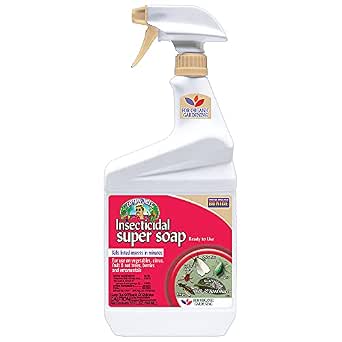 | Best for Broad Outdoor Pest Coverage | Brand: Bonide Captain Jack’s | Volume: 32 fluid ounces | Form: Ready-to-use spray | VIEW LATEST PRICE | See Our Full Breakdown |
| Safer Brand Insect Killing Soap Concentrate, 16 fl oz |  | Best Value for Frequent Treatment | Brand: Safer Brand | Volume: 16 fluid ounces | Form: Concentrate | VIEW LATEST PRICE | See Our Full Breakdown |
| Arber Organic Insecticide Concentrate |  | Best for Indoor Plant Enthusiasts | Volume: 16 fl oz | Finished spray yield: Up to 16 gallons | Form: Liquid concentrate | VIEW LATEST PRICE | See Our Full Breakdown |
| BioAdvanced Organics Neem Oil Spray |  | Best Ready-to-Use Versatility | Brand: BioAdvanced | Volume: 24 fl oz | Form: Ready-to-use oil spray | VIEW LATEST PRICE | See Our Full Breakdown |
| Earth’s Ally 3-in-1 Insecticide, Miticide, and Fungicide |  | Best for Pollinator Safety | Brand: Earth’s Ally | Volume: 32 fluid ounces | Form: Liquid Concentrate | VIEW LATEST PRICE | See Our Full Breakdown |
| Monterey 70% Neem Oil with Measuring Spoon |  | Best High-Concentration Value | Active ingredient: 70% clarified hydrophobic neem oil | Included accessory: Measuring spoon | Size: 8 oz | VIEW LATEST PRICE | See Our Full Breakdown |
| EcoVenger Plant-Based Garden Insect Control Spray |  | Best for Delicate Indoor Foliage | Volume: 16 oz | Form: Ready-to-use spray | Active ingredients: Citronella oil, geraniol, cedarwood oil | VIEW LATEST PRICE | See Our Full Breakdown |
| organic aphid control | Volume | Form | Brand | Active ingredient |
|---|---|---|---|---|
| Garden Safe Insecticidal Soap | 32 fluid ounces | Ready-to-use spray | Garden Safe | Potassium salts of fatty acids |
| Bonide Insecticidal Soap Ready | 32 fluid ounces | Ready-to-use spray | Bonide | Potassium salts of fatty acids |
| Monterey Horticultural Oil | 16 ounces | — | Monterey | — |
| Bonide Captain Jack’s Insectic | 32 fluid ounces | Ready-to-use spray | Bonide Captain Jack’s | — |
| Safer Brand Insect Killing Soa | 16 fluid ounces | Concentrate | Safer Brand | Potassium salts of fatty acids |
| Arber Organic Insecticide Conc | 16 fl oz | Liquid concentrate | — | — |
| BioAdvanced Organics Neem Oil | 24 fl oz | Ready-to-use oil spray | BioAdvanced | Clarified hydrophobic extract of neem oil, 0.9% |
| Earth’s Ally 3-in-1 Insecticid | 32 fluid ounces | Liquid Concentrate | Earth’s Ally | — |
| Monterey 70% Neem Oil with Mea | — | — | — | 70% clarified hydrophobic neem oil |
| EcoVenger Plant-Based Garden I | 16 oz | Ready-to-use spray | — | — |
More Details on Our Top Picks
Garden Safe Insecticidal Soap Insect Killer Spray, 32 oz
Garden Safe is my best overall pick for buyers who want a straightforward, ready-to-use soap spray for aphids across different growing spaces. Its potassium salts of fatty acids act through direct contact, so the practical advantage is simple application without measuring or mixing; the catch is that aphids must be hit, including on leaf undersides. It can be used indoors, outdoors, and in greenhouses, and the label data allows use on edible plants through harvest day. Compared with Bonide Insecticidal Soap, it has the clearer greenhouse-use fit, while Bonide describes control through both contact and ingestion. Neither is a set-and-forget treatment: missed pests may remain, so check plants and repeat as needed according to the label.
Pros:- Ready-to-use 32-ounce spray avoids mixing and measuring
- Can be used indoors, outdoors, and in greenhouses
- Suitable for vegetables, fruit trees, flowers, and other listed plants through harvest day
- Potassium-salt soap controls several listed soft-bodied pests by contact
Cons:- Aphids must be sprayed directly for control
- Thorough coverage, including leaf undersides, takes care and time
Best for: Gardeners who want one ready-to-use aphid spray for edible plants, houseplants, and greenhouse or outdoor growing areas.
Not ideal for: Growers with dense foliage or little time for careful spraying, since effective contact depends on covering aphids and leaf undersides.
- Brand:Garden Safe
- Form:Ready-to-use spray
- Volume:32 fluid ounces
- Active ingredient:Potassium salts of fatty acids
- Application:Spray pests directly and cover plant parts, including leaf undersides
- Use locations:Indoors, outdoors, and in greenhouses
- Edible-plant timing:May be applied through the day of harvest
- Model number:HG-93216
Our verdict“Choose Garden Safe for convenient, multi-setting aphid treatment on edible and ornamental plants, provided you can spray pests directly.”
Bonide Insecticidal Soap Ready-to-Use Spray, 32 oz
Bonide Insecticidal Soap is a beginner-friendly choice for gardeners who want a familiar spray format and broad plant-use options without preparing a concentrate. Its potassium salts of fatty acids kill by contact and ingestion, though aphids still need to be sprayed or feed on treated leaves; it will not solve an infestation without pest and foliage coverage. Compared with Garden Safe Insecticidal Soap, Bonide specifically describes ingestion as part of its control method, while Garden Safe lists greenhouse use and more explicit leaf-underside coverage directions. Bonide is intended for indoor and outdoor plants, including vegetables, fruits, flowers, lawns, and ornamentals, and is described as suitable for organic gardening through harvest day. The tradeoff is that its broad use case does not remove the need to monitor plants and apply carefully.
Pros:- Ready-to-use 32-ounce spray includes a spray nozzle
- Controls insects through contact and ingestion
- Suitable for a range of indoor and outdoor plants
- Described as suitable for organic gardening through harvest day
Cons:- Pests must be sprayed directly or feed on treated leaves
- The product data does not specify greenhouse use
Best for: New gardeners seeking a ready-to-spray soap for aphids on a mix of indoor plants, vegetables, flowers, and outdoor ornamentals.
Not ideal for: People seeking a treatment that works without contacting pests or treated foliage, since this soap relies on contact or ingestion.
- Brand:Bonide
- Form:Ready-to-use spray
- Volume:32 fluid ounces
- Weight:2 pounds
- Active ingredient:Potassium salts of fatty acids
- Control method:Contact and ingestion
- Use:Indoor and outdoor insect control
- Plant types:Vegetables, flowers, fruits, lawns, and ornamentals
- Organic gardening:Suitable for use up to the day of harvest
Our verdict“Pick Bonide for a simple, broad-use soap spray if you are comfortable treating foliage carefully and checking for surviving aphids.”
Monterey Horticultural Oil, 16 oz
Monterey Horticultural Oil stands apart for seasonal flexibility: it can be applied during dormant and growing seasons, making it a different kind of aphid-control option from the ready-to-use soaps in this lineup. The oil is mixed with water and applied with a pump-up or trigger sprayer, so buyers can prepare a batch for trees and varied plantings rather than relying on a pre-mixed bottle. It also targets a wider list of pests, including aphids, scales, mites, whiteflies, and insect eggs, and is OMRI Listed for organic gardening. Compared with Garden Safe Insecticidal Soap, Monterey requires mixing and application equipment, but offers dormant-season use. The tradeoff is less convenience for spot treatment, and the supplied product data says it provides poor control of caterpillars and worms.
Pros:- Can be applied during dormant and growing seasons
- Targets aphids and several other listed pests, including insect eggs
- OMRI Listed for organic gardening
- Can be mixed for use on a variety of trees and plants
Cons:- Requires mixing with water and a pump-up or trigger sprayer
- Product data indicates poor control of caterpillars and worms
- Less convenient than ready-to-use soaps for isolated aphid sightings
Best for: Organic gardeners managing trees or mixed plantings who want an oil treatment for aphids and other listed pests across dormant and growing seasons.
Not ideal for: Houseplant owners or anyone wanting a quick, no-mix spot spray; this product requires dilution and a separate sprayer.
- Brand:Monterey
- Volume:16 ounces
- Product type:Horticultural oil
- Use:Insect control
- Application seasons:Dormant and growing seasons
- Application method:Mix with water and apply using a pump-up or trigger sprayer
- Listed pests:Aphids, leaf miners, thrips, mites, scales, whiteflies, mealybugs, and insect eggs
- Organic gardening:OMRI Listed
Our verdict“Choose Monterey when seasonal treatment of trees and varied plants matters more than the convenience of a ready-to-use soap.”
Bonide Captain Jack’s Insecticidal Super Soap Ready-to-Use Spray, 32 oz
Captain Jack’s Insecticidal Super Soap is the broadest outdoor-use pick here, listing control for more than 30 insects and mites on edible crops and ornamentals. Its potassium salts of fatty acids and spinosad work through contact and ingestion, which gives it a different formulation from the single-active-ingredient soap sprays such as Bonide Insecticidal Soap. That wider pest scope may suit a garden where aphids appear alongside other listed insects, but it is still not a spray-and-forget solution: pests must contact the spray or feed on treated leaves. It comes ready to use, saving mixing time, yet its stated use is outdoor residential application. That makes it less flexible than Garden Safe, which is listed for indoor and greenhouse use. The product description also claims it kills powdery mildew; check the label for application directions.
Pros:- Ready-to-use 32-ounce spray with nozzle
- Lists control for more than 30 insects and mites
- Can be used on a broad range of edible and ornamental plants
- Combines potassium salts of fatty acids with spinosad
Cons:- Specified for outdoor residential use
- Pests must be sprayed directly or ingest treated foliage
- Includes spinosad, unlike the potassium-soap-only options in this group
Best for: Outdoor growers dealing with aphids alongside a range of other listed insect and mite pests on vegetables, berries, herbs, or ornamentals.
Not ideal for: Indoor gardeners or greenhouse growers seeking a product explicitly listed for those settings, or buyers wanting a soap-only active ingredient.
- Brand:Bonide Captain Jack’s
- Volume:32 fluid ounces
- Form:Ready-to-use spray
- Item weight:2.5 pounds
- Active ingredients:Potassium salts of fatty acids and spinosad
- Control method:Direct contact and ingestion
- Use:Outdoor residential use
- Listed pest range:More than 30 insects and mites
- Plant types:Vegetables, fruit, nuts, berries, herbs, lawns, and ornamental plants
Our verdict“Choose Captain Jack’s when outdoor aphid control is part of a wider insect-and-mite problem, not when indoor flexibility is the priority.”
Safer Brand Insect Killing Soap Concentrate, 16 fl oz
Safer Brand’s concentrate is the practical pick for repeated aphid treatments: its 16-ounce bottle produces up to six gallons of spray, reducing the need to keep buying ready-to-use bottles when infestations recur. The potassium-salt soap kills soft-bodied pests on contact, and the product is OMRI Listed and can be used on many plants through harvest day. Compared with Garden Safe Insecticidal Soap, Safer requires dilution but offers much more prepared-spray capacity; Garden Safe is simpler for occasional, immediate spot treatment. Repeated applications may be needed every five to seven days while insects are present, so this concentrate suits gardeners willing to keep up a schedule. It also needs careful timing: avoid peak heat or temperatures above 90°F to help prevent leaf damage.
Pros:- 16-ounce concentrate produces up to six gallons of spray
- Kills aphids and other listed soft-bodied pests on contact
- OMRI Listed for organic gardening
- Can be used on many plants through the day of harvest
Cons:- Requires dilution before use
- Repeated applications every five to seven days may be needed while pests remain
- Avoid application during peak heat or above 90°F to help prevent leaf damage
Best for: Vegetable and flower gardeners who expect recurring aphid pressure and are comfortable mixing concentrate and following a repeat-application schedule.
Not ideal for: Casual plant owners who need an immediate, ready-to-use spray or gardeners who cannot avoid applying during hot conditions.
- Brand:Safer Brand
- Volume:16 fluid ounces
- Form:Concentrate
- Active ingredient:Potassium salts of fatty acids
- Listed pests:Aphids, mealybugs, whiteflies, spider mites, and other listed pests
- Organic gardening:OMRI Listed
- Application interval:Every 5–7 days while insects are present
- Coverage:Produces up to 6 gallons of spray
- Edible-plant timing:May be used up to the day of harvest
Our verdict“Choose Safer Brand for recurring aphid problems and larger spray needs if mixing, repeat treatments, and heat precautions fit your routine.”
Arber Organic Insecticide Concentrate
This concentrate stands out for its biological formulation, which supports a balanced microbiome rather than just wiping out pests. Unlike the BioAdvanced Neem Oil Spray, which relies on oil to smother insects, Arber targets pests like fungus gnats in the soil as well as on foliage. The 16 fl oz bottle yields up to 16 gallons of spray, offering significant value per ounce for those with numerous houseplants. However, it requires careful dilution and repeated applications to break the pest life cycle, making it less convenient than ready-to-use options. This pick makes the most sense for gardeners who prefer a soil-safe treatment that doesn’t leave an oily residue on indoor leaves.
Pros:- Treats both foliage and soil surface pests
- Supports plant microbiome health
- High yield from small concentrate volume
Cons:- Requires precise dilution and mixing
- Needs repeat applications for full control
Best for: Indoor plant collectors dealing with fungus gnats and aphids who want a soil-safe, non-oily treatment.
Not ideal for: Users seeking a quick, single-application fix or those unwilling to measure dilutions.
- Volume:16 fl oz
- Finished spray yield:Up to 16 gallons
- Form:Liquid concentrate
- Application:Dilute and spray foliage and soil surface
- Suitable for:Indoor plants, pots, raised beds, edible gardens, and greenhouses
- Pests listed:Fungus gnats, aphids, spider mites, whiteflies, mealybugs, foliage-feeding beetles, and fruit flies
- Type:Biological insecticide
Our verdict“Choose this if you manage indoor plants with soil-borne pests and prefer a microbiome-friendly approach over heavy oils.”
BioAdvanced Organics Neem Oil Spray
This ready-to-use spray eliminates the hassle of mixing, offering a three-in-one solution for fungi, insects, and mites. Compared to the Arber Organic Insecticide, it requires no preparation, making it ideal for quick spot treatments on roses or vegetables. The clarified neem oil acts as a smothering agent, effective against a broad spectrum of pests. The tradeoff is the residue; oily sprays can leave spots on glossy leaves, which might bother indoor plant owners. It is approved for organic gardening and can be used right up to harvest, providing flexible timing for vegetable growers who need immediate results without waiting for dilution schedules.
Pros:- No mixing required; ready to spray
- Combines fungicide, insecticide, and miticide actions
- Safe for use up to the day of harvest
Cons:- Oil-based formula may leave residue on leaves
- Fungal control requires frequent 7-14 day applications
Best for: Vegetable gardeners and rose growers who need a convenient, no-mix solution safe for use up to harvest.
Not ideal for: Indoor plant owners who dislike oily residues on leaves or those with severe fungal issues requiring daily sprays.
- Brand:BioAdvanced
- Volume:24 fl oz
- Form:Ready-to-use oil spray
- Active ingredient:Clarified hydrophobic extract of neem oil, 0.9%
- Other ingredients:99.1%
- EPA registration number:70051-13-92564
- Use:Fungicide, insecticide, and miticide
- Suitable plants:Roses, flowers, houseplants, ornamental trees and shrubs, fruits, nuts, and vegetables
- Application schedule:Every 7–14 days for listed fungal diseases
Our verdict“A solid choice for outdoor gardeners wanting convenience and multi-pest control without mixing chemicals.”
Earth’s Ally 3-in-1 Insecticide, Miticide, and Fungicide
Earth’s Ally distinguishes itself with a synergistic blend of essential oils—thyme, rosemary, clove, and peppermint—rather than relying solely on neem or soap. This formula is independently tested and proven safe for bees, a critical factor for fruit trees and flowering plants where other sprays might pose a risk. Unlike the Monterey Neem Oil, which is primarily a smothering agent, Earth’s Ally works as a contact killer with added fungicidal properties. While it requires dilution, the OMRI-listed status ensures it fits strict organic protocols. This option is best suited for gardeners who prioritize ecological balance and need to protect pollinators while managing soft-bodied pests and mildew.
Pros:- Certified safe for bees and pollinators
- Essential oil blend offers natural fungicidal action
- OMRI Listed for organic gardening
Cons:- Concentrate requires dilution before every use
- Less effective against hard-bodied insects
Best for: Organic gardeners with flowering plants who need to protect bees and beneficial insects while treating pests.
Not ideal for: Those dealing with hard-shelled pests or those who prefer ready-to-use bottles over concentrates.
- Brand:Earth’s Ally
- Volume:32 fluid ounces
- Form:Liquid Concentrate
- Active Ingredients:Thyme Oil, Rosemary Oil, Clove Oil, Peppermint Oil
- Certification:OMRI Listed
- Target Species:Spider mites, aphids, whiteflies, mealybugs, leaf rollers, scale, powdery mildew, downy mildew, blight, canker, black spot, leaf spot
- Weight:2.3 pounds
Our verdict“The top pick for environmentally conscious growers who cannot compromise on pollinator safety.”
Monterey 70% Neem Oil with Measuring Spoon
Monterey offers a potent 70% neem oil concentration, far higher than the 0.9% found in the BioAdvanced spray. This strength allows for more flexible dilution ratios, making it cost-effective for large-scale applications on trees and shrubs. The inclusion of a measuring spoon is a thoughtful touch that simplifies the mixing process, addressing a common pain point with concentrates. However, the high concentration demands careful handling to avoid leaf burn on sensitive plants. It targets eggs and larvae effectively, offering long-term prevention rather than just immediate knockdown. This model is better suited to experienced gardeners who understand how to mix their own solutions and need a powerful, versatile base for extensive garden areas.
Pros:- High 70% active ingredient concentration
- Includes a measuring spoon for easier mixing
- Effective against pest eggs and larvae
Cons:- Requires careful dilution to prevent plant damage
- Lacks specific application instructions in provided data
Best for: Experienced gardeners managing large areas like orchards or shrubbery who want to control costs via bulk mixing.
Not ideal for: Beginners or those with sensitive plants who may struggle with proper dilution ratios.
- Active ingredient:70% clarified hydrophobic neem oil
- Included accessory:Measuring spoon
- Size:8 oz
- Uses:Fungicide, insecticide, and miticide
- Suitable plants:Ornamental plants, flowers, roses, vegetables, trees, shrubs, fruit and nut crops
- Organic listing:OMRI Listed for organic gardening
Our verdict“A powerful, economical choice for seasoned growers willing to handle their own mixing for maximum potency.”
EcoVenger Plant-Based Garden Insect Control Spray
EcoVenger uses a botanical blend of citronella, geraniol, and cedarwood oil, offering a lighter alternative to heavy neem oils. This makes it particularly suitable for delicate houseplants where the Arber biological concentrate might be too strong if not diluted perfectly, or where neem’s residue is undesirable. The spray is non-staining and has a refreshing scent, addressing common complaints about chemical smells in indoor spaces. It treats both foliage and soil, helping with gnats and aphids. However, it requires dilution for young growth and testing for leaf burn, adding steps compared to simple ready-to-use oils. This option stands out for apartment dwellers who need a gentle, odor-friendly solution for small potted plants.
Pros:- Non-staining formula with a pleasant scent
- Treats both foliage and soil pests
- Gentle botanical ingredients for sensitive plants
Cons:- Requires dilution for delicate new growth
- Must test on leaves to check for burn
Best for: Indoor gardeners with delicate houseplants who prioritize a non-staining, pleasant-smelling spray.
Not ideal for: Outdoor gardeners dealing with heavy infestations or those who prefer strong, established active ingredients like neem.
- Volume:16 oz
- Form:Ready-to-use spray
- Active ingredients:Citronella oil, geraniol, cedarwood oil
- Application:Spray leaves and stems or treat soil
- Dilution for delicate plants:Dilute 5 times with water
- Target pests:Gnats, aphids, red spiders, armyworms, and whiteflies
Our verdict“Ideal for indoor spaces where scent, staining, and plant sensitivity are top concerns.”
How We Picked
I evaluated these products based on their active ingredient efficacy against aphids, specifically looking for potassium salts of fatty acids and azadirachtin, the primary organic agents proven to disrupt aphid feeding and reproduction. I compared ready-to-use formulas against concentrates to assess the balance between convenience and cost-efficiency, noting which options provided sufficient coverage without excessive waste. Another critical factor was plant safety; I prioritized products labeled for use on edibles and ornamentals to ensure they would not cause phytotoxicity or leaf burn when applied correctly.
I also considered the versatility of each product, favoring solutions that address not just aphids but also common co-occurring pests like mites and whiteflies. This approach highlights the value of multi-purpose sprays for gardeners with mixed plantings. Finally, I analyzed application methods, distinguishing between simple trigger sprays for small containers and pump sprays or concentrates for larger beds, ensuring the recommendations match different garden scales and user experience levels.
| organic aphid control | Form |
|---|---|
| Garden Safe Insecticidal Soap | Ready-to-use spray |
| Bonide Insecticidal Soap Ready | Ready-to-use spray |
| Monterey Horticultural Oil | — |
| Bonide Captain Jack’s Insectic | Ready-to-use spray |
| Safer Brand Insect Killing Soa | Concentrate |
| Arber Organic Insecticide Conc | Liquid concentrate |
| BioAdvanced Organics Neem Oil | Ready-to-use oil spray |
| Earth’s Ally 3-in-1 Insecticid | Liquid Concentrate |
| Monterey 70% Neem Oil with Mea | — |
| EcoVenger Plant-Based Garden I | Ready-to-use spray |
Factors to Consider When Choosing Best Organic Aphid Control
Selecting the right organic aphid control involves more than just picking a brand; it requires understanding how different active ingredients interact with your specific garden environment and pest pressure.Active Ingredient Mechanisms
Understanding how the product kills aphids helps you set realistic expectations. Insecticidal soaps work by dissolving the outer shell of soft-bodied insects, causing them to dehydrate and die on contact. This means you must hit the pests directly; missed aphids survive. Neem oil, conversely, acts as a disruptor, interfering with hormone systems to prevent feeding and reproduction. It works slower but can break the life cycle if applied consistently. If you need immediate results, choose soap; if you want to prevent future outbreaks, choose neem.
Ready-to-Use vs. Concentrates
Tradeoffs between convenience and cost are stark in this category. Ready-to-use (RTU) sprays are ideal for small gardens, container plants, or occasional spot treatments because they require no mixing and reduce the risk of application errors. However, they are expensive per gallon and generate more plastic waste. Concentrates offer significant savings and allow you to mix only what you need, reducing waste. The downside is the need for accurate measuring, a compatible sprayer, and careful handling to avoid skin irritation or over-concentration that could burn plants.
Plant Compatibility and Residue
Not all organic sprays are safe for all plants. Some oils, particularly horticultural oils and neem, can cause leaf burn on sensitive species like ferns, succulents, or tomatoes if applied during high heat or direct sunlight. Always test a small area first. Additionally, consider the aesthetic impact; oils and soaps often leave a white residue or oily film on leaves, which can be unsightly on ornamental foliage. For edible crops, check the pre-harvest interval (PHI) to ensure the residue dissipates before consumption.
Spectrum of Control
Aphids rarely appear alone; they often accompany ants, mites, or fungal issues like sooty mold caused by honeydew. Choosing a multi-purpose formula like a 3-in-1 spray that acts as an insecticide, miticide, and fungicide can simplify your maintenance routine. These products save time and money by addressing multiple issues in one application. However, be cautious with broad-spectrum products if you have beneficial insects like ladybugs, as even organic options can harm them if sprayed directly.
Application Frequency and Persistence
Organic controls generally lack the residual long-lasting effect of synthetic chemicals. Most insecticidal soaps break down within hours in sunlight, requiring reapplication every 5-7 days or after rain. Neem oil may offer slightly longer residual activity but still requires consistent scheduling. Plan your garden maintenance around these limitations; if you cannot commit to frequent spraying, organic aphid control may be frustrating. In such cases, combining sprays with physical barriers like row covers or introducing beneficial insects is a more sustainable strategy.
Frequently Asked Questions
Will organic aphid control kill beneficial insects like ladybugs?
Yes, if sprayed directly. Organic does not mean selective. Insecticidal soaps and oils can kill ladybugs, lacewings, and predatory mites on contact. To protect beneficials, apply sprays in the early morning or late evening when pollinators and predators are less active. Focus on the undersides of leaves where aphids cluster, avoiding open flowers. Once the spray dries, most products become harmless to beneficials, allowing them to return to the garden.How often should I apply organic aphid control sprays?
Frequency depends on the active ingredient and weather. Insecticidal soaps typically require reapplication every 5 to 7 days, or immediately after rain, because they break down quickly in sunlight and water. Neem oil may last slightly longer but still needs consistent applications every 7 to 14 days to disrupt the aphid life cycle effectively. Monitor your plants closely; if new aphids appear, reapply promptly to prevent the population from rebounding before it becomes severe.Can I mix different organic pest control products together?
It is generally not recommended to mix products unless the label explicitly states they are compatible. Mixing insecticidal soap with neem oil or other concentrates can alter pH levels, reducing effectiveness or causing phytotoxicity (plant damage). Some combinations may also create a solution that is too harsh for delicate foliage. Always test a small area first if you are experimenting, but sticking to single-product applications is safer and ensures you know which product is working.Is neem oil safe to use on edible vegetables?
Yes, neem oil is registered for use on most edible vegetables and fruits. However, you must follow the pre-harvest interval (PHI) listed on the label, which is the number of days you must wait after the last application before harvesting. For some crops, this is zero days, while for others, it may be a few days. Always wash produce thoroughly before eating. Avoid spraying neem on sensitive herbs like basil or cilantro, as it can alter their flavor profile or cause leaf damage.Why are aphids still appearing after I sprayed?
Aphids reproduce rapidly, and eggs can hatch days after treatment. Organic sprays primarily kill nymphs and adults on contact; they may not penetrate egg cases. Additionally, ants often farm aphids for honeydew, bringing new aphids back to plants. To break the cycle, you must spray consistently to catch new hatchlings, control ant populations separately, and inspect plants regularly. Persistence is key, as a single application rarely eliminates an established infestation completely.Conclusion
Selecting the best organic aphid control depends on your garden’s scale and your tolerance for maintenance. For best overall performance and ease, the Garden Safe Insecticidal Soap delivers reliable contact kill for most home gardeners. If you are managing a large garden and need cost efficiency, the Earth’s Ally 3-in-1 Concentrate provides potent, multi-purpose coverage that stretches your budget. For beginners who want zero hassle, stick with ready-to-use sprays like Bonide Captain Jack’s. Those seeking a premium, broad-spectrum solution that tackles fungi and mites alongside aphids should consider Trifecta Crop Control. Finally, for preventative care and long-term cycle disruption, Monterey Neem Oil remains a trusted choice. Match the product to your specific pest pressure and application schedule for the best results.