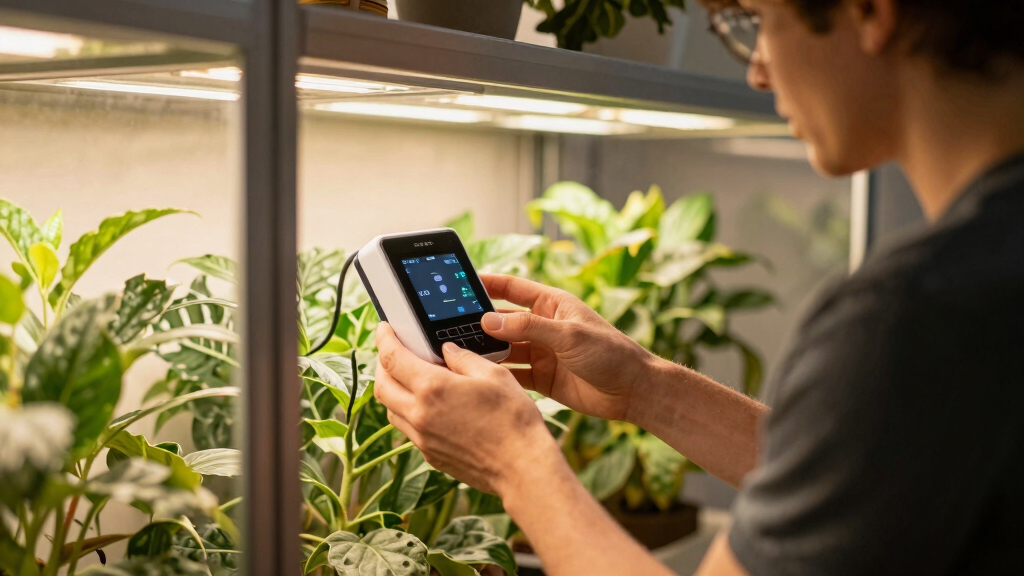

Choosing the right wireless grow room data logger can significantly improve your environment management, ensuring optimal conditions for plant growth. Among the options available, the Govee Bluetooth Digital Hygrometer stands out as a highly versatile and user-friendly choice, especially for those just starting out. Its accurate sensors, remote app monitoring, and data export capabilities make it a reliable tool for both hobbyists and small-scale commercial growers. However, tradeoffs include its limited Bluetooth range and basic feature set compared to more advanced options. In this guide, I’ll compare this model with other options to help you find the best fit for your grow room needs.
Key Takeaways
- The Govee Bluetooth Hygrometer offers accurate environmental readings with easy app control, making it ideal for small grow spaces.
- Its Bluetooth range and data storage are sufficient for most home growers but may fall short for larger setups needing centralized monitoring.
- The device’s simple setup and intuitive interface are perfect for beginners, though advanced growers might prefer more comprehensive data logging features.
- Compared with Wi-Fi-based options, Bluetooth models generally have easier installation but limited connectivity range.
- Data export capabilities allow for long-term tracking, valuable for optimizing grow conditions over time.
| Govee Bluetooth Digital Hygrometer Indoor Thermometer, Room Humidity and Temperature Sensor Gauge with Remote App Monitoring, Large LCD Display, Notification Alerts, 2 Years Data Storage Export, Grey | 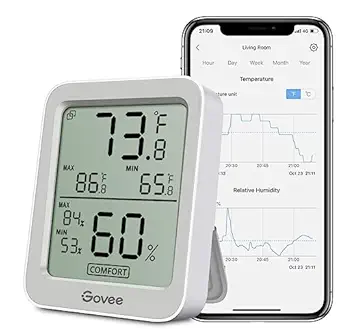 | Best Overall for Ease of Use and Reliable Monitoring | Connectivity: Bluetooth 4.0 | Range: 196ft / 60m | Temperature Accuracy: ±0.54°F | VIEW LATEST PRICE | See Our Full Breakdown |
More Details on Our Top Picks
Govee Bluetooth Digital Hygrometer Indoor Thermometer, Room Humidity and Temperature Sensor Gauge with Remote App Monitoring, Large LCD Display, Notification Alerts, 2 Years Data Storage Export, Grey
The Govee Bluetooth Hygrometer is a standout for those seeking straightforward, reliable environmental monitoring. Its easy pairing with the Govee Home app takes just minutes, making it accessible to users with limited tech experience. The built-in Swiss-made sensors deliver temperature accuracy to ±0.54°F and humidity to ±3%RH, ensuring precise readings. The large LCD display provides real-time data at a glance, while the app offers instant notifications when conditions go out of range. The device stores up to 20 days of online data, with export options for up to 2 years of records in CSV format. Compared with Wi-Fi models, this device’s Bluetooth connectivity limits its range but simplifies setup and reduces costs. It’s ideal for small grow rooms, wine cellars, or greenhouses where proximity is manageable.
Pros:- Easy Bluetooth setup and pairing
- Accurate Swiss-made sensors
- Large LCD display for quick readings
- Long-term data export capabilities
Cons:- Limited Bluetooth range (196ft/60m)
- Basic features without Wi-Fi connectivity
- Relies on app notifications, which may be missed
Best for: Small-scale growers or hobbyists seeking reliable, straightforward environmental data
Not ideal for: Large grow operations requiring centralized or multi-room monitoring
- Connectivity:Bluetooth 4.0
- Range:196ft / 60m
- Temperature Accuracy:±0.54°F
- Humidity Accuracy:±3%RH
- Display:Large LCD
- Data Storage:20 days online, exportable for 2 years
Bottom line: The Govee Bluetooth Hygrometer offers excellent value for small growers needing reliable, easy-to-use environmental monitoring with long-term data export.
How We Picked
To identify the best wireless grow room data logger, I focused on models that combine reliable wireless connectivity, accurate environmental sensors, and easy data management. I prioritized devices with user-friendly setup, good app integration, and long-term data storage options. Cost-effectiveness was also a key factor, ensuring that the solutions are accessible without sacrificing essential features. I compared these devices based on flexibility, connectivity, and overall value for growers aiming for precise environmental control.
Factors to Consider When Choosing Best Wireless Grow Room Data Logger
Selecting the best wireless grow room data logger depends on your specific needs, such as the size of your grow environment, your budget, and how much data management you require. Wireless options vary from simple Bluetooth devices suitable for small spaces to comprehensive Wi-Fi solutions capable of monitoring multiple zones simultaneously. Understanding the connectivity range, sensor accuracy, data storage, and ease of use will help you choose a device that keeps your environment stable and your plants healthy.Connectivity Options
Wireless data loggers primarily connect via Bluetooth or Wi-Fi. Bluetooth models are generally easier to set up and are less expensive but have limited range, making them ideal for small or single-room setups. Wi-Fi-based devices, on the other hand, support longer-range monitoring and integration with home automation systems, but they tend to be more complex and costly. When choosing, consider the size of your grow area and whether you need remote access from multiple devices or locations.
Sensor Accuracy and Reliability
Accurate sensors are essential for effective environmental control. Look for models with Swiss-made or similarly reputable sensors, which typically offer better precision. Temperature accuracy within ±0.5°F and humidity within ±3%RH are generally sufficient for most grow operations. Keep in mind that more advanced sensors may come at a higher cost but can provide more consistent data over time.
Data Storage and Export
Long-term data storage is vital for monitoring trends and making informed adjustments. Many devices store recent days of data online, but the ability to export records—often in CSV format—adds significant value. This feature allows you to analyze environmental patterns over weeks or months, helping optimize your grow conditions. Be sure to check how much data can be stored and exported before making a purchase.
Ease of Use and Setup
For beginners, a device with simple setup, clear app instructions, and user-friendly interfaces is a must. Devices that sync quickly and send real-time notifications reduce the risk of environmental fluctuations going unnoticed. More complex setups, like multi-zone monitoring systems, are better suited to experienced growers comfortable with network configurations.
Frequently Asked Questions
How accurate are wireless grow room data loggers?
Most quality wireless data loggers feature sensors with accuracy ranging from ±0.5°F for temperature and ±3%RH for humidity, which is sufficient for maintaining optimal grow conditions. Accuracy can vary based on sensor quality, calibration, and environmental factors, so choosing a model with reputable sensors and regular calibration can help ensure reliable readings over time.
Can I monitor my grow room remotely with a wireless data logger?
Yes, many wireless data loggers support remote monitoring via smartphone apps or web portals, especially those that use Wi-Fi connectivity. Bluetooth devices typically require proximity, but some models can connect to hubs or gateways to enable remote access. Be sure to verify the connectivity options if remote monitoring is a priority for your setup.
What is the typical range of Bluetooth data loggers?
Most Bluetooth grow room sensors have a range of around 196 feet (60 meters) in open space, but this can be reduced by walls, furniture, or other obstacles. If your grow environment is larger than this, a Wi-Fi-based logger or a mesh system may be better suited to cover multiple zones effectively.
How much data can these devices store?
Basic Bluetooth models like the Govee hygrometer typically store recent data for up to 20 days online, with options to export long-term records in CSV format for up to two years. More advanced Wi-Fi systems may offer continuous data logging and cloud storage, making long-term trend analysis easier. Always check the storage limits before purchasing.
Are wireless data loggers suitable for large-scale grow operations?
Wireless data loggers designed for small to medium setups work well for personal or hobbyist growers. For large-scale operations, more sophisticated wired or multi-zone wireless systems with centralized dashboards are preferable. These can monitor multiple rooms or zones simultaneously and provide more comprehensive data management options.
Conclusion
If you’re a casual grower or just starting out, the Govee Bluetooth Hygrometer provides reliable monitoring with minimal setup fuss and long-term data storage. For more extensive setups or growers needing remote access across multiple zones, investing in Wi-Fi-based systems with centralized dashboards is advisable. Advanced users who require detailed analytics and multi-zone management should look for higher-end solutions, while hobbyists will find simple Bluetooth models perfectly adequate.