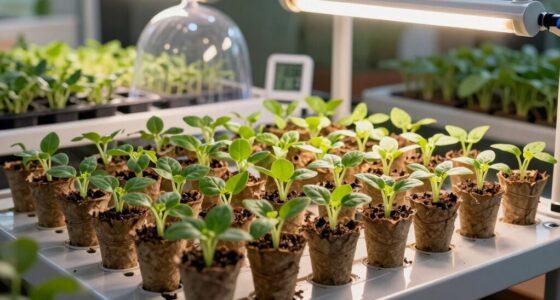

Pelleted seeds indoors are quite convenient because they’re easier to handle, especially tiny ones like lettuce or carrots, and help you plant with more precision. They improve seed spacing and prevent mess, making indoor gardening simpler. However, they can slightly delay germination and cost more than regular seeds. If you want to know how to get the best results with pelleted seeds and whether they’re worth it for your setup, keep exploring what’s involved.

Get garden gear delivered free with Prime
- Fast, free delivery on millions of items
- Prime Video, Amazon Music and more included
- Member-only deals all year
Key Takeaways
- Pelleted seeds simplify handling and precise placement, making indoor sowing more convenient.
- They may delay germination slightly due to seed coating needing moisture to break down.
- Higher costs and limited seed options can make pelleted seeds less economical for large indoor plantings.
- Proper soil preparation and moisture control remain essential for successful germination indoors.
- Coatings could interfere with seedling growth if not designed to break down properly.

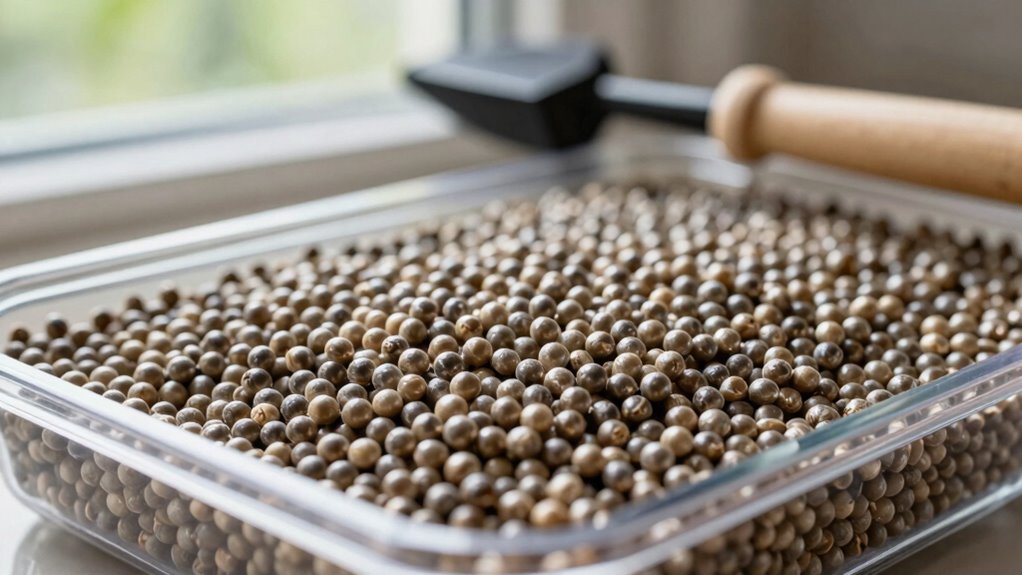
Have you ever struggled with tiny, hard-to-handle seeds when starting your garden indoors? If so, pelleted seeds might seem like a game-changer. These seeds are coated with a layer of inert material, making them larger and easier to handle. They’re designed to improve seed germination because you can place them precisely where you want them without the mess or frustration of handling tiny grains. But before jumping in, it’s worth considering whether pelleted seeds are truly convenient or just overrated.
When you choose pelleted seeds, you often find that planting becomes simpler. Their uniform size makes seed spacing more consistent, which can lead to more even germination and healthier seedlings. This is especially helpful if you’re new to indoor gardening or if you’re planting small, delicate seeds like lettuce or carrots that tend to be difficult to handle directly. With pelleted seeds, you can easily see where you’ve planted each seed, reducing the risk of overcrowding or missed spots. Plus, they tend to stay on the soil surface better, which means you don’t have to worry about burying tiny seeds too deep. Proper soil preparation, including maintaining adequate moisture levels, remains essential for successful germination regardless of seed type. Additionally, understanding the seed coating materials can help you anticipate how they might interact with your soil and watering practices. Recognizing the cost implications of pelleted seeds is also important, as they tend to be more expensive than regular seeds, especially for larger plantings.
However, for successful seed germination indoors, soil preparation remains essential, regardless of whether you’re using pelleted seeds or traditional ones. You want a well-draining, nutrient-rich medium that encourages healthy root development. The coating on pelleted seeds may sometimes delay germination slightly because they often need a bit of moisture to break through the coating. That’s why proper soil preparation — ensuring even moisture and warmth — is crucial. You should start with a sterile seed-starting mix, lightly moistened, to give your seeds the best environment for sprouting. The better you prepare your soil, the more reliable your germination rate will be, whether your seeds are pelleted or not. It’s also helpful to be aware that the availability of pelleted seeds varies depending on seed type, which can limit your options. Choosing the right seed type can significantly influence your success rate and overall gardening experience.
Some gardeners find that pelleted seeds are more costly than regular seeds, which can add up over a large planting. Also, not all seed types are available in pelleted form, limiting your options. Plus, some coatings might interfere with seedling growth if they aren’t designed to break down properly. Overhyped or not, pelleted seeds do offer a practical advantage for handling and planting precision, but they aren’t a magic solution for perfect germination. You still need to pay attention to soil quality, moisture levels, and temperature. In the end, whether you find pelleted seeds to be convenient or overrated depends on your gardening needs and expectations. They can make planting easier, but they don’t replace the importance of good soil preparation and attentive care.
Products Worth Considering

Traeger Woodridge Wood Pellet Grill & Smoker, 860 Sq In, WiFi

Traeger Pro 22 Wood Pellet Grill and Smoker, 572 sq. in.

Orbit B-hyve XR 16-Zone Indoor/Outdoor Smart Sprinkler Controller
As an affiliate, we earn on qualifying purchases.
Frequently Asked Questions
Do Pelleted Seeds Require Special Soil for Optimal Germination?
Pelleted seeds don’t require special soil for ideal germination, but soil compatibility can boost your success. Use a light, well-draining seed-starting mix to improve germination success rates. Avoid heavy or overly rich soils that can drown delicate seedlings or hinder root growth. Keep the soil moist but not waterlogged, and guarantee good aeration. With proper soil conditions, your pelleted seeds will sprout quickly and grow strong indoors.
How Long Is the Typical Shelf Life of Pelleted Seeds?
Pelleted seeds typically have a shelf life of 1 to 3 years if stored properly. Did you know that proper seed storage can extend shelf longevity by protecting seeds from moisture, heat, and light? To maximize germination chances, keep your pelleted seeds in a cool, dry, airtight container. Proper storage guarantees you get the most out of your seeds, making them ready when you’re prepared to plant.
Can Pelleted Seeds Be Used for All Plant Types Indoors?
Yes, you can use pelleted seeds for most plant types indoors, but it depends on the seed coating and your specific indoor gardening setup. Seed coating makes handling easier and improves germination, especially for small or tricky seeds. However, some plants with particular soil or light needs may not benefit as much. Always check if the pelleted seed variety suits your indoor environment and plant requirements before planting.
Are Pelleted Seeds More Resistant to Pests Indoors?
Pelleted seeds often have a seed coating that can improve pest resistance indoors. This coating acts as a barrier, helping to protect the seed from pests like fungus gnats or soil-borne insects. While it’s not foolproof, using pelleted seeds can give you an extra layer of defense, reducing pest issues and increasing your chances of healthy sprouting. Just remember, combining seed coating with good care practices maximizes pest resistance indoors.
What Are the Costs Comparison Between Pelleted and Regular Seeds?
Pelleted seeds generally cost more than regular seeds because of the seed coating process, which adds extra materials and labor. A thorough cost analysis shows that while pelleted seeds are pricier upfront, they can save you money later by improving germination rates and reducing planting errors. If you’re prioritizing convenience and efficiency indoors, the higher initial investment might be worth it, but for budget-conscious growers, regular seeds remain the more economical choice.
Conclusion
While pelleted seeds offer a tidy and straightforward planting experience, they might not always be the secret ingredient to gardening success. If you’re seeking simplicity and neatness, they can be a gentle nudge in the right direction. However, if you’re after a more hands-on journey, traditional seeds might bring a touch more satisfaction. Ultimately, it’s about finding what feels most natural to you and embracing your unique gardening rhythm.