You can turn kitchen scraps like vegetable peels, coffee grounds, and eggshells into nutrient boosters for your garden. Composting these kitchen wastes creates rich soil that supplies essential nutrients like nitrogen, potassium, and phosphorus to your plants. Avoid scraps like meat or oily foods to prevent odors and pests. Properly composted kitchen scraps improve soil health and plant vigor. If you want to discover more tips, you’ll find helpful insights to boost your garden’s growth.
Key Takeaways
- Incorporate green kitchen scraps like vegetable peels and coffee grounds into compost to increase nitrogen and nutrient content.
- Use crushed eggshells and banana peels to supply calcium and potassium, essential for healthy plant growth.
- Maintain a proper green-to-brown material ratio for balanced nutrient cycling and nutrient availability.
- Avoid adding meat, dairy, or oily scraps to prevent odors and pest issues that can hinder nutrient quality.
- Mature compost derived from kitchen scraps enhances soil fertility and provides natural nutrient boosts to plants.
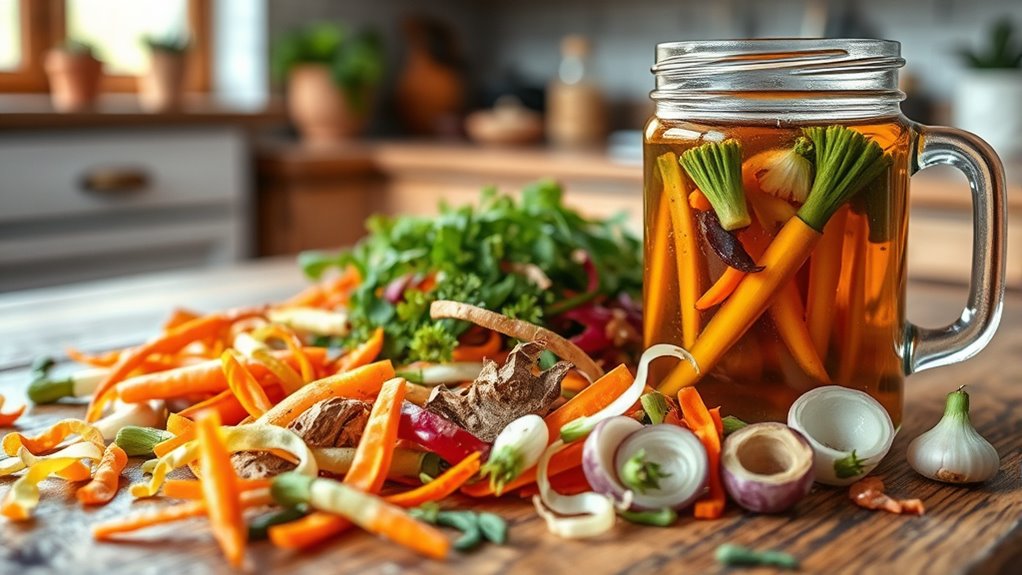
Many kitchen scraps that typically get tossed in the trash or compost bin can actually be repurposed to boost your garden’s nutrients. Instead of letting these valuable resources go to waste, you can explore different composting methods to transform scraps into rich soil amendments. Composting methods vary from traditional pile composting to vermicomposting with worms, or even Bokashi fermentation. Each approach has its benefits, but all serve the purpose of recycling kitchen waste into nutrient-dense compost. By doing so, you create a natural fertilizer that improves soil health and supports vigorous plant growth.
Transform kitchen scraps into nutrient-rich compost with various eco-friendly methods for a healthier garden.
When you incorporate kitchen scraps into your compost, you’re addressing common plant nutrient deficiencies naturally. Many garden plants suffer from deficiencies of nitrogen, phosphorus, or potassium—primary nutrients essential for healthy growth. Kitchen scraps like vegetable peels, coffee grounds, eggshells, and fruit scraps are rich in these essential elements. For instance, coffee grounds and banana peels are high in potassium, while vegetable scraps provide nitrogen. Properly composting these scraps ensures that nutrients become bioavailable, making them easier for your plants to absorb. Additionally, maintaining proper composting conditions accelerates nutrient cycling and enhances the overall quality of your compost.
You should be mindful of what you add to your compost pile. Avoid scraps that might cause odor issues or attract pests, such as meat, dairy, or oily foods. Instead, focus on a balanced mix of green materials (kitchen scraps rich in nitrogen) and brown materials (carbon-rich items like dried leaves or paper). This balance promotes efficient composting and prevents nutrient imbalances. As the compost matures, it becomes a dark, crumbly, earthy-smelling substance packed with nutrients that can correct deficiencies in your garden soil.
Using compost as a supplement to your soil not only improves plant health but also enhances soil structure, water retention, and microbial activity. This holistic approach ensures your plants get the nutrients they need, especially if your garden soil is lacking in specific elements. Regularly adding kitchen scraps via composting helps maintain a steady nutrient supply, reducing the need for chemical fertilizers. Plus, it’s an eco-friendly way to reduce waste, lower your carbon footprint, and foster a more sustainable gardening practice.
In short, by mastering composting methods and understanding plant nutrient deficiencies, you can turn everyday kitchen scraps into powerful natural fertilizers. This process keeps your garden thriving and minimizes waste, making your gardening efforts more sustainable and cost-effective. With a little effort, you’ll be able to give your plants the nutrients they crave, all while doing your part to protect the environment. Embracing SQA best practices in your composting process can further ensure that your efforts are efficient, consistent, and aligned with sustainable standards.
Frequently Asked Questions
Can Kitchen Scraps Replace Commercial Fertilizers Entirely?
Kitchen scraps can’t fully replace commercial fertilizers because composting methods vary in nutrient content, and kitchen waste may lack essential minerals like nitrogen and phosphorus. While you can improve soil health and reduce waste by using scraps, they often provide a nutrient comparison that’s less concentrated. For ideal growth, combine composted kitchen scraps with commercial fertilizers or other soil amendments, ensuring your plants get all the nutrients they need.
Which Scraps Are Most Effective for Boosting Soil Nutrients?
You should focus on fruit peels and coffee grounds, as they’re highly effective for boosting soil nutrients. Fruit peels add essential vitamins and minerals, while coffee grounds provide nitrogen, improving plant growth. Mix these scraps into your compost or directly into the soil. They break down quickly, enriching your garden naturally without the need for commercial fertilizers, and help create a healthier, more sustainable environment for your plants.
How Long Does It Take for Scraps to Decompose Naturally?
Scraps typically decompose in about 2 to 6 months, depending on environmental factors like temperature, moisture, and aeration. In warm, moist, and well-ventilated conditions, decomposition speeds up. If it’s cooler or drier, it can take longer. To speed things up, chop scraps into smaller pieces, keep the compost moist, and turn it regularly. Patience and proper conditions are key for effective natural decomposition.
Are There Any Kitchen Scraps That Could Harm Plants?
Some kitchen scraps can harm your plants, especially if they include toxic vegetables like eggplant or potatoes with green skins, which contain solanine. Also, avoid scraps prone to mold growth, such as bread or cheese, as mold can spread harmful fungi to your plants. Always compost healthy, organic scraps and remove any moldy or toxic pieces to prevent plant damage and guarantee safe nutrient enrichment.
Can Composting Kitchen Scraps Attract Pests or Rodents?
Composting kitchen scraps can attract pests or rodents if you’re not careful. To prevent this, implement pest prevention strategies like burying scraps deep in the compost or using sealed bins. Proper rodent deterrence measures, such as keeping compost away from structures and avoiding meat or dairy, help minimize attraction. While composting offers eco-friendly benefits, maintaining a balanced, well-managed system is key to avoiding unwanted visitors.
Conclusion
By turning kitchen scraps into nutrient boosters, you’re planting seeds of sustainability right in your own home. Think of your kitchen as a treasure trove where every peel and leftover becomes gold for your garden. Embrace these small acts, and you’ll nurture your plants while nurturing the planet. Remember, even the tiniest scrap holds the power to transform your garden into a lush, thriving oasis—proof that sometimes, the smallest efforts yield the grandest blooms.