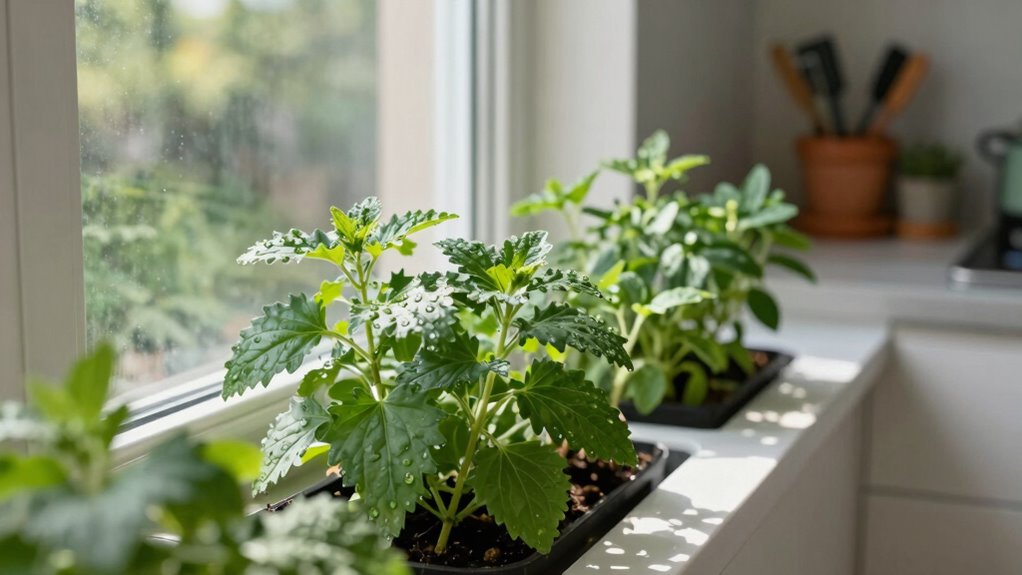

To extend your indoor herb harvest, focus on regular pruning to encourage new growth and harvest longevity. Guarantee your herbs get ample bright, indirect light, ideally 12-16 hours daily, supplementing with grow lights if needed. Maintain consistent watering—neither over- nor underwater—and watch for pests to keep plants healthy. Proper soil and airflow also play a key role. If you want proven tips to keep your herbs thriving longer, explore what’s next.

Get garden gear delivered free with Prime
- Fast, free delivery on millions of items
- Prime Video, Amazon Music and more included
- Member-only deals all year
Key Takeaways
- Harvest herbs early in the morning and prune regularly to promote continuous, tender growth and prolong harvest periods.
- Ensure optimal light conditions with 12-16 hours of bright, indirect light or supplemental grow lights.
- Maintain consistent watering routines, avoiding over- or underwatering to prevent stress and root issues.
- Keep the growing environment clean and encourage natural pest control to maintain healthy, productive herbs.
- Rotate or transplant herbs as they mature to prevent woody growth and promote fresh, flavorful foliage.

Growing herbs indoors can be incredibly rewarding, but many gardeners find that the harvest window tends to be shorter than expected. The good news is that with a few strategic steps, you can extend the time your herbs remain productive and flavorful. One of the key secrets is mastering herb flavor enhancement. When you harvest herbs at their peak, their essential oils are at their strongest, which boosts flavor and aroma. To do this, always pick herbs in the morning after the dew has dried but before the sun gets too intense. Regular pruning encourages the plant to produce new, tender growth, prolonging your harvest window and maintaining fresh, vibrant herbs for longer periods. Additionally, understanding the specific needs of each herb—like water, light, and nutrient requirements—helps keep them healthy and productive. Providing the right light conditions is crucial, as it directly affects their growth and flavor. Ensuring optimal environmental conditions can significantly improve your herbs’ overall health and harvest longevity. Proper soil quality also plays a vital role in supporting healthy root development and sustained growth. Recognizing signs of over- or under-watering can help prevent stress-related issues that might shorten your herbs’ productive lifespan. Maintaining consistent watering routines is essential for avoiding stress and promoting continuous growth.
Another essential aspect is implementing pest prevention techniques. Pests are one of the biggest threats to extending your herb harvests because they can quickly damage or kill plants, shortening their productive lifespan. Prevent pests by keeping your growing environment clean; remove any fallen leaves or debris that might harbor bugs. Use natural pest prevention methods like introducing beneficial insects such as ladybugs or applying neem oil, which deters pests without harming your herbs. Regularly inspecting your plants allows you to catch any signs of trouble early—such as discolored leaves or tiny webs—so you can act before the infestation spreads. By preventing pests from taking hold, you guarantee your herbs stay healthy, which naturally extends their harvest window. Additionally, maintaining proper air circulation can help reduce the likelihood of pest and disease problems, further extending your herbs’ productivity. Good airflow promotes healthier plants and reduces humidity, making it less inviting for pests and pathogens.
To further prolong your herbs’ productivity, consider rotating and transplanting them if necessary. As herbs mature, some may become woody or less flavorful, signaling it might be time to replace them or move them to a different spot with better light or airflow. Proper lighting is essential—aim for at least 12-16 hours of bright, indirect light daily. If your herbs aren’t getting enough light, they’ll become leggy and less flavorful, reducing your harvest period. Supplement with grow lights if needed, especially during darker months. Finally, pay attention to watering habits; overwatering can lead to root rot, while underwatering stresses the plant. Finding a balance ensures your herbs remain healthy and vibrant, which directly impacts how long you can enjoy fresh leaves.
As an affiliate, we earn on qualifying purchases.
Frequently Asked Questions
Which Herbs Are Easiest to Extend Harvest Periods for Indoors?
You can easily extend harvest periods for herbs like basil, mint, and chives indoors. To do this, focus on herb growth optimization by providing adequate light, consistent watering, and proper airflow. Also, maintain container soil health by using nutrient-rich, well-draining soil and periodically fertilizing. These practices encourage continuous growth, allowing you to enjoy fresh herbs longer. Regular pruning and harvesting also stimulate new growth, maximizing your indoor herb harvest.
How Often Should I Rotate Indoor Herb Containers?
You should rotate your indoor herb containers every few weeks to promote even growth and prevent pests. During rotation, check herb watering needs and guarantee proper container drainage to avoid overwatering. This regular change helps herbs adapt to different light spots and prevents root rot. Keep an eye on watering schedules and drainage, adjusting as necessary, to maintain healthy, thriving herbs and extend their harvest windows indoors.
Can Artificial Lighting Replace Natural Sunlight Effectively?
Artificial lighting, especially LED growth lights, can effectively substitute natural sunlight if you choose the right spectrum and intensity. LED growth lights designed for sunlight simulation provide the necessary wavelengths for photosynthesis, promoting healthy herb growth. Position the lights close enough to mimic natural sunlight, and keep them on for about 12-16 hours daily. This guarantees your indoor herbs thrive, even without direct sunlight.
What Are Common Pests That Affect Indoor Herbs?
You’ll often encounter pests like aphids, spider mites, and whiteflies attacking your indoor herbs. Pest identification helps you recognize these invaders quickly, so you can act fast. Organic pest control methods, such as neem oil, insecticidal soap, or introducing beneficial insects, keep your herbs healthy without chemicals. Regular inspection, proper airflow, and maintaining clean growing spaces guarantee pests stay at bay, safeguarding your indoor garden’s essentiality.
How Do I Prevent Mold and Mildew on Indoor Herbs?
To prevent mold and mildew on your indoor herbs, you should focus on humidity control and air circulation. Keep humidity levels low, around 40-50%, using a dehumidifier if needed. Guarantee good air circulation by spacing your herbs properly and using fans to promote airflow. Regularly inspect your plants for early signs of mold, and remove any affected leaves promptly to prevent spread. These steps help maintain a healthy environment for your herbs.
As an affiliate, we earn on qualifying purchases.
Conclusion
By mastering light, watering, and pruning, you can extend your indoor herbs’ harvest window considerably. Imagine enjoying fresh basil or mint for up to twice as long—like having a never-ending herb garden at your fingertips. Studies show that properly managed herbs can stay productive for over 12 weeks, giving you more flavor-packed moments in your kitchen. With a little care, you’ll keep your herb supply thriving and your culinary creations endless.
As an affiliate, we earn on qualifying purchases.
As an affiliate, we earn on qualifying purchases.
Halloween Picks
halloween
As an affiliate, we earn on qualifying purchases.