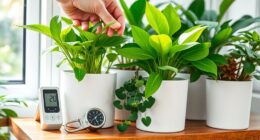
To create flavorful dishes with hydroponic herbs, focus on pairing herbs with compatible aroma profiles. For example, basil enhances tomato-based dishes, while cilantro adds citrus notes for spicy salsas. Mint pairs well with lamb and fruit salads, and herbs like chives and parsley are versatile for many cuisines. Controlling environmental factors helps develop strong flavors and aroma. Keep experimenting with combinations to reveal even more vibrant culinary possibilities as you explore further.
Key Takeaways
- Select herbs with complementary aroma compounds, such as basil with tomatoes or cilantro with spicy dishes, for harmonious flavor pairings.
- Use hydroponic cultivation to precisely control environmental factors, enhancing herb potency and optimal flavor development.
- Combine versatile herbs like parsley and chives to create balanced, layered flavors suitable for various culinary applications.
- Harvest herbs at peak maturity to maximize aroma and taste, ensuring vibrant, fresh flavor in your dishes.
- Experiment with new herb pairings, leveraging hydroponic growth to develop innovative, flavorful culinary combinations.

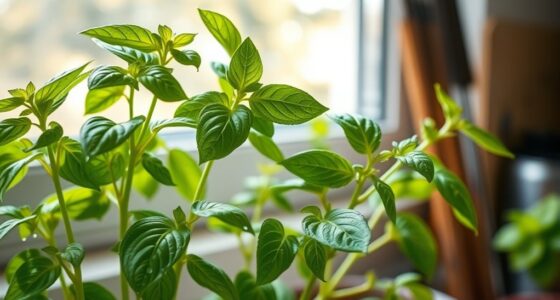
Growing herbs hydroponically opens up a world of fresh, flavorful options right at your fingertips. When you’re cultivating herbs this way, understanding herb flavor compatibilities becomes essential to creating delicious, balanced dishes. Hydroponic herb cultivation techniques allow you to grow a variety of herbs indoors or in small spaces, providing consistent, high-quality herbs year-round. But to truly maximize their potential, you need to know how different herbs interact in flavor profiles and how to pair them effectively in your culinary creations.
Herb flavor compatibilities hinge on the natural aroma compounds and essential oils that define each herb’s unique taste. For example, basil pairs beautifully with tomatoes, enhancing their sweetness and adding a fresh, peppery note. Cilantro’s citrusy undertones work well with spicy dishes and salsas, while mint’s coolness complements lamb or fruit salads. Chives and parsley are versatile herbs that can be used in a wide range of dishes, from creamy soups to grilled vegetables, thanks to their mild, fresh flavors. When you understand these compatibilities, you can craft more harmonious flavor pairings that elevate your cooking.
Herb flavor compatibilities depend on aroma compounds and essential oils.
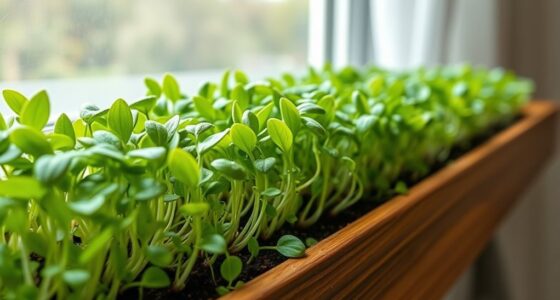
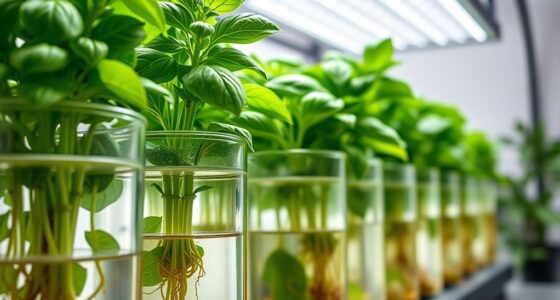
Hydroponic herb cultivation techniques make it easy to experiment with these flavor pairings because they enable rapid growth and easy control over growing conditions. You can grow multiple herbs side-by-side, adjusting light, nutrient levels, and water pH to optimize flavor development. By maintaining precise environmental controls, you ensure that each herb develops its fullest aroma and taste, making your flavor pairings more vibrant and true to their natural profiles. This precision also minimizes pests and diseases, resulting in healthier, more potent herbs that contribute stronger flavors to your dishes. Additionally, understanding the postharvest handling of herbs can further enhance their flavor retention and freshness.
To effectively combine herbs in your hydroponic setup, start by planning your herb garden around the flavor profiles you want to achieve. For instance, if you’re making a Mediterranean-inspired dish, consider pairing basil, oregano, and thyme. For a fresh, summer salad, combine mint, cilantro, and parsley. Regularly harvest your herbs at their peak flavor, which keeps their aroma and taste lively. Remember that fresh herbs are more potent than dried ones, so use them accordingly in your recipes.
Incorporating herb flavor compatibilities into your hydroponic cultivation enhances your culinary creativity. With the right techniques, you can grow a diverse array of herbs that work together seamlessly, giving you the ability to craft dishes with layered, complementary flavors. As you get more comfortable with hydroponic herb cultivation techniques, you’ll find it easier to experiment with new pairings, turning your kitchen into a vibrant, aromatic garden where every meal is a fresh, flavorful experience.
Frequently Asked Questions
How Do I Prevent Cross-Contamination Between Herbs?
To prevent cross-contamination between herbs, follow strict cleaning protocols by thoroughly washing your hands and tools before handling each herb. Use separate containers or trays to keep herbs apart and avoid mixing flavors. Always separate herbs during harvesting, trimming, and storage, and clean all surfaces and equipment regularly. This guarantees each herb stays pure, maintaining flavor integrity and safety in your hydroponic cooking.
Can I Grow Herbs Indoors Year-Round?
Absolutely, you can grow herbs indoors year-round, turning your space into a lush, green oasis. With proper indoor herb lighting, you’ll give your plants the sunlight they need, no matter the season. Consistent year-round herb care involves maintaining ideal temperatures and watering routines. Think of it as cultivating a miniature garden that never sleeps, allowing you to enjoy fresh herbs anytime you want, all from the comfort of your home.
What Are the Best Lighting Conditions for Hydroponic Herbs?
You should use LED lighting with a full light spectrum to grow healthy hydroponic herbs indoors. Aim for 12-16 hours of light daily to mimic natural sunlight, ensuring your herbs get enough energy for ideal growth. Position the LEDs about 12-18 inches above your plants, adjusting as they grow. Consistent lighting and the right spectrum help your herbs develop strong flavors and vibrant foliage, making your hydroponic setup successful year-round.
How Often Should I Harvest My Hydroponic Herbs?
You should harvest your hydroponic herbs when they reach ideal plant maturity, usually every 1-2 weeks depending on the herb. Keep an eye on the harvest timing; pick leaves or stems when they’re vibrant and healthy. Regular harvesting encourages new growth, so don’t wait too long. For best flavor and freshness, harvest early in the morning before the sun hits the plants.
Are There Any Herbs That Don’T Grow Well Together?
Some herbs don’t grow well together because of incompatible companion planting or herb compatibility issues. For example, dill and fennel can hinder each other’s growth, and basil may struggle if planted near sage. To guarantee healthy growth, research herb compatibility before planting, and consider companion planting principles. This way, you avoid planting incompatible herbs side by side, helping your hydroponic garden thrive.
Conclusion
By mastering herb pairings for hydroponic cooking, you open vibrant flavors and fresh ingredients year-round. Did you know that hydroponic herbs can grow up to 25% faster than soil-grown counterparts? This efficiency means you get more herbs in less time, enhancing your culinary creations. So, experiment with your flavor combinations and enjoy the freshest herbs straight from your hydroponic garden—your taste buds and creativity will thank you for it.