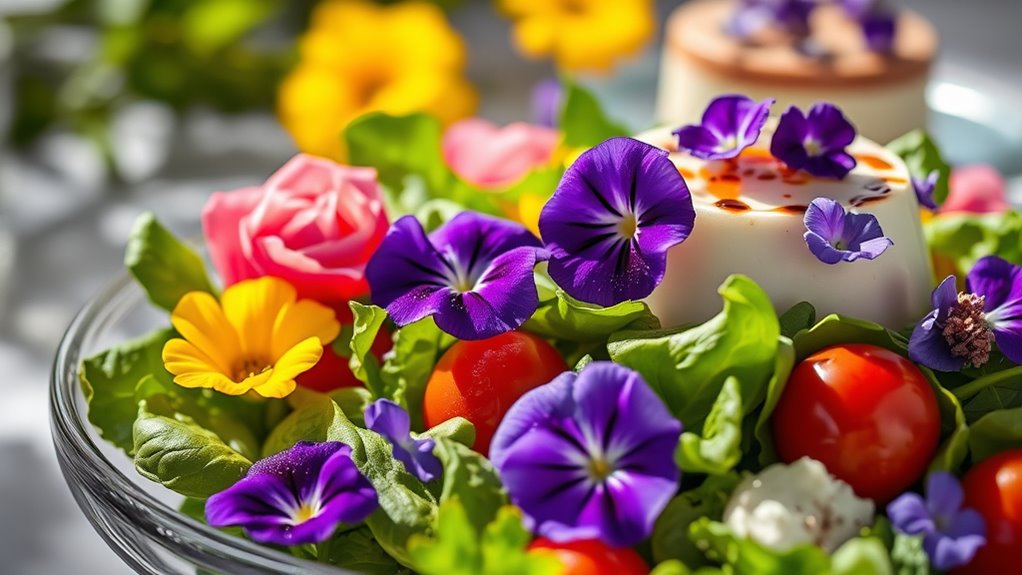
You can easily elevate your meals by incorporating edible flowers into salads, desserts, and garnishes. Toss colorful petals like pansies, violets, or nasturtiums into salads for visual appeal and subtle flavors. Decorate cakes, cupcakes, or panna cotta with fresh flowers to create stunning desserts. Use petals to garnish drinks or cheese platters for an elegant touch. Keep flowers fresh and safe by sourcing them properly—discover more ways to transform your dishes with edible blooms as you continue exploring.
Key Takeaways
- Incorporate edible flowers like pansies, violets, and nasturtiums into salads for visual appeal and subtle flavor.
- Use flowers to decorate cakes, cupcakes, and fruit tarts, enhancing presentation and floral aroma.
- Infuse syrups, whipped creams, or custards with edible flowers to add floral notes to desserts.
- Garnish desserts and beverages with fresh, properly preserved petals for color and aromatic enhancement.
- Source flowers from reputable suppliers or grow your own to ensure safety and optimal culinary flavor.
Edible flowers add vibrant color and delicate flavor to a variety of dishes, making them a beautiful and tasty addition to your culinary creations. When working with edible flowers, it’s vital to focus on flower preservation to keep them fresh and vibrant. Proper flower preservation involves gentle handling, avoiding excessive moisture, and storing them in a cool, dry place, ideally in a paper towel-lined container or in the refrigerator. This guarantees they retain their flavor, texture, and visual appeal. Before sourcing edible flowers, you should prioritize edible flower sourcing from reputable suppliers or grow your own to guarantee they’re free from pesticides and chemicals. This step is essential because not all flowers are edible, and some can be toxic if misused. Trusted sources will also provide information about the flowers’ origins and suitability for culinary use, giving you peace of mind when incorporating them into your recipes.
Choose reputable sources or grow your own to ensure edible flowers are safe and chemical-free.
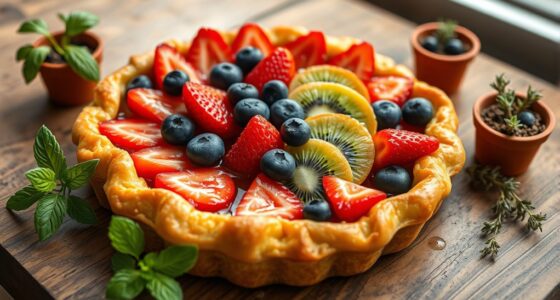
Once you’ve secured high-quality, safe edible flowers, you can begin exploring their versatility in salads, desserts, and garnishes. The subtle sweetness and floral aroma of flowers like pansies, violets, and nasturtiums can elevate salads by adding both visual appeal and nuanced flavor. Toss them in with greens, herbs, and other fresh ingredients for a colorful, aromatic dish. For desserts, edible flowers can be used to decorate cakes, cupcakes, panna cotta, or fruit tarts. Their delicate petals lend a refined touch and can be infused into syrups, creams, or whipped toppings to add floral notes. When using flowers in desserts, it’s best to incorporate them at the end of preparation to preserve their color and flavor.
Garnishing with edible flowers is an effortless way to make any dish more appealing. Place a few petals on top of cheeses, soups, or drinks to add a pop of color and a hint of floral aroma. You can also create stunning edible flower arrangements on platters or in cocktail glasses, instantly making your presentation more sophisticated. Remember to wash flowers gently before use, and avoid using flowers that haven’t been specifically labeled as edible unless you’re entirely certain they’re safe.
Incorporating edible flowers into your cooking is a delightful way to impress guests or simply enjoy a more vibrant, flavorful meal. By paying attention to flower preservation and sourcing, you guarantee your edible flowers are both safe and stunning. With a little practice, you’ll discover how these delicate blooms can transform ordinary dishes into extraordinary culinary experiences.
Frequently Asked Questions
Are Edible Flowers Safe for Children and Pets?
Edible flowers can be safe for children and pets if you guarantee proper flower safety. Always verify that the flowers are non-toxic and free from pesticides or chemicals. You should also be aware of pet precautions, as some flowers are harmful to animals. Keep edible flowers out of reach of pets and children, and consult a trusted source if you’re unsure about a specific type. When in doubt, avoid giving flowers to young children or pets.
How Do I Store Edible Flowers to Keep Them Fresh?
Think of storing edible flowers like guarding a delicate secret; you want to preserve their beauty. To keep them fresh, handle with care and use a damp paper towel to retain moisture. Place the flowers in an airtight container or a glass jar, then store in the refrigerator’s crisper drawer. For flower preservation, follow these freshness tips, and your blooms will stay vibrant and ready to enchant your dishes.
Can I Grow Edible Flowers Indoors Year-Round?
Yes, you can grow edible flowers indoors year-round with proper indoor gardening. Place them near a sunny window or use grow lights to simulate seasonal blooming conditions. Keep the environment warm and maintain consistent watering, avoiding overwatering. By providing adequate light and care, you’ll enjoy fresh, edible flowers indoors whenever you want, regardless of the season. This way, indoor gardening makes seasonal blooming accessible all year.
What Are Common Allergies Related to Edible Flowers?
You should be aware that edible flowers can cause flower allergy symptoms like itching, swelling, or difficulty breathing if you’re sensitive. Some people also experience edible flower cross reactivity, meaning they might react to related plants or flowers. To stay safe, try a small amount first and watch for any allergic reactions. If you notice symptoms, stop eating the flowers and consult a healthcare professional.
How Do I Identify Edible Versus Toxic Flowers in Nature?
To identify edible versus toxic flowers, you should focus on flower toxicity and use identification tips. Always consult trusted guides or apps to confirm species, and look for distinct features like leaf shape, color, and scent. Avoid flowers with unfamiliar or strange odors, milky sap, or unusual colors. When in doubt, don’t consume it—misidentification can be dangerous. Proper research guarantees safe, enjoyable edible flower experiences.
Conclusion
As you explore these edible flower recipes, remember that nature’s delicate beauty isn’t just for the eye but also for your palate. Like a painter’s brushstroke or a poet’s verse, these blossoms add a touch of magic and wonder to your creations. Embrace their fleeting elegance, knowing each bloom is a reminder to savor life’s simple, vibrant moments. Let your culinary journey bloom with the same grace and artistry that flowers inspire all around us.