VPD might sound advanced, but it’s really a simple and effective way to optimize your garden’s environment. It measures the difference between air humidity and what your plants need at specific temperatures, helping you make quick, data-driven decisions. By monitoring VPD, you can adjust watering, humidity, and airflow precisely, preventing issues like overwatering or mold. Keep going to discover how mastering VPD can transform your gardening results and make climate control easier than ever.

Get garden gear delivered free with Prime
- Fast, free delivery on millions of items
- Prime Video, Amazon Music and more included
- Member-only deals all year
Key Takeaways
- VPD simplifies climate management by providing a clear, measurable indicator of plant hydration needs.
- It enables precise adjustments in humidity and airflow for optimal plant health.
- Using VPD helps gardeners avoid overwatering, underwatering, and humidity-related issues.
- Incorporating VPD makes climate control data-driven, improving growth outcomes and resource efficiency.
- It acts as a practical shortcut, transforming complex environmental factors into actionable gardening decisions.
Understanding vapor pressure deficit (VPD) might seem like an advanced concept reserved for experienced growers, but it’s actually the missing climate shortcut that can substantially improve your gardening results. At its core, VPD measures the difference between the moisture in the air and the moisture the plant leaves can hold at a given temperature. If you grasp this, you’ll better understand how your plants respond to their environment and how to optimize their growth. Essentially, VPD acts as a climate adaptation tool, guiding you to adjust watering, humidity, and airflow to keep your plants healthy and thriving.
VPD measures the difference between air moisture and what plants can hold, guiding optimal watering, humidity, and airflow.
When you pay attention to VPD, you’re directly influencing plant hydration. If the VPD is too high, the air is dry, and your plants lose water quickly through their leaves. This can cause stress, slow growth, or even damage if left unchecked. Conversely, if VPD is too low, the air is overly humid, which can lead to problems like mold, mildew, or root rot. By maintaining an optimal VPD range, you help your plants stay hydrated without overwatering, creating a balanced environment that encourages vigorous growth. This balance is crucial, especially in environments where humidity and temperature fluctuate frequently.
Climate adaptation becomes easier once you understand VPD because it provides a clear, measurable way to respond to changing conditions. Instead of guessing whether your plants need more water or better airflow, you can monitor the VPD and make precise adjustments. For example, if you notice the VPD rising, you might increase humidity or reduce airflow to keep it within the ideal range. If it drops too low, ventilate more or lower humidity levels. This precise control minimizes the stress on your plants and maximizes their potential for healthy development. Plus, understanding climate control can help you create a more stable environment, reducing the impact of external weather fluctuations. Incorporating environmental data**** can further enhance your ability to fine-tune conditions for optimal plant growth.
Using VPD as your climate shortcut also helps you conserve resources. Instead of overwatering just to be safe or running dehumidifiers unnecessarily, you can fine-tune your environment based on actual data. This approach not only boosts plant health but also reduces waste and energy costs. It’s a straightforward way to adapt your garden to seasonal changes or indoor conditions, ensuring consistent results regardless of external weather fluctuations.
In essence, understanding VPD empowers you to take a more scientific approach to gardening. It turns guesswork into informed decisions, allowing you to optimize plant hydration and adapt your climate management strategies. By integrating air quality considerations into your VPD management, you can further create an environment that supports healthy, thriving plants. Once you incorporate VPD into your routine, you’ll notice your plants become more resilient, grow faster, and produce better yields—all because you’re working with your environment instead of against it.
Products Worth Considering

Orbit B-hyve XD 4-Port Smart Hose Watering Timer with Wi-Fi Hub

Orbit B-hyve 12-Zone Indoor/Outdoor Wi-Fi Sprinkler Controller

Orbit B-hyve XR 8-Zone Indoor/Outdoor Smart Sprinkler Controller
As an affiliate, we earn on qualifying purchases.
Frequently Asked Questions
How Does VPD Impact Plant Growth Specifically?
VPD impacts plant growth by influencing how much water vapor the air can hold, which directly affects plant stress and water uptake. When VPD is high, plants lose more water, causing stress that hampers growth. Conversely, low VPD promotes better water retention, leading to healthier plants. By managing VPD, you can optimize growth conditions, reduce stress, and guarantee your plants thrive with better overall development.
Can VPD Be Adjusted Indoors Easily?
Think of adjusting VPD indoors like tuning a vintage radio—you just need to find the right station. You can easily control indoor humidity and temperature to optimize VPD. Use a humidifier or dehumidifier, and adjust your thermostat to keep conditions steady. Monitoring tools help you fine-tune these settings, making plant health more predictable. With a little effort, you’ll create an environment where your plants thrive effortlessly.
What Tools Are Needed to Measure VPD Accurately?
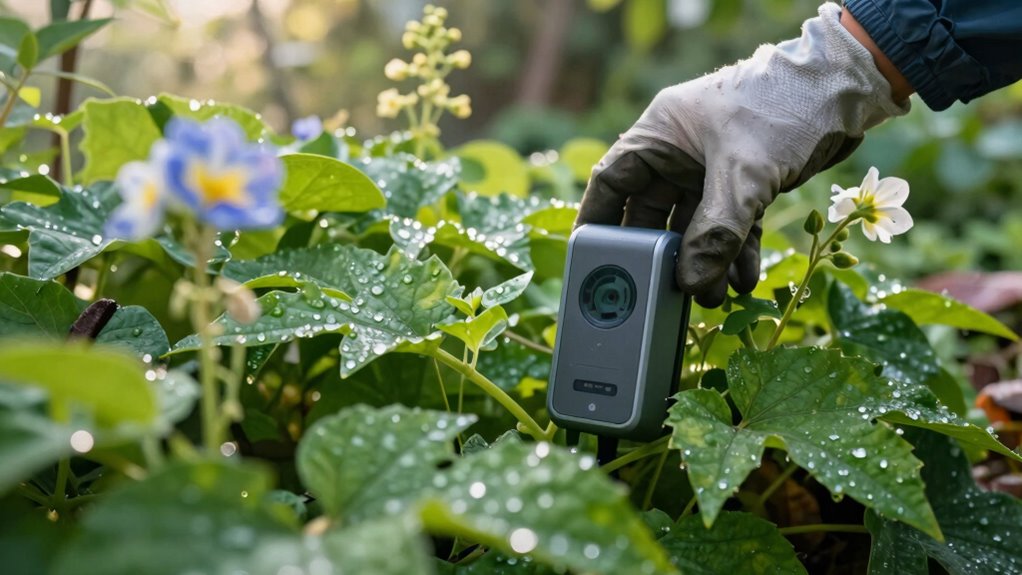
To measure VPD accurately, you need a reliable sensor, like a dew point or humidity sensor, and a thermometer. Make sure to calibrate the sensor regularly for accuracy. Data logging tools, such as a digital logger or connected app, help track changes over time. These tools provide real-time readings, allowing you to adjust indoor conditions effectively, ensuring ideal plant health and growth.
Is VPD Relevant for All Types of Plants?
Think of VPD as the heartbeat of your garden’s climate rhythm—it’s relevant for all plant types, whether lush vegetables or delicate orchids. Environmental factors like humidity and temperature influence VPD, shaping how each plant absorbs water and thrives. By understanding VPD, you tune into this subtle pulse, helping you adapt care to suit diverse plant needs, ensuring each species dances harmoniously with its environment.
How Often Should I Monitor VPD Levels?
You should monitor VPD levels daily or at least several times a week to maintain ideal humidity control and support plant health. Regular checks help you adjust humidity and temperature settings effectively, preventing issues like mold or dehydration. Consistent monitoring ensures your plants stay in their perfect VPD range, promoting vigorous growth and preventing stress. Keep an eye on changes, especially during flowering or environmental shifts, for the best results.
Conclusion
Understanding VPD might seem complex, but it’s a game-changer for your garden’s climate control. By mastering this concept, you could boost plant growth and reduce stress. Did you know that maintaining ideal VPD levels can increase crop yields by up to 20%? It’s a simple shortcut that helps you fine-tune your environment for healthier, more productive plants. So, don’t overlook VPD—embrace it and watch your garden thrive like never before.