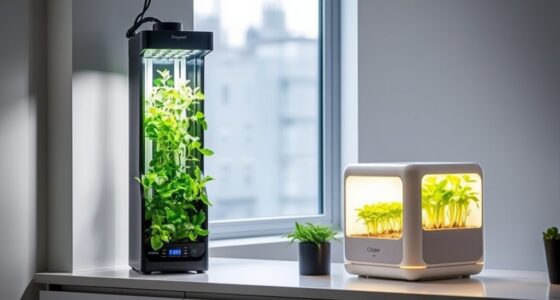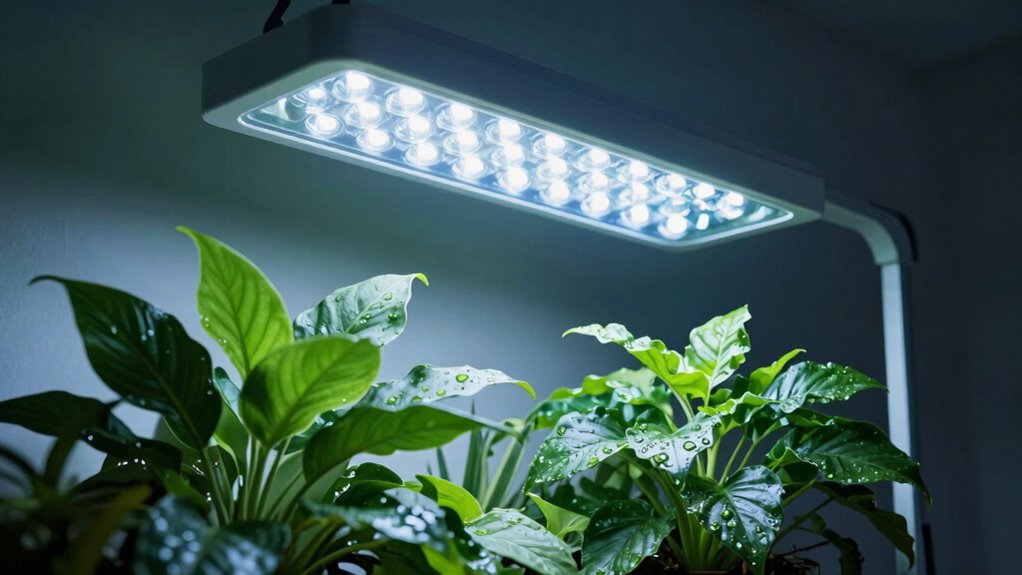

Most growers overlook adjusting their smart grow light’s spectrum to match different plant growth stages. They often stick with default settings, missing out on blue light during vegetative growth or red light during flowering. Properly customizing your light spectrum can boost plant health, encourage vigorous growth, and increase yields. By actively fine-tuning your grow light, you’re more likely to see better results. Keep exploring—there’s more to mastering your grow light than you might think.
Key Takeaways
- Many users neglect to adjust spectrum settings for different growth stages, reducing overall plant health.
- Inconsistent light duration settings often lead to suboptimal photosynthesis and growth.
- Overreliance on default presets without monitoring can hinder maximum yield potential.
- Failing to fine-tune red and blue light ratios according to plant needs limits growth vigor.
- Not actively experimenting with light adjustments prevents optimal development and harvest quality.

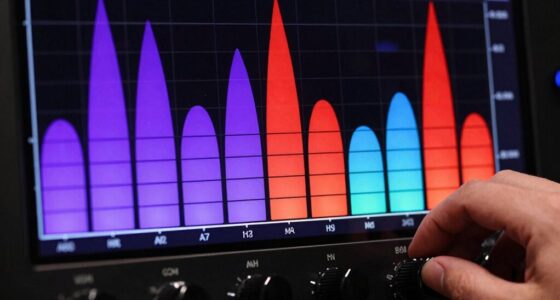
Setting up your smart grow light correctly can substantially boost your plant’s health and growth. Many growers overlook the importance of fine-tuning the plant spectrum and light duration, yet these settings are crucial for maximizing your plants’ potential. The plant spectrum refers to the specific wavelengths of light emitted by your grow light, which directly influence photosynthesis and overall plant development. Most manufacturers provide default settings, but these often don’t match the needs of your particular plants. By adjusting the spectrum, you can enhance flowering, vegetative growth, or fruit production. For example, a full-spectrum light mimics natural sunlight, providing a balance of blue and red wavelengths. Blue light promotes lush, healthy leaves and strong stems, while red light encourages flowering and fruiting. If your grow light allows for spectrum customization, experiment with shifting the balance based on your plant’s growth stage. During vegetative phases, emphasize blue tones; during flowering, increase red wavelengths to stimulate blooming. Additionally, understanding the photosynthesis process can help you better tailor your light settings for optimal plant health. Properly managing the light spectrum, including understanding the plant growth stages, during different growth phases, combined with the correct light duration, creates an optimal environment for your plants. Yet, it’s a common mistake to leave these parameters on default or set and forget. The most successful growers actively monitor and adjust these settings, observing how their plants respond and making incremental improvements. When you pay close attention to how your plants react to spectrum and light duration adjustments, you’ll notice healthier foliage, more vigorous growth, and better yields. Gaining a deeper understanding of plant responses can further improve your ability to fine-tune the lighting for maximum results. Mastering these settings might take some trial and error, but the payoff is healthier plants and more successful harvests.

Smart Grow Light for Indoor Plants, 53.9"-67.5" Adjustable Height Full Spectrum LED Plant Light, APP Control with Auto Timer, Plant Assistant,Stepless Dimming, Ideal for Large Tall Plants
Smart APP & Manual Control :Use the Smart APP for full scheduling, brightness, and mode control, or adjust…
As an affiliate, we earn on qualifying purchases.
As an affiliate, we earn on qualifying purchases.
Frequently Asked Questions
How Often Should I Adjust the Grow Light Settings During Plant Growth?
You should adjust your grow light settings weekly as your plants grow. Keep an eye on soil testing results to guarantee your plants get the right light intensity and duration. Proper lighting helps prevent pest management issues by promoting healthy growth. As plants develop, increase or decrease light exposure accordingly, ensuring they aren’t stressed or underlit. Regular adjustments optimize growth and health, making your indoor gardening more successful.
Can Different Plant Species Require Unique Grow Light Configurations?
Yes, different plant species need unique grow light configurations. You should adjust the light spectrum to match their growth stages—blue light for vegetative growth and red for flowering. Also, modify light intensity based on the plant’s needs; some require more direct light, while others thrive with less. Paying attention to these factors guarantees ideal growth, healthy development, and better yields for each plant species.
What Are Signs My Grow Light Setting Is Incorrect?
Like a vintage jukebox, your grow light can sometimes play the wrong tune. If your plants look stretched, pale, or have scorched edges, your light intensity might be too high or too low. Also, check the color spectrum; if leaves turn yellow or purple, your light may not match their needs. These signs indicate your settings need adjustment to optimize growth and health.
Is There an Optimal Duration for Daily Grow Light Exposure?
Yes, there’s an ideal duration for daily grow light exposure, typically around 12-16 hours for most plants. Focus on photoperiod management by adjusting light duration to match your plant’s growth stage. Also, guarantee the light intensity is appropriate—too much can stress plants, while too little slows growth. Consistently monitoring and tweaking these factors helps promote healthy development and maximize yields.
How Do Ambient Room Conditions Influence the Best Grow Light Settings?
Ambient room conditions like temperature, humidity, and natural light considerably influence your grow light settings. You should adjust the light spectrum to complement the room’s natural light, ensuring your plants get the right balance of blue and red wavelengths. Also, monitor light intensity to prevent stress or stretch. If the room is warm and humid, reduce intensity; if cold or dark, increase it. Tailoring these factors optimizes plant growth.
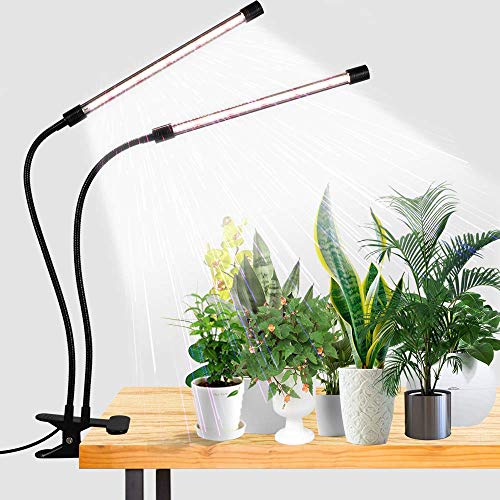
GooingTop LED Grow Light,6000K Full Spectrum Clip Plant Growing Lamp with White Red LEDs for Indoor Plants,5-Level Dimmable,Auto On Off Timing 4 8 12Hrs
6000K White Light – equipped with 10 Red + 74 White LEDs, this growing Lamp is similar to…
As an affiliate, we earn on qualifying purchases.
As an affiliate, we earn on qualifying purchases.
Conclusion
Now that you know the secrets to mastering your smart grow light, you’re armed to turn your indoor garden into a thriving oasis. Think of it as tuning a fine instrument—every adjustment brings your plants closer to harmony. Don’t let this powerful tool sit in the shadows; embrace its potential, and watch your green friends flourish like a well-orchestrated symphony. With a little attention, your garden will bloom brighter than you ever imagined.

East Grace LED Plant Grow Light Bulb, 15W, Royal Blue 450-460nm, LED Aquarium Blue Light, Grow Lamp for Hydroponic Indoor Garden Greenhouse Succulent Veg Flower
OPTIMIZE PLANT STRUCTURE: This grow light delivers a precise 450-460nm blue spectrum to build strong, compact plants. It…
As an affiliate, we earn on qualifying purchases.
As an affiliate, we earn on qualifying purchases.

HIGROW 660nm Red Light Bulb, 18W (36W Equivalent) LED Grow Light for Indoor Plants Flowering Bloom and Fruiting, Grow Spectrum Enhancement
New Version: Currently the old and new versions are shipped randomly, the product is only a difference in…
As an affiliate, we earn on qualifying purchases.
As an affiliate, we earn on qualifying purchases.