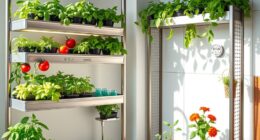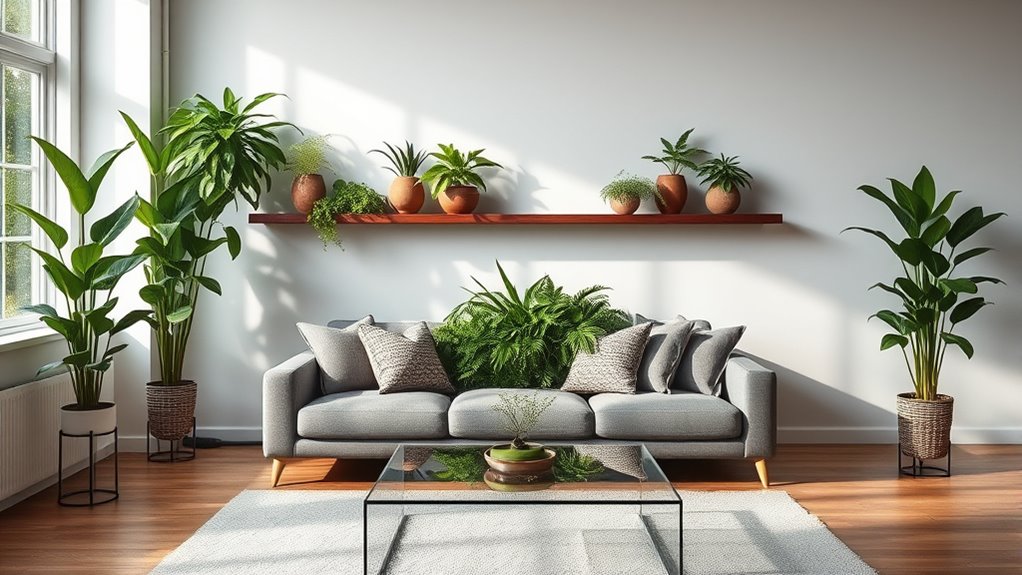

To integrate indoor gardens into your living room decor, start by selecting plants that match your space’s lighting and style. Use varied heights, textures, and decorative pots to create visual interest. Place taller plants in corners and hang or elevate others to maximize light. Group similar care needs for easy maintenance and rotate plants regularly for even growth. Achieving a harmonious indoor garden elevates your space’s aesthetic and atmosphere—discover more tips to create your perfect green oasis.
Key Takeaways
- Use varied plant heights and textures to create visual interest and balance within the living room space.
- Incorporate decorative pots and containers that complement your existing decor style.
- Position taller plants in corners or behind furniture to maximize space and promote a natural flow.
- Group plants with similar care needs for easier maintenance and cohesive display.
- Enhance ambiance by combining greenery with ambient lighting and strategic plant placement.

Have you ever contemplated transforming your living room into a lush oasis? Incorporating indoor gardens can instantly breathe life into your space, creating a calming and inviting atmosphere. The key to a successful indoor garden lies in choosing the right lighting options and mastering plant arrangement tips, which work together to ensure your plants thrive and your decor looks stunning.
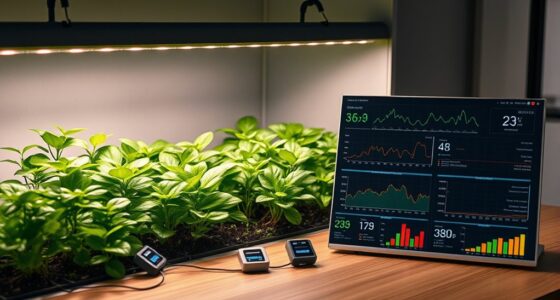
First, understanding your lighting options is essential. Natural light is your best friend; windows that receive plenty of sunlight will support a wide variety of plants. If your living room doesn’t get enough sunlight, don’t worry—there are alternatives. You can supplement with grow lights that mimic natural sunlight, providing the necessary spectrum for healthy plant growth. LED grow lights are energy-efficient and come in various intensities, making them suitable for different types of indoor plants. Position your plants near windows with south or east exposure for the most sunlight, and consider using sheer curtains to diffuse harsh rays and prevent leaf scorch. If space allows, hanging plants or placing them on elevated shelves can maximize light exposure, especially in rooms with limited window access.
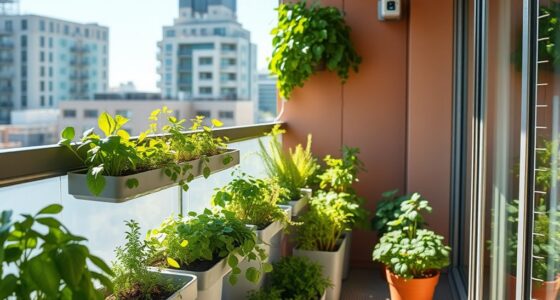
Once you’ve addressed lighting, focus on plant arrangement tips to create a cohesive and vibrant display. Group plants with similar care needs together, such as those that prefer low light or high humidity. Use varying heights and textures to add visual interest—tall plants like fiddle leaf figs or snake plants can anchor corners, while trailing plants like pothos or string of pearls cascade from shelves or hanging baskets. Mixing different leaf shapes and colors also enhances the overall aesthetic. Don’t forget to consider the scale of your plants in relation to your furniture; a balanced arrangement feels more natural and inviting.
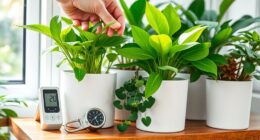
Placement is equally important. Place taller plants at the back or in corners to fill empty spaces, and arrange smaller plants on coffee tables, sideboards, or plant stands at different levels. Use decorative pots that complement your living room decor, adding personality to your indoor garden. Regularly rotate your plants to ensure even light exposure and prevent them from leaning toward the light source. Keep an eye on their watering needs, and group plants with similar moisture requirements to make maintenance easier. Additionally, implementing AI-driven data analytics can help monitor your plant health and optimize care routines.
Incorporating an indoor garden isn’t just about adding greenery—it’s about creating a harmonious environment where your plants flourish and your living room becomes a tranquil retreat. With thoughtful lighting options and strategic plant arrangement tips, you’ll craft a vibrant, healthy indoor garden that elevates your space and your mood every day.
Frequently Asked Questions
How Do I Choose the Right Plants for My Living Room?
You should focus on plant selection by considering your living room’s lighting, space, and climate. Choose plants that thrive in your conditions, whether low or bright light, and match their size to your room’s aesthetic considerations. Opt for plants with interesting textures or colors to enhance your decor. Keep maintenance in mind, so pick plants that fit your lifestyle, ensuring your indoor garden stays vibrant and beautiful.
What Are Common Pests That Affect Indoor Garden Plants?
Think of pests as uninvited guests crashing your indoor garden party. Common culprits include spider mites, aphids, and fungus gnats, which can damage your plants like tiny vandals. To keep them at bay, practice pest prevention by regularly inspecting plants and using natural repellents like neem oil or insecticidal soap. Staying vigilant guarantees your lush oasis remains vibrant, thriving under your attentive care.
How Often Should I Water Indoor Garden Plants?
You should water your indoor garden plants when their soil moisture drops, typically once a week or when the top inch feels dry. Establish a consistent watering schedule, but always check soil moisture first to avoid overwatering. Adjust frequency based on factors like plant type, season, and indoor humidity. This way, your plants stay healthy, and you prevent issues like root rot or dehydration.
Can Indoor Gardens Improve Air Quality in My Home?
You might be surprised, but indoor gardens can actually improve your home’s air quality through air purification. By choosing the right plant selection—such as snake plants and pothos—you actively reduce toxins and increase oxygen levels. This natural way to refresh your space enhances air quality, making your living room healthier and more inviting. So, adding indoor plants isn’t just decorative; it’s a simple step toward cleaner, fresher indoor air.
What Lighting Options Are Best for Indoor Garden Plants?
You should choose LED lighting or natural sunlight for your indoor garden plants. LED lights are energy-efficient and can be customized to provide the specific spectrum your plants need, making them ideal for consistent growth. Natural sunlight is also excellent, especially if your living room gets plenty of direct light. Combining both options guarantees your plants thrive, stay healthy, and add vibrant greenery to your living space.
Conclusion
Incorporating indoor gardens into your living room not only boosts your space’s beauty but also improves air quality and reduces stress. Did you know that just having houseplants can increase indoor humidity levels by up to 5%? So, by adding a touch of greenery, you create a healthier, more relaxing environment. Start small, choose plants you love, and watch your living room transform into a vibrant, calming oasis you’ll enjoy every day.