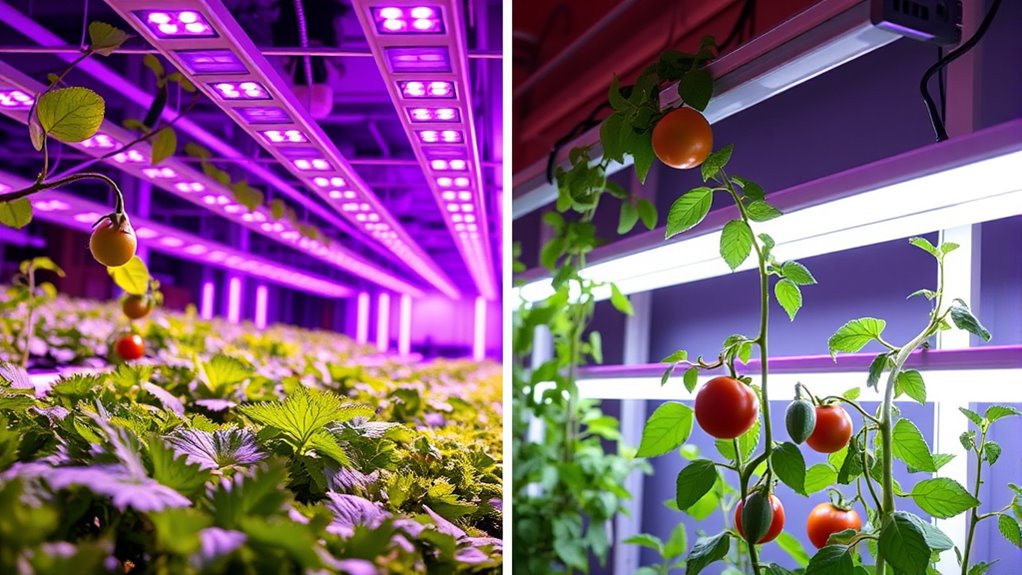
When choosing between LED and fluorescent lights for your hydroponic system, LEDs are the smarter option. They offer targeted wavelengths to support different growth stages, are more energy-efficient, and last longer, reducing maintenance costs. While fluorescents may be cheaper upfront, their limited spectrum and higher energy use make them less suitable for ideal plant growth. If you want to maximize yield and save money long-term, switch to LEDs—learn how they can transform your setup.
Key Takeaways
- LEDs offer customizable spectra tailored for different plant growth stages, unlike broad-spectrum fluorescents.
- LEDs are more energy-efficient, producing more light per watt and reducing electricity costs over time.
- LED fixtures are more durable and require less maintenance than fluorescent bulbs, lowering long-term expenses.
- Fluorescent lights are affordable initially but less effective for flowering or fruiting stages.
- For maximizing yield and efficiency, LEDs are the preferred choice despite higher upfront costs.
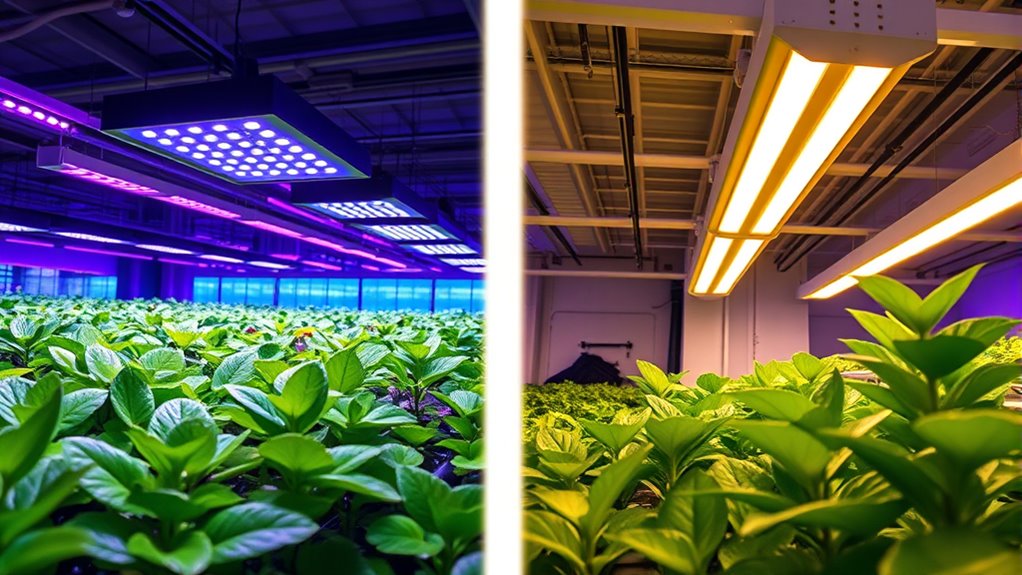
Are LED and fluorescent lights equally effective for hydroponic systems? The answer depends on what you’re aiming to achieve. Both lighting options can support plant growth, but they differ considerably in their light spectrum and energy efficiency. When considering which to use, you need to understand how each type influences plant development and the overall costs involved. Fluorescent lights, traditionally favored for their affordability and availability, emit a broad light spectrum that can support seedlings and leafy greens well. However, their light spectrum isn’t as customizable or tailored for specific plant needs as LEDs. Fluorescent bulbs tend to produce a softer, less intense light, which might limit their effectiveness for flowering or fruiting plants. They also consume more energy relative to the amount of usable light they produce, making them less energy efficient. Over time, this higher energy consumption can lead to increased electricity bills, especially if you’re running multiple fixtures.
LED lights, on the other hand, have revolutionized indoor gardening because of their highly customizable light spectrum and superior energy efficiency. You can select LED grow lights tailored to specific growth stages, such as vegetative or flowering phases, by adjusting the spectrum of light they emit. This targeted approach guarantees your plants receive the ideal wavelengths for photosynthesis, promoting healthier, faster growth. Additionally, LEDs produce more light per unit of energy consumed, meaning they’re much more energy efficient than fluorescent bulbs. This not only saves you money on electricity but also reduces heat output, which minimizes the need for additional cooling in your grow space. The durability of LED fixtures also means fewer replacements and less maintenance over time, further enhancing their cost-effectiveness. Furthermore, the durability of LED fixtures makes them suitable for long-term use in various environments, unlike fluorescent lights, which may need frequent replacement.
While fluorescent lights might be suitable for small-scale or beginner setups due to their lower initial cost, LEDs offer long-term benefits that often outweigh the upfront investment. Their ability to deliver the right light spectrum at high energy efficiency levels makes them a preferred choice for serious hydroponic growers aiming for maximum yield and plant health. In essence, if you’re looking for a lighting solution that maximizes plant growth while minimizing energy costs, LEDs are the smarter choice. They provide the precise light spectrum your plants need and do so with greater energy efficiency, ensuring your hydroponic system remains cost-effective and productive over time.

KingLED KP1000 LED Grow Light for Indoor Plants, Full Spectrum Plant Light with Veg & Bloom Mode, 100W Growing Lamp for Seed Starting Seedlings Vegetable Hydroponic Greenhouse, 2×2/2×3 Grow Tent
【Sunlike Full Spectrum】This 100W full spectrum LED grow light delivers 1560 μmol/㎡/s PPFD (at 6″) with 460nm blue,…
As an affiliate, we earn on qualifying purchases.
As an affiliate, we earn on qualifying purchases.
Frequently Asked Questions
How Do LED and Fluorescent Lights Impact Plant Nutrient Uptake?
You’ll find that LED and fluorescent lights affect plant nutrient uptake differently because of their light spectrum and photosynthesis efficiency. LEDs provide a tailored spectrum that boosts photosynthesis, helping plants absorb nutrients more effectively. Fluorescent lights have a broader spectrum but are less efficient. By choosing LEDs, you can optimize light spectrum and improve plant growth, leading to better nutrient uptake and healthier plants overall.
What Is the Average Lifespan of LED Versus Fluorescent Grow Lights?
Imagine your grow lights as steady guardians over your plants’ health. LED lights usually shine bright for about 25,000 to 50,000 hours, lasting years with consistent light spectrum and high energy efficiency. Fluorescent lights, however, often flicker out around 8,000 to 15,000 hours. With this in mind, LEDs offer a longer, more reliable lifespan, making them a smarter, energy-efficient choice for your hydroponic setup.
Are There Any Health Risks Associated With Fluorescent Grow Lights?
You should be aware that fluorescent grow lights can emit UV and infrared radiation, which might pose health risks if you’re exposed to prolonged or direct light without proper protection. Their light spectrum is less tailored for plant growth, and disposal can impact the environment due to mercury content. To minimize risks, use protective gear and ensure proper disposal to reduce environmental impact while optimizing plant health.
How Do Initial Costs Compare Between LED and Fluorescent Systems?
You might worry about your budget, but the initial cost comparison shows LED systems often require higher installation costs than fluorescents. Though LEDs save money over time with energy efficiency, their upfront prices can be intimidating. Fluorescent lights usually have lower installation costs, making them more appealing initially. Still, consider long-term savings and performance before making your choice—sometimes, paying more upfront pays off later.
Do Different Plant Species Have Specific Light Preferences in Hydroponics?
You should consider plant light preferences because different species have unique lighting needs in hydroponics. Some plants thrive under blue light, promoting leafy growth, while others prefer red light for flowering. Understanding species-specific lighting helps optimize growth and yields. By customizing your lighting to match each plant’s preferences, you guarantee healthier plants and better results, making your hydroponic system more efficient and productive.
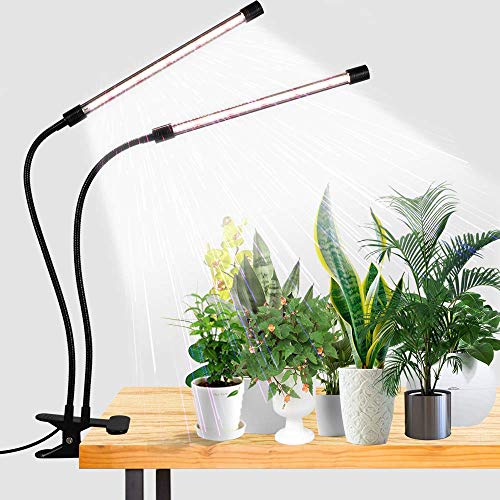
GooingTop LED Grow Light,6000K Full Spectrum Clip Plant Growing Lamp with White Red LEDs for Indoor Plants,5-Level Dimmable,Auto On Off Timing 4 8 12Hrs
6000K White Light – equipped with 10 Red + 74 White LEDs, this growing Lamp is similar to…
As an affiliate, we earn on qualifying purchases.
As an affiliate, we earn on qualifying purchases.
Conclusion
Now that you’ve seen both sides, it’s clear LED and fluorescent lights each have their strengths. While LEDs offer energy efficiency and customizable spectrums, fluorescents provide a budget-friendly option with good coverage. Think about your goals—are you aiming for cost savings or ultimate control? Your choice shapes your hydroponic success. In the end, whether you choose bright, modern LEDs or trusty fluorescents, your plants will thrive with the right light.

Aokrean Plant Grow Light, 48 LEDs Full Spectrum Grow Lights for Indoor Plants, Height Adjustable Small Halo Grow Light with Base, 3 Optional Spectrums, Auto Timer 3/9/12Hrs, 10 Brightness, 3 Pack
NOTE: The product stand needs to be pressed down by the flower pot to be stable. Not wireless…
As an affiliate, we earn on qualifying purchases.
As an affiliate, we earn on qualifying purchases.

Uallhome 2 Pack LED Grow Light Panel 200W Lamp for Indoor Plants, Full Spectrum with White Blue Red UV IR LEDs for 4x4ft Coverage Grow Tent Greenhouse Veg and Bloom Seedlings Hydroponics
Beetter light spectrum optimization: Full spectrum lights are all-around products that can provide adequate and balanced lighting for…
As an affiliate, we earn on qualifying purchases.
As an affiliate, we earn on qualifying purchases.