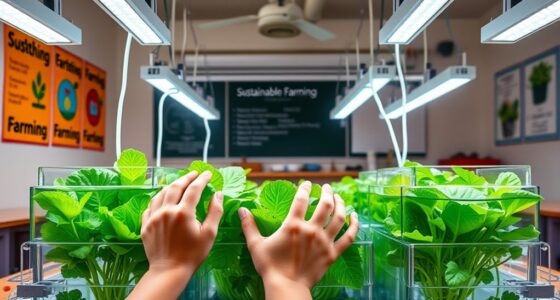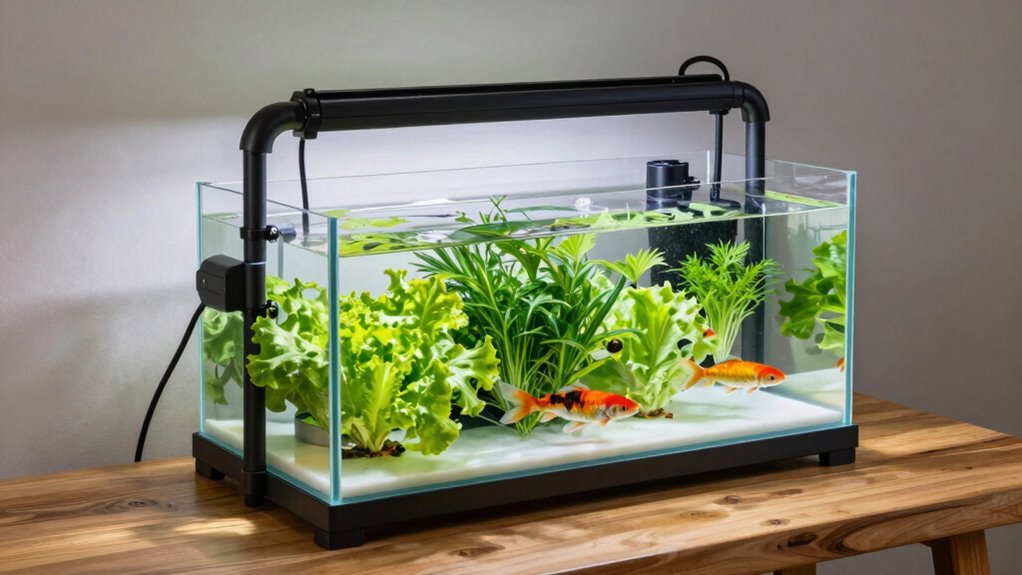

Home aquaponics looks cool, but it requires a mindset shift toward sustainability, patience, and viewing your home as a self-sufficient ecosystem. You’ll need to prioritize eco-friendly habits, manage both plants and fish thoughtfully, and see waste as a resource rather than trash. This approach helps you understand food sources better and boosts your personal connection to nature. Keep exploring to discover how embracing this mindset can transform your lifestyle and impact beyond your home.

Get garden gear delivered free with Prime
- Fast, free delivery on millions of items
- Prime Video, Amazon Music and more included
- Member-only deals all year
Key Takeaways
- Adopting home aquaponics requires viewing your household as a self-sustaining ecosystem, emphasizing patience and ongoing maintenance.
- It demands a mindset focused on sustainability, including resourcefulness in waste management and local food production.
- Cultivating awareness of food origins and environmental impact encourages eco-conscious choices and lifestyle habits.
- Success depends on embracing ecological responsibility, such as water conservation and organic inputs, as part of daily routines.
- Developing respect for natural systems and biodiversity fosters a deeper connection to sustainability and community advocacy.
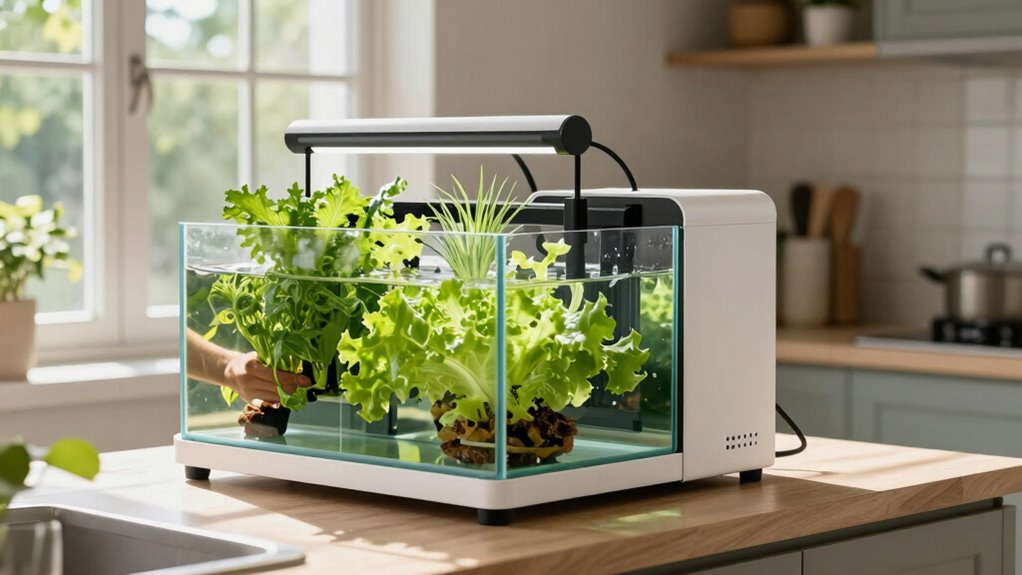
Adopting home aquaponics requires more than just setting up a tank and planting some fish and plants; it demands a fundamental shift in how you view food production. Instead of relying solely on traditional grocery shopping, you start to see your home as a mini ecosystem—where animals and plants work together in harmony. This approach isn’t just about having a fresh salad or fish; it’s about embracing a lifestyle rooted in sustainability. You begin to prioritize eco-friendly habits, recognizing how small changes in your daily routine can contribute to a healthier planet.
When you choose to integrate aquaponics into your home, you actively participate in urban sustainability. You reduce your carbon footprint by growing your own food, cutting down on packaging waste, and minimizing transportation emissions. It’s a conscious decision to take responsibility for the resources you consume. This mindset encourages you to think differently about waste, viewing it as a resource rather than trash. Excess organic waste from your kitchen can be composted or fed to your fish, completing a cycle of reuse that’s better for the environment.
Home aquaponics shifts your perception of food sources. Instead of trusting the supermarket’s supply chain, you become more aware of where your food comes from and how it’s produced. You realize that sustainable food production doesn’t have to be complicated or distant; it can be part of your daily life. This new perspective fosters patience and attentiveness, as you learn to maintain a balanced ecosystem where fish and plants thrive together. It’s a practice that demands consistency and mindfulness, reinforcing eco-friendly habits like conserving water, reducing energy use, and choosing organic inputs whenever possible. Developing this sustainable mindset can also inspire you to advocate for broader environmental initiatives in your community.
This mindset isn’t just about the environment; it’s about personal well-being too. You understand that growing your own food can be more nutritious and enjoyable, connecting you to nature in a way that store-bought produce can’t. It’s a reminder that sustainability is a holistic concept—integrating ecological responsibility with personal health. As you adopt these habits, you develop a deeper respect for natural systems, realizing that even small efforts contribute to global sustainability goals.
In the end, home aquaponics looks cool, but its true value lies in fostering a mindset that values sustainability, eco-friendly habits, and self-sufficiency. It’s about changing the way you think about food, waste, and your impact on the environment—making every meal a conscious choice that supports a more resilient, sustainable future. Recognizing the importance of biodiversity helps reinforce the interconnectedness of natural systems and the need to protect them through sustainable practices.
Products Worth Considering

Orbit B-hyve XD 4-Port Smart Hose Watering Timer with Wi-Fi Hub

Orbit B-hyve XR 16-Zone Indoor/Outdoor Smart Sprinkler Controller

EGO POWER+ String Trimmer, Battery Powered, 16 Trimmer for Weeds and Grass with POWERLOAD, LINE IQ, Telescopic Carbon Fiber Shaft, Battery a
As an affiliate, we earn on qualifying purchases.
Frequently Asked Questions
How Much Initial Investment Is Required for Home Aquaponics?
You’ll likely need around $200 to $1,000 for initial startup costs, depending on the system size and materials. To assess economic feasibility, consider expenses for tanks, grow beds, plumbing, and fish stock. Smaller, DIY setups cost less, while larger, automated systems require more investment. Planning carefully helps you balance costs and benefits, ensuring your home aquaponics system is both affordable and sustainable in the long run.
What Are Common Pests or Diseases in Aquaponics Systems?
In your aquaponics system, pests like aphids, snails, and spider mites can cause trouble, so practicing pest management is key. Diseases such as fin rot or fungal infections may also occur, making disease prevention essential. Regularly inspect your plants and fish, maintain clean water, and remove any affected parts promptly. Implementing proper pest control and disease prevention strategies helps keep your system healthy and productive.
How Long Does It Take to See Results in a New System?
Patience and persistence pay off in aquaponics. Typically, you’ll see results within 4 to 8 weeks, as the water cycle stabilizes and aquatic aesthetics flourish. During this time, plants begin to grow, and fish start thriving. Keep monitoring the water quality, maintaining the system, and adjusting as needed. With consistent care, your system will soon showcase lush greenery and lively fish, delivering the delightful results you desire.
Can Aquaponics Be Integrated With Existing Home Systems?
Yes, you can integrate aquaponics with your existing home systems, especially if you’re mindful of urban compatibility and system scalability. You’ll need to adapt your space and plumbing, ensuring it fits your home’s layout and meets local regulations. Start small to test the setup’s integration, then expand as you learn. With proper planning, aquaponics can seamlessly complement your home environment, making sustainable food production more accessible.
What Are the Long-Term Maintenance Challenges?
You’ll face long-term challenges like maintaining nutrient balance, which requires regular testing and adjustments to keep your fish and plants healthy. System scalability can also be tricky; as your aquaponics setup grows, it needs more attention to water quality and filtration. Staying vigilant about these issues helps prevent problems and guarantees your system runs smoothly over time, making your home aquaponics both sustainable and rewarding.
Conclusion
Starting your home aquaponics journey is like planting a seed—requiring patience, care, and a shift in how you see your environment. It’s not just about growing fish and plants; it’s about nurturing a tiny ecosystem, a mirror of nature’s balance. Embrace this mindset, and you’ll find yourself tending a living symbol of harmony, where your efforts bloom into sustainability. With each small step, you’re cultivating more than just food—you’re cultivating a new way of thinking.