TL;DR
John Chang shared “Vegetable Gardening for Engineers,” a guide to growing vegetables in urban apartments using containers and hydroponics. It organizes plant biology, environmental measurements, crop data, techniques and economics; the author describes it as a starting point shaped by his own learning, not a complete guide to every gardening method.
John Chang has shared “Vegetable Gardening for Engineers,” a guide that organizes the science and practical choices involved in growing vegetables at home, with a focus on indoor and balcony gardens. The document is aimed at urban growers using containers or hydroponic systems, and presents measurements, crop data and techniques as a structured starting point rather than a guide to every form of vegetable gardening.

Get garden gear delivered free with Prime
- Fast, free delivery on millions of items
- Prime Video, Amazon Music and more included
- Member-only deals all year
Chang says he put the document together after finding popular gardening books too short on detail and social media too focused on discussion and clickbait. He describes it as a synthesis of material gathered during his own learning, including agricultural university extension programs, commercial seed and fertilizer crop guides, biology courses, farmer training, gardening workshops and techniques used by indoor cannabis growers. Those sources inform his project; the source material does not describe an independent review or testing of the recommendations.
The guide’s concepts section treats plant growth as a balance among interdependent conditions. It lists light, temperature, humidity, wind and carbon dioxide alongside root-zone conditions such as nutrient concentration, pH, water temperature and dissolved oxygen. Chang identifies light, air temperature, electrical conductivity and pH as especially useful measurements for small-scale systems. The material explains that too little of a growth factor can limit development, while excess light or fertilizer can also cause plant stress.
Other sections cover growth stages, crop-selection data, gardening tools and techniques, resources, and the economics of market gardening. A crop table, called “VegTable,” is intended to help readers compare crops and answer basic selection questions. The guide describes stages from seed germination through vegetative growth, flowering, fruiting and harvest, noting that pollination is relevant to fruiting crops. Chang invites readers to suggest changes through pull requests or email.
Measurements for Small-Space Growing
The guide’s approach may help apartment gardeners make decisions more systematically. Rather than treating a plant problem as an isolated issue, it connects environmental conditions: for example, light supplies energy for growth, temperature affects metabolic rate, and humidity and airflow influence transpiration and nutrient movement. That framing gives readers a set of variables to observe when plants struggle, while making clear that the factors interact.
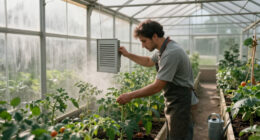
Its scope also addresses a practical constraint: many city growers have neither garden beds nor outdoor plots. By concentrating on containers and hydroponics, the document focuses on two approaches suited to balconies and indoor spaces. The benefit is a more targeted reference for that setting; the trade-off is that readers looking for guidance on soil beds, composting or other systems will need different resources.
The source material does not establish how widely the guide has been used, whether its crop data have been independently checked, or whether readers have achieved particular yields. Its significance here is the format and subject matter: a personally assembled, measurement-oriented reference for people who want to understand the variables behind home vegetable growing.
Products Worth Considering

Orbit B-hyve XR 16-Zone Indoor/Outdoor Smart Sprinkler Controller

EGO Power+ 21-Inch Self-Propelled Cordless Lawn Mower, LM2134SP-2

Orbit B-hyve XD 4-Port Smart Hose Watering Timer with Wi-Fi Hub
As an affiliate, we earn on qualifying purchases.
A Deliberately Narrow Gardening Scope
Chang describes the document as the result of a learning process over several years. He says he consulted sources spanning formal agricultural guidance and practical workshops, then organized the information into concepts, data and resources. That account is the author’s description of how the guide was assembled, not evidence that every recommendation has been validated across growing conditions.
The stated focus is urban apartment growing, specifically hydroponics and container gardening. Chang says garden beds, composting, aquaculture, fungiculture and permaculture are not covered yet. For outdoor growing, the material points readers toward considerations such as sun, wind, temperature, water access, soil conditions and local frost dates; it does not present the document as a substitute for location-specific planting advice.
““This is a starting point for understanding how to grow vegetables at home.””
— John Chang, the guide’s author
Evidence and Coverage Limits
The source material does not specify when the Show HN submission was posted, how many people have read or contributed to the guide, or whether its crop tables and advice have been independently reviewed. It also does not report measured results such as harvest size, costs or success rates. Readers should treat the author’s synthesis as a starting reference, with results likely dependent on crop, equipment and local conditions.
Chang says some subjects are not covered “yet,” but does not provide a schedule for adding them. It is unclear whether the guide has since been updated beyond the version described in the source material. The document’s focus also means it may not answer questions about outdoor beds or the other excluded practices.
Reader Feedback and Possible Updates
Chang’s stated next step is open-ended: he welcomes pull requests and email feedback. The source material does not announce a publication deadline, planned release or specific additions. Readers can look for changes to the guide and its crop data, but no update timetable is confirmed.
For now, the document is presented as a resource to consult alongside advice suited to a particular crop and growing environment. Any future expansion into the currently excluded topics remains uncertain.
Key Questions
What is “Vegetable Gardening for Engineers”?
It is John Chang’s structured guide to growing vegetables at home, combining plant-growth concepts, environmental measurements, crop data, techniques and resources.
Who is the guide aimed at?
Its stated focus is people growing vegetables in urban apartments, especially with containers or hydroponic systems indoors or on balconies.
Does it cover traditional garden beds?
No. Chang says garden beds, composting, aquaculture, fungiculture and permaculture are outside the guide’s current scope.
What measurements does it discuss?
The guide discusses light, air temperature, humidity, airflow, carbon dioxide, nutrient concentration, pH, root-zone temperature and dissolved oxygen. It identifies light, temperature, electrical conductivity and pH as key measurements for small-scale systems.
Has the guide’s advice been independently validated?
The supplied material does not describe independent review, controlled testing or reported growing results. Chang presents the document as a starting point based on his own learning and research.
Source: jrcpl.us