TL;DR

Get garden gear delivered free with Prime
- Fast, free delivery on millions of items
- Prime Video, Amazon Music and more included
- Member-only deals all year
Gardening Know How recommends aerating lawns in October to relieve soil compaction and give grass roots improved access to air and water. The report describes rotary aerators and other options, but provides no independent trial data or guarantee that a short session will produce a particular result.
Gardening Know How recommends October lawn aeration as a way to relieve compacted soil and support grass-root growth before next year. Its report says a rotary aerator can make holes that help air and moisture reach roots, but it does not provide trial data to substantiate its stronger claims about speed or results.
The article says soil compaction can restrict the movement of air, water and nutrients into the root zone, weakening grass and contributing to thinning. It describes fall as a useful time to aerate because above-ground growth slows as temperatures cool while soil may remain warm enough for root development. Those conditions vary by location, weather and lawn type.
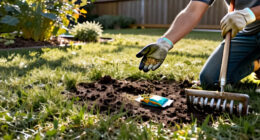
A rotary push aerator has a drum or cylinder with tines that puncture the ground as it is rolled across the lawn. The report also mentions garden forks and tools that remove small soil plugs as alternatives. It says spike-blade models may suit particularly compacted ground, clay or silty soil, and lawns with thatch; these are equipment recommendations from the publication, not results from a comparative test presented in the source.
The report says aerating before overseeding or repairing bare patches can help seed reach openings in the soil. It also argues that better drainage may reduce waterlogging. Its claim that the task can be done in 10 minutes is not accompanied by a specified lawn size or method, so homeowners should not treat that estimate as a general time commitment.
How Aeration Can Help Grass Roots
For homeowners dealing with compacted or thinning turf, aeration is a comparatively direct way to open channels through the soil. Improved access to air and water may support root growth, while openings can provide places for seed to settle when a lawn is being overseeded. The potential value is practical: stronger roots may help grass withstand stress, including dry conditions, although the source does not quantify any effect.
Timing and the condition of the lawn matter. Aerating when soil is workable may be easier than doing it when it is very dry or saturated; the report describes fall rainfall and lingering soil warmth as helpful factors, but these are not guaranteed in every region. Its claim that aeration is more effective than fertilizing is not supported with a comparison or evidence in the supplied material. Aeration and fertilizing address different lawn-care needs, so the report does not establish that one replaces the other.
As an affiliate, we earn on qualifying purchases.
Why the Report Focuses on Fall
The source frames October as a seasonal opportunity after summer heat and foot traffic may have compacted soil. It explains that roots need oxygen and that compaction can close soil air spaces. In its account, cooler air slows blade growth while soil warmth can continue to support roots. This is the publication’s general explanation, not a forecast for every lawn or climate.
The article also connects aeration with fall overseeding and drainage. It suggests that seed can fall into aeration holes and that loosening compacted ground can help water move through it. The source does not identify a particular location, report measurements of soil compaction, or cite a controlled study. It describes a gardening recommendation rather than a newly announced tool or a documented change in lawn-care practice.
““The easiest way to do it is with a rotary lawn aerator.””
— Gardening Know How
As an affiliate, we earn on qualifying purchases.
What the Advice Does Not Establish
The supplied report does not include independent research, measured outcomes or a defined test lawn showing how much aeration improves grass growth. It also does not specify the climate or soil conditions behind its October recommendation. The claim that the task takes 10 minutes lacks a lawn-size baseline, and the assertion that aeration can outperform fertilizing is not accompanied by supporting evidence.
Whether a lawn needs aeration, which tool is appropriate, and when to use it depend on soil, turf condition and local weather. The source does not give detailed instructions for assessing compaction, operating each tool safely or deciding how often to aerate. Its advice should be read as general guidance, not a guaranteed result for every lawn.
As an affiliate, we earn on qualifying purchases.
Check Local Conditions Before Aerating
The report identifies no upcoming study, product launch or follow-up announcement. For homeowners considering its advice, the next step is to assess whether the lawn is compacted and whether the soil is in workable condition, then choose a tool suited to the lawn and the user’s capacity. Any aerator should be used according to its manufacturer’s instructions.
Results, if any, would become apparent over time rather than being established by the article itself. Homeowners overseeding can watch for germination and new growth, while those addressing thinning turf can track lawn condition through the next growing season. The source offers no schedule for checking results and no guarantee of a lush lawn next year.
As an affiliate, we earn on qualifying purchases.
Key Questions
Why does Gardening Know How recommend aerating in October?
The report says fall conditions may favor root growth: air temperatures cool, while soil can remain warm. It also says aeration can open compacted soil to air and water. Local timing and conditions differ.
What does a rotary lawn aerator do?
It is a rolling tool with tines on a drum or cylinder. As it moves across the lawn, the tines puncture the ground and create openings in the soil.
Will aerating guarantee lush grass next year?
No. The source recommends aeration but provides no trial data or guarantee. Results can depend on soil, weather, grass condition and other lawn-care factors.
Can I use a garden fork instead of a rotary aerator?
The report lists a garden fork as an alternative, along with tools that remove small soil plugs. It calls a rotary aerator the easiest option, but does not compare the methods in a controlled test.
Should I aerate before overseeding?
Gardening Know How recommends aerating before overseeding, saying openings may help seed reach the soil. The source does not quantify how much this affects germination.
Source: rss
Columbus Day / Indigenous Peoples' Day Picks
long weekend sales
As an affiliate, we earn on qualifying purchases.