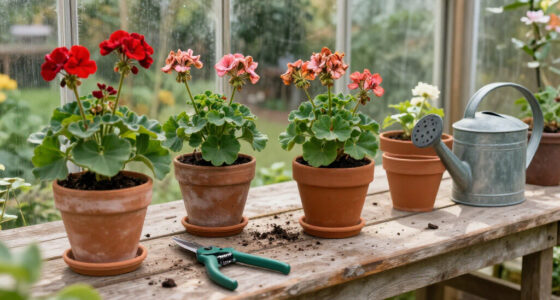
A healthy root mass looks white or light tan, with roots that are firm and extend outward and downward to anchor the plant securely. You’ll notice the soil around these roots crumbles easily and feels light, indicating good aeration and oxygen flow. Weak, rotting, or discolored roots suggest poor health. If you want to understand how to keep your roots strong and vibrant, there’s much more to discover below.

Get garden gear delivered free with Prime
- Fast, free delivery on millions of items
- Prime Video, Amazon Music and more included
- Member-only deals all year
Key Takeaways
- Healthy roots are typically white or light tan, firm, and free from rot or disease.
- They extend outward and downward, anchoring the plant securely.
- A healthy root mass indicates good soil aeration and oxygen availability.
- Roots should feel light when loosened and crumble easily in soil.
- Strong, vibrant roots promote optimal nutrient absorption and plant growth.
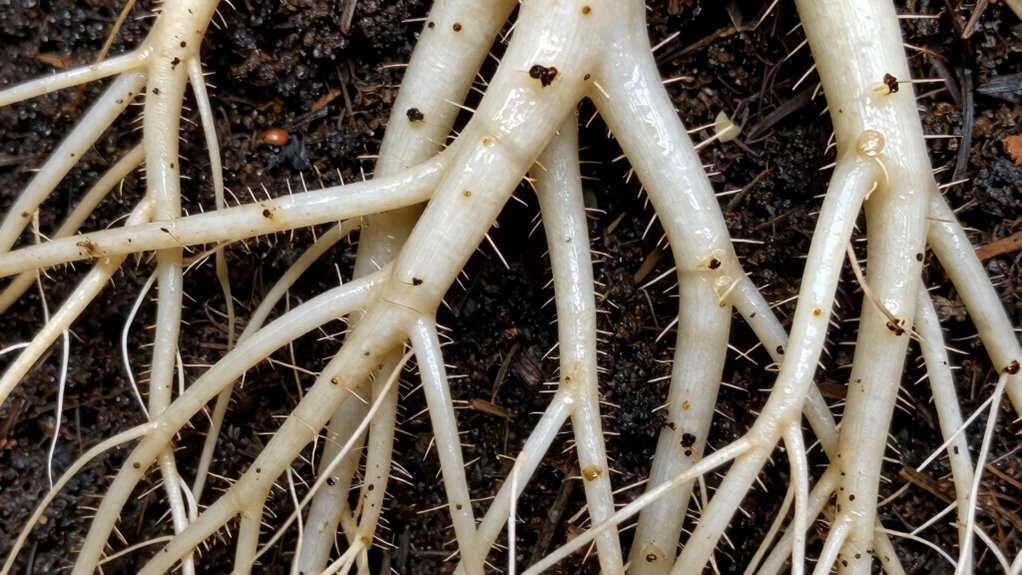
Have you ever wondered what makes certain plants thrive while others struggle? The secret often lies beneath the surface, in the health of their root system. A healthy root mass acts as the foundation for strong, vigorous plants, and understanding what it should look like can help you nurture better growth. When inspecting your plants, one of the first things you should notice is how well the roots are spreading and filling the soil. Healthy roots are usually white or light tan, firm, and free from rot or disease. They extend outward and downward, anchoring the plant securely while maximizing access to essential nutrients and water. Proper soil aeration is vital to prevent issues like root rot and disease, ensuring roots stay healthy and functional.
Soil aeration plays a key role in maintaining a healthy root mass. Well-aerated soil allows oxygen to reach the roots easily, which is indispensable for root respiration and overall plant health. If the soil is compacted or waterlogged, oxygen becomes scarce, leading to weak roots, poor nutrient absorption, and increased risk of disease. You can tell if your soil has good aeration by gently loosening it around the plant. If it crumbles easily and feels light, it’s a good sign that the roots can breathe and grow without hindrance. Conversely, heavy, dense soil may need aeration through tilling or the addition of organic matter like compost to improve porosity.
Nutrient absorption is another essential aspect of a healthy root mass. Roots are the plant’s primary means of taking in nutrients from the soil, so their health directly impacts growth and vitality. When roots are thriving, you’ll notice lush foliage, vibrant color, and strong stems. If your plant shows signs of nutrient deficiencies—such as yellowing leaves or stunted growth—it could indicate that the roots aren’t absorbing nutrients effectively. This might happen due to poor soil conditions, root damage, or disease. Ensuring your roots are healthy involves providing a balanced fertilizer, maintaining proper watering practices, and avoiding soil compaction.
Products Worth Considering

Rachio 3 Smart Sprinkler Controller, 8-Zone

EGO Power+ ST1511T 15-Inch Cordless String Trimmer with Battery and Charger

Husqvarna Automower 550 Commercial Robotic Lawn Mower
As an affiliate, we earn on qualifying purchases.
Frequently Asked Questions
How Often Should I Check My Plant’s Root Health?
You should check your plant’s root health every few months, especially if you’re considering root pruning or noticing growth issues. Regular inspections help guarantee the roots are healthy and nutrient absorption is essential. When you examine roots, look for signs of rot or crowding. Proper root care promotes strong growth, prevents disease, and supports overall plant vitality, making it easier for your plant to thrive in its environment.
Can Root Health Be Improved After Damage?
Did you know that plants can regenerate roots even after significant damage? Yes, root health can improve with proper care. You can encourage root regeneration through soil remediation, which restores essential nutrients and promotes healthy growth. While it takes time, consistent watering, aeration, and organic amendments help damaged roots recover, ultimately strengthening your plant. Keep patience—you’ll see progress as your roots rebuild and thrive again.
What Are Signs of Root Rot?
You’ll notice root rot symptoms like a foul smell, brown or black roots, and mushy texture when you examine your plant’s roots. Signs of decay also include roots that easily break apart and a general decline in plant health, such as wilting or yellowing leaves. If you see these signs, act quickly by trimming affected roots and adjusting watering practices to prevent further damage.
Does Root Color Indicate Plant Health?
Imagine you’re in a medieval garden, inspecting roots like a wise herbalist. Yes, root color indicators matter; healthy roots are usually white or light tan, signifying good health. Dark or black roots can hint at issues like rot or disease. Don’t fall for root health myths that color alone guarantees importance—look for firm texture and uniform color as your true signs of healthy roots.
How Does Soil Type Affect Root Development?
Soil type considerably influences root development. If you have compacted soil, roots struggle to grow because of limited oxygen and space, leading to weak or stunted roots. Poor drainage issues in heavy clay or dense soils cause waterlogging, which can drown roots and hinder their growth. To promote healthy roots, loosen compacted soil and improve drainage, allowing roots to expand, access nutrients, and strengthen your plant’s overall health.
Conclusion
A healthy root mass is your garden’s silent heartbeat, anchoring your plants with strength and resilience. Think of it as the roots’ quiet promise—nurturing growth beneath the surface, out of sight but crucial for life itself. When you nurture these roots, you’re planting hope and stability, ensuring your garden’s future blooms. Let your roots be a symbol of your dedication—hidden yet essential—reminding you that true strength begins beneath the surface.