
TL;DR

Get garden gear delivered free — and shop member deals
- Fast, free delivery on millions of items
- Access to Prime Big Deal Days deals on October 6–7
- Prime Video, Amazon Music and more included
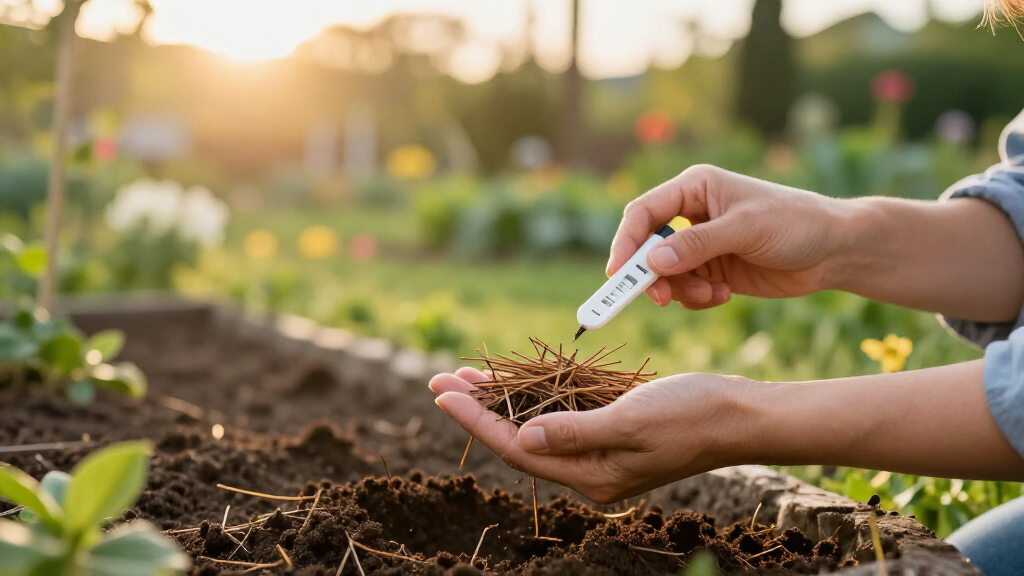
Recent increased interest in using pine needles as mulch has sparked questions about their impact on soil acidity. Experts confirm that pine needles do not make soil dangerously acidic when used properly, but misconceptions persist. This article clarifies the facts and offers practical advice for gardeners.
Recent online searches and gardening discussions have surged around the question: do pine needles make soil dangerously acidic? Experts confirm that, when used as mulch, pine needles do not pose a risk of creating harmful soil conditions, countering longstanding myths among gardeners.
Many gardeners believe that pine needles, also known as pine straw, significantly lower soil pH, making it dangerously acidic. However, horticultural research and expert opinions indicate that pine needles are only mildly acidic and decompose slowly, contributing little to soil acidity over time. The misconception likely stems from the fact that fresh pine needles have a pH around 3.2 to 3.8, which is acidic, but this does not translate to long-term soil acidification when used as mulch.
According to soil scientists and extension services, the use of pine needles as mulch can actually benefit soil health by conserving moisture, suppressing weeds, and gradually adding organic matter. The acid content diminishes as the needles decompose, and the overall impact on soil pH is minimal, especially when used in typical garden applications. Experts emphasize that soil pH is influenced by many factors, including existing soil composition, watering habits, and fertilizer use, rather than pine needle mulch alone.
Despite the scientific consensus, many gardeners remain wary due to longstanding myths and anecdotal reports. The surge in online searches and social media discussions reflects growing curiosity and concern, prompting experts to clarify the facts and dispel misconceptions.
Why Gardeners Should Reconsider Pine Needles as Mulch
This clarification matters because many gardeners rely on pine needles for mulch, especially in regions with abundant pine forests. Misunderstanding their impact could lead to unnecessary removal or avoidance, depriving gardens of their benefits. Correct information helps gardeners make informed choices, promoting sustainable and effective gardening practices without fear of damaging soil health.
Additionally, this insight supports environmentally friendly gardening, as pine needles are a natural, biodegradable, and locally available resource. Recognizing their safety and benefits encourages their proper use, reducing reliance on synthetic mulches and chemical amendments.
As an affiliate, we earn on qualifying purchases.
Historical Myths and Scientific Clarification on Pine Needles
The myth that pine needles significantly acidify soil has persisted for decades, partly due to their naturally low pH when fresh and the visual appearance of their decomposition. Historically, gardeners have avoided pine needles for fear of harming acid-sensitive plants like azaleas and blueberries. However, recent scientific studies and extension service guidelines clarify that the overall impact on soil pH is minimal. The current trend of increased interest in natural mulches and organic gardening has brought this myth into focus, prompting experts to address it.
Previous anecdotal reports and outdated advice have contributed to the misconception. Now, with more accessible scientific data and outreach, the gardening community is updating its understanding of pine needles’ role in soil health.
As an affiliate, we earn on qualifying purchases.
Remaining Questions About Long-Term Effects of Pine Needles
While current evidence suggests minimal impact on soil pH, it is still unclear how continuous, large-scale use of pine needles over many years might influence soil chemistry in different environments. Some experts recommend further long-term studies to confirm these effects across various soil types and climates. Additionally, the impact on specific acid-sensitive plants in different soil conditions remains an area for ongoing research.
As an affiliate, we earn on qualifying purchases.
Monitoring and Educating on Pine Needle Mulching Practices
Experts plan to continue disseminating accurate information through extension services and gardening platforms. Future research may focus on long-term soil health in different regions and with different plant varieties. Meanwhile, gardeners are encouraged to use pine needles confidently, following best practices such as mixing with other organic mulches and monitoring soil pH periodically.
As an affiliate, we earn on qualifying purchases.
Key Questions
Do pine needles make soil dangerously acidic?
No. Scientific evidence shows that pine needles only mildly acidify soil and do not create dangerous conditions when used as mulch.
Can I use pine needles around all types of plants?
Yes, but with caution around highly acid-sensitive plants. Generally, pine needles are safe for most garden plants and can improve soil moisture retention.
How long does it take for pine needles to decompose?
Pine needles decompose slowly, often taking 1-2 years depending on climate and soil conditions.
Should I worry about pine needle acidity if I have blueberries or azaleas?
While these plants prefer acidic soil, the slight acidity from pine needles is usually insufficient to cause harm. However, soil pH should be monitored if in doubt.
What are the benefits of using pine needles as mulch?
Pine needles help conserve moisture, suppress weeds, and add organic matter to soil without significantly changing its pH.
Source: rss
Fall Picks
fall essentials
As an affiliate, we earn on qualifying purchases.