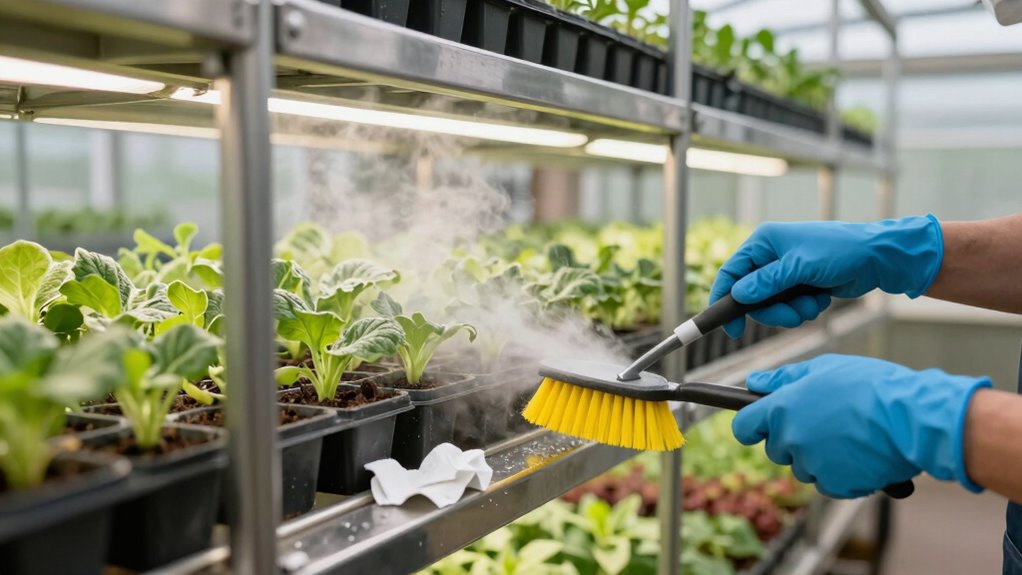

To effectively clean grow shelves between crop rotations, start by removing all plant debris, old soil, and dust from shelves and cracks. Sweep or vacuum thoroughly, then wash surfaces with a horticultural-safe disinfectant to eliminate microbes and pests. Focus on corners, crevices, and equipment contact points. Allow everything to dry completely before setting up your new crops. Following these steps helps maintain a healthy environment and prevents issues down the line—learn more to guarantee your success.

Get garden gear delivered free — and shop member deals
- Fast, free delivery on millions of items
- Access to Prime Big Deal Days deals on October 6–7
- Prime Video, Amazon Music and more included
Key Takeaways
- Remove all plant debris, old soil, and residual matter from shelves and surrounding areas.
- Sweep, vacuum, or wash surfaces with horticultural-safe disinfectants to eliminate dust and microorganisms.
- Focus on corners, cracks, and equipment contact points during cleaning to prevent pest harboring.
- Apply soil sterilization methods like steaming or chemical treatments if reusing containers or soil.
- Allow all surfaces to dry completely before setting up new crops to prevent mold and pathogen growth.

Keeping your grow shelves clean between crop rotations is essential for healthy plants and peak yields. When you finish a crop, residual plant matter, pests, and pathogens can linger, risking contamination of your next planting. To prevent this, proper cleaning routines are crucial. Soil sterilization plays a vital role in this process; by thoroughly sterilizing your grow area, you eliminate harmful microorganisms that could infect new plants. You can use heat sterilization methods, such as steaming or applying heat to the soil, or chemical sterilizers designed for horticultural use. Ensuring the growing medium and surfaces are sterilized minimizes the chance of disease transmission and keeps your environment safe for fresh crops.
Pest prevention is another critical aspect of cleaning your grow shelves. Many pests, like spider mites or fungus gnats, can hide in cracks, crevices, or residual soil, waiting to infest your next crop. Before starting anew, inspect every corner of your grow area carefully. Remove any debris, dead plant material, or old roots that could harbor pests. Use a combination of physical cleaning and targeted pest control solutions to eliminate any lurking bugs. Regularly sanitizing tools and containers helps prevent the spread of pests from one crop to the next. Applying neem oil or insecticidal soap during cleaning can also help prevent pest infestations before they take hold. Additionally, maintaining a clean environment reduces the risk of pests establishing themselves in the future. Incorporating proper sanitation practices is essential for ongoing pest management and plant health. Regularly inspecting and maintaining your grow setup can help identify pest issues early and prevent infestations from becoming severe.
To effectively clean your grow shelves, start by removing all plant debris and old soil. Sweep or vacuum the area to clear loose dirt and dust. Next, wash all surfaces with a disinfectant solution appropriate for horticultural settings—ensure it’s safe for your plants and won’t leave harmful residues. Pay special attention to corners, cracks, and any equipment that contacts your plants. After cleaning, consider applying a soil sterilization method if you’re reusing soil or containers. This could involve steaming or using sterilizing agents, following manufacturer instructions carefully. Regularly monitoring environmental conditions can help identify issues early and prevent the buildup of pests or pathogens. Once everything is disinfected and sterilized, allow the area to dry completely before setting up your new crop. This reduces moisture that pests and fungi thrive on. Properly maintaining these cleaning protocols can significantly extend the life of your grow equipment and prevent future issues. Implementing a consistent cleaning schedule can further enhance your crop yield and overall plant health.
horticultural disinfectant spray
As an affiliate, we earn on qualifying purchases.
As an affiliate, we earn on qualifying purchases.
Frequently Asked Questions
How Often Should Grow Shelves Be Cleaned During a Crop Cycle?
You should clean your grow shelves at least once a week during a crop cycle to maintain ideal shelf maintenance. Regular cleaning helps prevent pests, diseases, and mold, ensuring healthy plant growth. After each crop rotation, do a thorough cleaning to remove residues and pathogens. Consistent cleaning not only promotes plant health but also extends the lifespan of your shelves, making crop rotation more effective and manageable.
What Cleaning Products Are Safest for Indoor Grow Shelves?
For safe shelf maintenance, use cleaning solutions like diluted vinegar or mild soap. Avoid harsh chemicals that could harm plants or leave residues. Spray the solutions onto your shelves, then wipe thoroughly with a clean cloth or sponge. This guarantees you remove dirt and pathogens without risking contamination. Regularly cleaning your grow shelves with gentle, plant-safe products helps maintain a healthy environment and promotes ideal crop growth.
Can Cleaning Damage or Degrade Shelf Materials Over Time?
Did you know that improper cleaning can reduce shelf material lifespan by up to 30%? Cleaning can indeed degrade shelf material over time if harsh chemicals or abrasive tools are used. To maintain cleaning durability, choose gentle cleaning products suited for your shelf material, and avoid scrubbing too hard. Regular, careful cleaning preserves shelf integrity, ensuring your grow space stays functional and safe for future crops.
How to Prevent Mold and Pests After Cleaning the Shelves?
To prevent mold and pests after cleaning your grow shelves, guarantee thorough drying to eliminate moisture, which discourages mold growth. Use mold prevention solutions like diluted hydrogen peroxide or vinegar, and apply pest control treatments suitable for indoor environments. Regularly inspect shelves for signs of pests or mold, and maintain proper airflow and humidity levels. Consistent cleaning and monitoring create an environment that’s less inviting for pests and mold to thrive.
Are There Eco-Friendly Cleaning Methods for Grow Shelves?
Cleaning grow shelves is like giving your plants a revitalizing gust of fresh air. You can use eco-friendly methods by applying natural disinfectants like vinegar, hydrogen peroxide, or baking soda. Reusable cleaning tools, such as cloths and brushes, help reduce waste and environmental impact. These options are safe for your crops, effective in sanitizing, and gentle on the planet, ensuring a healthy start for your next crop cycle.
As an affiliate, we earn on qualifying purchases.
Conclusion
Think of your grow shelves as a blank canvas, ready to be painted with the colors of your next crop. Clearing away the remnants of the past is like sweeping away shadows, making room for fresh, vibrant growth. When you clean thoroughly, you’re planting the seeds for a new symphony of thriving plants. With each careful scrub, you craft a fertile stage where your next crop can flourish, unstoppable and bright as a sunrise.
As an affiliate, we earn on qualifying purchases.
As an affiliate, we earn on qualifying purchases.
Fall yard work Picks
leaf blowers
As an affiliate, we earn on qualifying purchases.