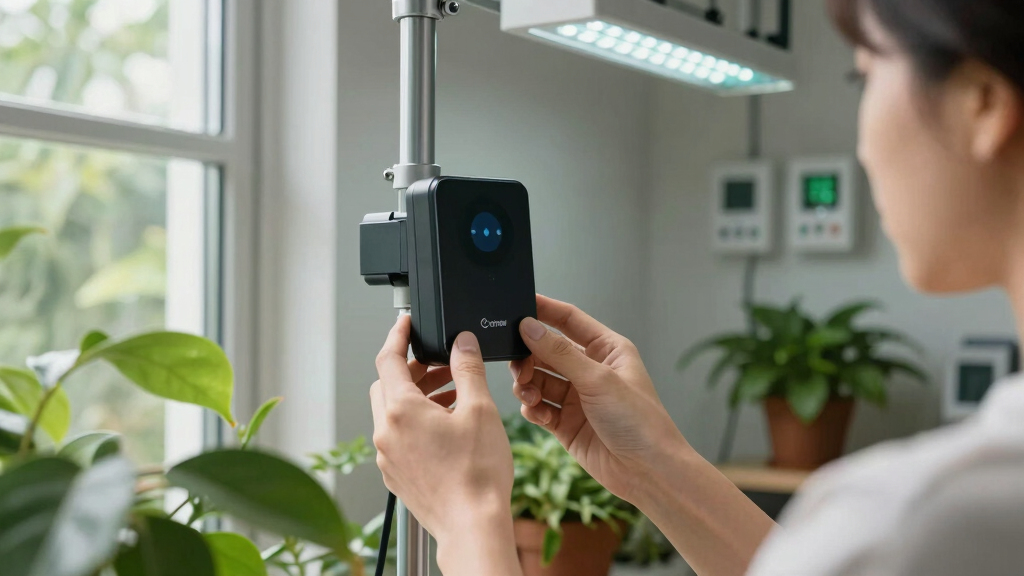

Choosing the right sensor network for your plant room depends on your specific needs—whether it’s precise soil moisture monitoring, environmental control, or seamless smart home integration. My top picks include the RainPoint Smart Digital Wireless Plant Moisture Meter for comprehensive soil moisture alerts, the YoLink Indoor Temperature & Humidity Sensor for long-range monitoring, and the ThirdReality Zigbee Sensors for reliable, scalable automation. Each offers unique advantages, but also significant tradeoffs in complexity, connectivity requirements, or scope. Understanding these differences helps ensure you select a solution that aligns with your gardening goals and smart home setup.

Get garden gear delivered free — and shop member deals
- Fast, free delivery on millions of items
- Access to Prime Big Deal Days deals on October 6–7
- Prime Video, Amazon Music and more included
Complete the kit


Key Takeaways
- The RainPoint Moisture Meter provides detailed soil moisture data with easy integration for auto-watering.
- The YoLink Sensors excel in long-range environments, suitable for large or remote plant rooms.
- The ThirdReality Zigbee Sensors offer robust connectivity for those with existing Zigbee hubs and want scalable, multi-sensor setups.
- Ease of setup varies significantly—some sensors require hubs or complex configurations, while others are plug-and-play.
- Battery life and environmental durability are key considerations depending on indoor or outdoor use.
| Smart WiFi Soil Moisture Meter for Plants, 2-in-1 Sensor with App Alerts |  | Best Overall for Soil Moisture Monitoring | Soil Moisture Range: 0-100% RH | Soil Temperature Range: -40°F to 176°F / -40°C to 80°C | Probe Length: 6 inches (15cm) | VIEW LATEST PRICE | See Our Full Breakdown |
| WiFi Temperature Humidity Sensor – Indoor Thermometer Hygrometer with App Alerts and Alexa Compatibility |  | Best for Indoor Environmental Monitoring | Connectivity: Wi-Fi | Power Source: Battery (2 AAA included) | Temperature Range: Up to 60°C | VIEW LATEST PRICE | See Our Full Breakdown |
| YoLink Indoor Temperature & Humidity Sensor (3-Pack) |  | Best for Long-Range Monitoring & Smart Integration | Connectivity: LoRa | Number of Sensors: 3 | Batteries Included: Yes | VIEW LATEST PRICE | See Our Full Breakdown |
| RainPoint Smart Digital Wireless Plant Moisture Meter with Wi-Fi Hub and Alerts |  | Best for Auto-Watering and Real-Time Soil Monitoring | Connectivity: Wi-Fi (2.4 GHz) | Display: Large digital screen | Sensors: Capacitive moisture sensors | VIEW LATEST PRICE | See Our Full Breakdown |
| ThirdReality Smart Soil Moisture Sensor Gen2 3-Pack, Zigbee Compatible, Enhanced Signal Stability, Capacitive Monitoring for Gardens and Indoor Plants |  | Best for Reliable, Scalable Smart Gardening | Compatibility: Zigbee 3.0, Hubitat, SmartThings | Sensor Type: Capacitive | Number of Sensors: 3 | VIEW LATEST PRICE | See Our Full Breakdown |
| smart sensor network for plant room | Connectivity |
|---|---|
| Smart WiFi Soil Moisture Meter | WiFi 2.4GHz, compatible with iOS and Android |
| WiFi Temperature Humidity Sens | Wi-Fi |
| YoLink Indoor Temperature & Hu | LoRa |
| RainPoint Smart Digital Wirele | Wi-Fi (2.4 GHz) |
| ThirdReality Smart Soil Moistu | Zigbee |
More Details on Our Top Picks
Smart WiFi Soil Moisture Meter for Plants, 2-in-1 Sensor with App Alerts
This device leads the lineup for its comprehensive soil moisture and temperature monitoring, making it ideal for hands-on plant enthusiasts. Its ability to send real-time alerts via a dedicated app helps maintain optimal watering schedules, especially for indoor or outdoor gardens. Compared with WiFi-only sensors, it offers more detailed data, but setup can be challenging for those unfamiliar with app connectivity. Its waterproof design and long battery life are big pluses, though the need for 2 AA batteries adds ongoing cost and maintenance.
Pros:- Real-time remote monitoring via app
- Customizable watering alerts
- Durable waterproof design
- Long battery life with low power consumption
Cons:- Requires 2 AA batteries (not included)
- Setup may be complex for some users
Best for: Plant owners seeking precise soil moisture control with remote alerts
Not ideal for: Users seeking simple, plug-and-play solutions or those without WiFi setup experience
- Soil Moisture Range:0-100% RH
- Soil Temperature Range:-40°F to 176°F / -40°C to 80°C
- Probe Length:6 inches (15cm)
- Battery Life:Up to 12 months
- Waterproof Rating:IP65
- Connectivity:WiFi 2.4GHz, compatible with iOS and Android
Our verdict“A versatile, detailed soil moisture sensor ideal for dedicated plant care, though setup complexity may deter casual users.”
WiFi Temperature Humidity Sensor – Indoor Thermometer Hygrometer with App Alerts and Alexa Compatibility
This compact sensor focuses on environmental conditions rather than soil, making it perfect for indoor plant rooms, greenhouses, or pet enclosures. Its ability to send alerts via a free app and support Alexa voice commands simplifies remote monitoring. However, humidity data is only accessible within the Alexa app, limiting versatility. Its small form factor makes it easy to place discreetly, but it requires a 2.4 GHz WiFi network and is not weatherproof, restricting outdoor use.
Pros:- Remote monitoring and smart alerts
- Compatible with Alexa for voice control
- Compact and easy to place
- Long battery life
Cons:- Humidity data only in Alexa app
- Limited to indoor use
Best for: Home gardeners needing quick, reliable indoor temperature and humidity data
Not ideal for: Those wanting outdoor or soil moisture monitoring capabilities
- Connectivity:Wi-Fi
- Power Source:Battery (2 AAA included)
- Temperature Range:Up to 60°C
- Response Time:500 milliseconds
- Material:ABS
- Dimensions:7.1 cm length
Our verdict“A straightforward, compact sensor for indoor environmental tracking, best suited for users already integrated with Alexa.”
YoLink Indoor Temperature & Humidity Sensor (3-Pack)
The YoLink sensors stand out for their impressive long-range wireless capability, making them suitable for sprawling plant rooms, greenhouses, or multiple locations within a property. Their compatibility with LoRa protocol and integration with popular platforms like SmartThings makes them ideal for users seeking scalable, automated control. Yet, humidity monitoring is limited to temperature and humidity, and they require a compatible hub, adding to setup complexity and cost. Batteries last over two years, reducing maintenance.
Pros:- Long-range wireless connectivity
- Batteries last over 2 years
- Supports multiple notification options
- Good for large or remote spaces
Cons:- Humidity monitoring not supported
- Requires a compatible hub
- No outdoor weatherproof version
Best for: Gardeners with large or remote plant spaces requiring long-distance environmental data
Not ideal for: People needing outdoor ruggedness or a simple, hubless setup
- Connectivity:LoRa
- Number of Sensors:3
- Batteries Included:Yes
- Battery Life:Over 2 years
- Compatible Hub:Required
Our verdict“An excellent choice for large-scale or remote environments, provided you already have or plan to set up a compatible hub system.”
RainPoint Smart Digital Wireless Plant Moisture Meter with Wi-Fi Hub and Alerts
The RainPoint system combines a high-quality soil moisture meter with a dedicated Wi-Fi hub, enabling remote monitoring and integration with auto-watering systems. Its large digital display provides immediate readings, while customizable moisture alerts help prevent over- or under-watering. Although setup involves purchasing the hub separately and some users find installation complex, once configured, it offers seamless automation for indoor and outdoor plants. It’s a solid choice for those focused on maintaining optimal soil conditions through automation.
Pros:- Real-time soil moisture data with alerts
- Supports integration into auto-watering systems
- Waterproof and suitable for outdoor use
- Includes moisture meter, hub, and test strips
Cons:- Requires separate purchase of batteries
- Wi-Fi hub supports only 2.4 GHz networks
- Setup can be complex
Best for: Indoor or outdoor growers seeking integrated soil moisture monitoring with auto-watering capabilities
Not ideal for: Users without space for additional hubs or those seeking purely app-based, hubless solutions
- Connectivity:Wi-Fi (2.4 GHz)
- Display:Large digital screen
- Sensors:Capacitive moisture sensors
- Waterproof:Yes
- Includes:Moisture meter, Wi-Fi hub, pH test strips
Our verdict“A comprehensive moisture management system ideal for automating plant watering, with some setup hurdles to consider.”
ThirdReality Smart Soil Moisture Sensor Gen2 3-Pack, Zigbee Compatible, Enhanced Signal Stability, Capacitive Monitoring for Gardens and Indoor Plants
The ThirdReality sensors excel in delivering stable, accurate soil moisture readings through Zigbee connectivity, making them ideal for users who already operate Zigbee hubs like SmartThings or Hubitat. Their reinforced antenna design ensures strong signals across larger or complex plant rooms, supporting automation and remote monitoring. The main drawback is the need for a compatible hub, which can increase setup complexity and cost. Still, for those committed to Zigbee ecosystems, these sensors offer dependable performance and expandability.
Pros:- Stable and accurate moisture readings
- Enhanced antenna for reliable coverage
- Supports automation and remote monitoring
- Compatible with popular smart home platforms
Cons:- Requires a Zigbee hub
- Additional costs for hubs and firmware updates
- Firmware updates require OTA support
Best for: Experienced smart gardeners with Zigbee hubs seeking scalable, reliable soil moisture sensors
Not ideal for: Beginners or those without Zigbee-compatible systems
- Compatibility:Zigbee 3.0, Hubitat, SmartThings
- Sensor Type:Capacitive
- Number of Sensors:3
- Connectivity:Zigbee
- Antenna:Reinforced for stable coverage
Our verdict“A strong choice for users invested in Zigbee, prioritizing connectivity stability and scalability over simplicity.”

How We Picked
Our selection process focused on sensors that are specifically suited for plant rooms, emphasizing connectivity options, ease of use, and environmental monitoring capabilities. We compared products based on compatibility with smart home ecosystems, battery longevity, installation complexity, and feature set—prioritizing devices that deliver reliable, real-time data to help optimize plant care. Tradeoffs like price, setup difficulty, and scalability were also considered, ensuring each pick serves a distinct user profile from beginners to advanced smart gardeners.
| smart sensor network for plant room | Connectivity |
|---|---|
| Smart WiFi Soil Moisture Meter | WiFi 2.4GHz, compatible with iOS and Android |
| WiFi Temperature Humidity Sens | Wi-Fi |
| YoLink Indoor Temperature & Hu | LoRa |
| RainPoint Smart Digital Wirele | Wi-Fi (2.4 GHz) |
| ThirdReality Smart Soil Moistu | Zigbee |
Factors to Consider When Choosing Best Smart Sensor Network For Plant Rooms
When selecting the best smart sensor network for your plant room, consider key factors such as connectivity type, ease of setup, environmental durability, and integration with your existing smart home ecosystem. Whether you need precise soil moisture control, long-range environmental monitoring, or scalable automation, understanding these core aspects will help determine the right fit for your gardening goals.
Connectivity Options
Sensor networks vary from WiFi, Bluetooth, Zigbee, to LoRa protocols. WiFi-based sensors are straightforward but may require more network bandwidth, while Zigbee and LoRa offer more reliable long-range connectivity, especially for larger or more complex setups. Choose based on your existing smart home hubs and the size of your plant room.
Ease of Installation and Use
Some sensors are plug-and-play, ideal for beginners, while others require hubs or complex configurations. Consider your technical comfort level—if you prefer simplicity, look for sensors with minimal setup and app-based control. Advanced users might prioritize automation features and integration capabilities.
Durability and Environmental Suitability
Indoor sensors for plant rooms should be resistant to humidity and occasional splashes, while outdoor options need waterproof and weatherproof designs. Match your choice to the environment to avoid sensor damage or inaccurate readings.
Compatibility with Smart Ecosystems
Check if the sensors support your preferred smart home platform—be it Alexa, Google Assistant, SmartThings, or Hubitat. Compatibility ensures seamless automation, especially if you plan to link sensors with watering systems, climate controls, or other devices.
Frequently Asked Questions
Can I use these sensors outdoors?
Some sensors are designed with waterproof or weather-resistant features, making them suitable for outdoor use, such as the RainPoint Moisture Meter. However, others like the WiFi Temperature & Humidity Sensor are intended for indoor environments only, so always check the environmental ratings before deploying outdoors.
Do I need a hub or gateway for these sensors?
It depends on the model. Devices like the ThirdReality Zigbee sensors and YoLink sensors require compatible hubs to function, which adds to setup complexity but offers scalable, reliable connectivity. In contrast, WiFi-based sensors typically connect directly to your home network without hubs, simplifying installation but possibly limiting range or scalability.
What is the typical battery life for these sensors?
Most sensors in this lineup boast long battery life, ranging from 12 months for WiFi moisture meters to over two years for LoRa-based YoLink sensors. Battery longevity reduces maintenance frequency, especially important for sensors placed in hard-to-reach areas.
Are these sensors compatible with smart home assistants?
Yes, many models support integration with popular voice assistants like Alexa and Google Assistant. For example, the WiFi Temperature & Humidity Sensor supports Alexa, while the moisture sensors can often be integrated into broader smart home routines via compatible hubs or platforms.
What is the setup complexity for these sensors?
Setup difficulty varies; some sensors like the RainPoint and WiFi temperature sensors are straightforward, often involving app installation and WiFi connection. Others, like the Zigbee and LoRa-based options, require additional hub configuration and firmware updates, making them more suitable for experienced users or those seeking scalable solutions.
Conclusion
For casual plant owners or beginners, WiFi sensors like the Smart WiFi Soil Moisture Meter or the WiFi Temperature & Humidity Sensor provide quick, easy monitoring without extra hubs. More advanced users managing large or complex plant rooms will benefit from the YoLink Sensors or ThirdReality Zigbee Sensors for their reliability and scalability. Those focused on automation and integration should consider systems that support auto-watering or multi-sensor setups, balancing setup effort with long-term benefits.
Halloween Picks
halloween
As an affiliate, we earn on qualifying purchases.