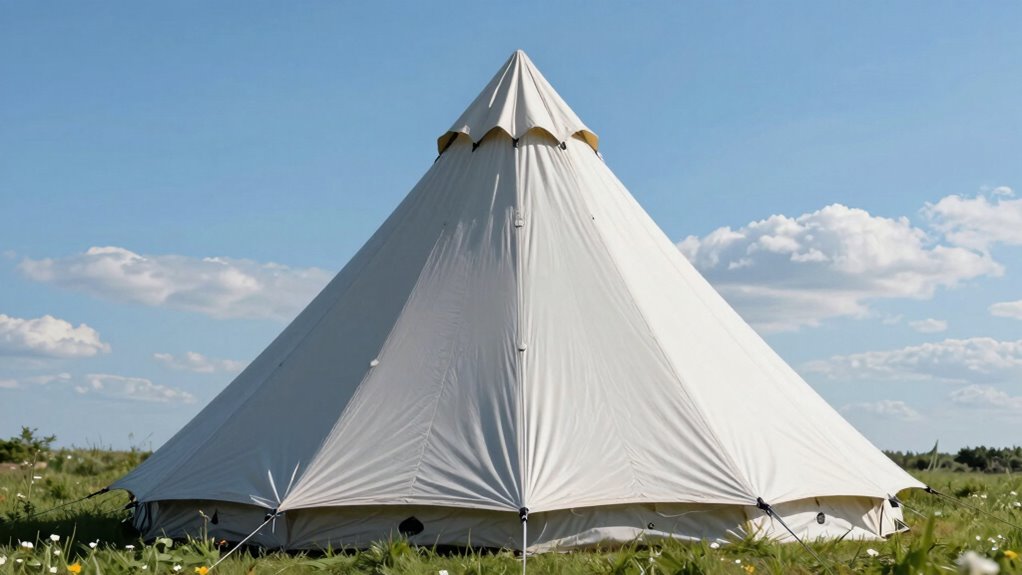

Your tent height quickly becomes a big deal because it affects your comfort, movement, and safety in changing weather. Taller tents let you stand and move freely, making long stays more enjoyable, but they also face more wind and storm risks. If you’re in exposed areas, stability becomes essential sooner than you think. Pay attention to your environment and choose wisely—you’ll discover how the right height can protect and enhance your camping experience.
Key Takeaways
- Taller tents offer greater comfort but are more vulnerable to wind and weather, requiring extra stability measures.
- The impact of tent height on stability becomes evident quickly in exposed or storm-prone environments.
- Inadequate anchoring of taller tents can lead to collapse during sudden weather changes.
- The benefits of increased headroom are often overshadowed by stability challenges in adverse conditions.
- Proper planning and reinforcement are essential as tent height influences safety and comfort sooner than expected.
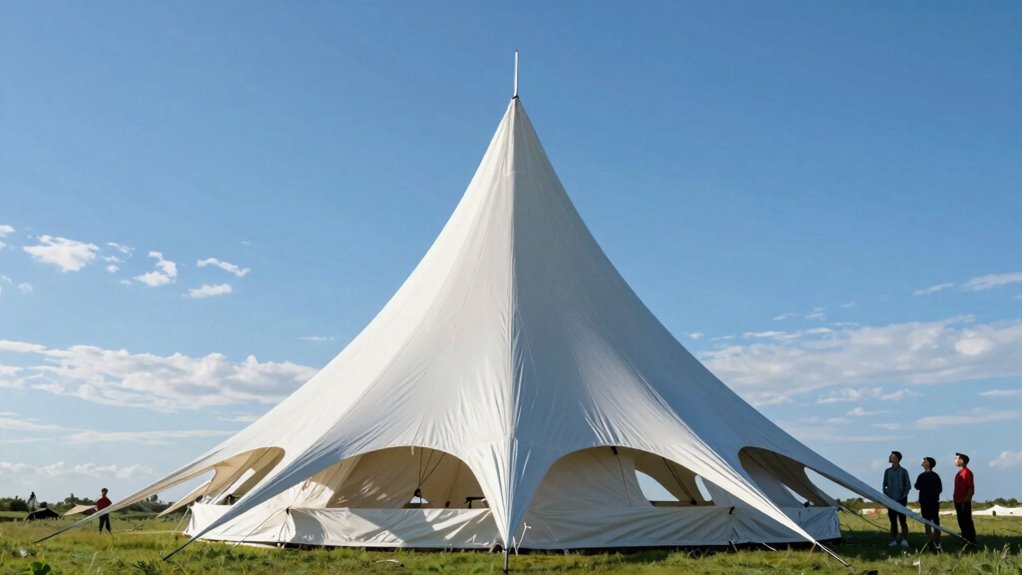
When it comes to camping or outdoor gatherings, tent height might seem like a minor detail—until suddenly, it isn’t. At first, you might think that as long as the tent keeps you dry and provides shelter, its height isn’t a big deal. But as you settle into your campsite, you’ll quickly notice that tent height influences your overall camping comfort in surprising ways. If your tent is too low, you’ll find yourself crouching constantly, which quickly becomes uncomfortable after just a few hours. On the other hand, a taller tent allows you to stand upright, move around freely, and organize your gear without feeling cramped. That extra height can make the campsite feel more livable, especially during longer stays, and significantly improves your overall experience.
However, it’s not just about comfort—tent height also impacts tent stability, which is crucial in unpredictable weather or strong winds. Taller tents tend to have a larger surface area exposed to the elements, making them more susceptible to shifting or even collapsing if not properly anchored. When you choose a taller tent, you need to pay close attention to its design and stability features. Look for models with sturdy poles, reinforced joints, and proper guy lines. If the tent isn’t stable, even the best camping comfort won’t save you from a nasty surprise when storms roll in. Conversely, shorter tents are generally more stable in windy conditions because their lower profile reduces wind resistance. Still, they might sacrifice some comfort by limiting headroom and ease of movement.
You also need to consider where you’re camping. In open, exposed areas, a taller tent can catch more wind, demanding extra stakes and guy lines for stability. If you’re in a sheltered spot, height might be less of a concern, and you can prioritize comfort without risking too much instability. The key is balancing your needs: if comfort matters most, and you’re prepared to reinforce your tent, a higher model can be worth it. If weather conditions tend to be rough, a lower-profile tent might be smarter, even if it means sacrificing some standing room and convenience.
Ultimately, the importance of tent height becomes clear once you start spending longer stretches outdoors. It affects how comfortably you can move, organize, and rest inside your shelter, and it influences how well your tent holds up against nature’s challenges. Being aware of tent stability and how it relates to height can help you make a more informed decision. Picking the right height isn’t just about personal preference; it’s about ensuring you’re safe, comfortable, and prepared for whatever weather might come your way.

4 Person Instant Tents for Camping Setup in 50s, Cabin Tent with Rainfly
- Fast Setup: Sets up in 50 seconds with pre-attached poles
- Spacious Interior: 8.04 x 8.04 ft with 59-inch height
- Lightweight & Portable: Weighs 13.4 lbs, packs to 39.4 x 7.1 inches
As an affiliate, we earn on qualifying purchases.
As an affiliate, we earn on qualifying purchases.
Frequently Asked Questions
How Does Tent Height Affect Overall Stability?
Tent height impacts overall stability by influencing weight distribution and the tent center’s balance. When your tent is taller, it raises the center of gravity, making it more prone to tipping over in wind or uneven ground. Properly anchoring your stakes and ensuring even weight distribution helps counteract this, but keep in mind that taller tents require extra caution to maintain stability, especially in challenging weather conditions.
Are Taller Tents Suitable for All Weather Conditions?
Is a tall tent a fortress or a fragile shell? Taller tents aren’t ideal for all weather conditions because they often struggle against strong winds and rain, risking stability. While camping aesthetics and tent height trends favor taller designs for spacious comfort, consider the weather. If storms roll in, a lower, more aerodynamic tent usually performs better, keeping you safe and dry regardless of the season.
What Are the Best Materials for High-Tent Structures?
The best materials for high-tent structures include durable tent fabric like ripstop nylon or polyester, which resist tearing and weather. For structural support, consider aluminum or steel poles, as they offer strength without adding excessive weight. These materials guarantee your tent remains stable and safe, especially at greater heights. Using high-quality tent fabric combined with robust structural support keeps your tall tent resilient in various weather conditions.
How Does Tent Height Influence Ventilation and Airflow?
Higher tents improve ventilation efficiency by allowing better airflow and reducing stuffiness inside. You’ll notice improved airflow optimization, as warm air naturally rises and escapes through vents or open sides. This height helps maintain a cooler, more comfortable environment, especially in warm weather. Keep in mind, taller tents require sturdy support to prevent instability, but the benefits for ventilation and airflow are well worth the extra effort.
Can Taller Tents Be More Difficult to Transport or Store?
Like carrying a tall tree, taller tents can present storage challenges. Their increased tent height makes them bulkier and harder to pack into compact spaces, much like trying to fit an oak into a small shed. You might find transporting these tents more cumbersome, especially if your gear space is limited. To avoid hassle, consider how tent height impacts storage and portability before choosing a tent that’s taller than you need.

Smithok 8 Pack 4mm Guy Lines Ultralight Tent Cords with Aluminum Adjuster Tensioner Outdoor Camping Guylines Ropes for Tent Tarp,Camping,Hiking Backpacking (Yellow)
- Length: 13 feet per cord
- Quantity: 8 pack
- Reflective Material: High visibility in low light
As an affiliate, we earn on qualifying purchases.
As an affiliate, we earn on qualifying purchases.
Conclusion
As you stand beneath your tent, remember that its height isn’t just about space—it’s about how you see the world around you. A taller tent can lift your spirits and broaden your perspective faster than you’d think. Don’t underestimate the power of small changes; they can elevate your experience and transform your outlook. Sometimes, the tallest tents aren’t just structures—they’re gateways to new horizons waiting to be explored.

Forceatt Tent for 2 Person is Waterproof and Windproof, Camping Tent for 3 to 4 Seasons,Lightweight Aluminum Pole Backpacking Tent Can be Set Up Quickly,Great for Hiking…
- Capacity for Two People: Includes two doors and vestibules
- Lightweight Design: Weighs only 5.5 lbs (2.5 kg)
- Spacious Interior: Dimensions: 88.6×53.1in, Height: 43.3in
As an affiliate, we earn on qualifying purchases.
As an affiliate, we earn on qualifying purchases.

6 Person Camping Tent, Setup in 60 Seconds, Waterproof,Outdoor Camping
- Quick Setup in 60 Seconds: Pre-attached poles for instant assembly
- Spacious Interior: Fits 2 air mattresses or 6 sleeping bags
- Standing Height: 77-inch center height for easy movement
As an affiliate, we earn on qualifying purchases.
As an affiliate, we earn on qualifying purchases.