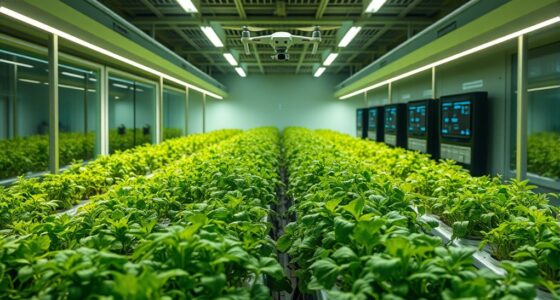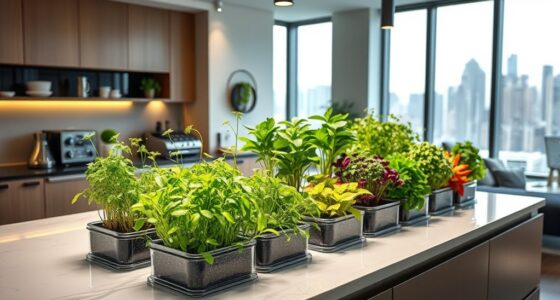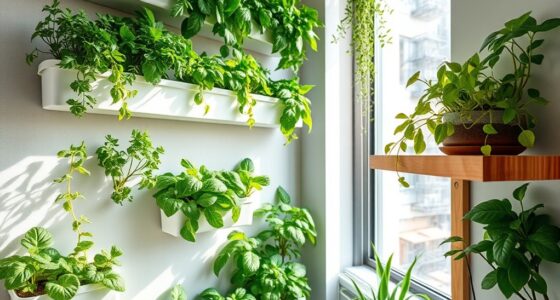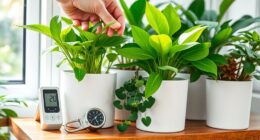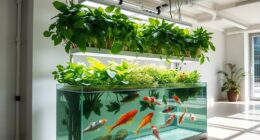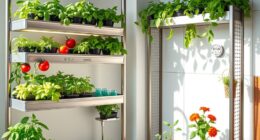
Indoor garden systems are evolving with sleek, modern designs that blend style and technology. You’ll find innovations like hydroponic setups, vertical farming on walls, and smart systems that let you control lighting and watering remotely. Sustainable materials and energy-efficient lighting are also in trends, making your space eco-friendly. Space-saving, customizable options create versatile gardens perfect for any home. To discover how these trends can transform your indoor space, explore more innovative ideas ahead.
Key Takeaways
- Integration of smart technology for remote monitoring and automation enhances user convenience.
- Modern, minimalist designs using sleek materials create seamless aesthetic compatibility with contemporary interiors.
- Vertical farming setups maximize space efficiency in urban environments through modular, stackable structures.
- Eco-friendly materials and energy-efficient LED lighting promote sustainable indoor gardening practices.
- Customizable and versatile systems support a wide range of plants, from herbs to flowering and small fruiting varieties.

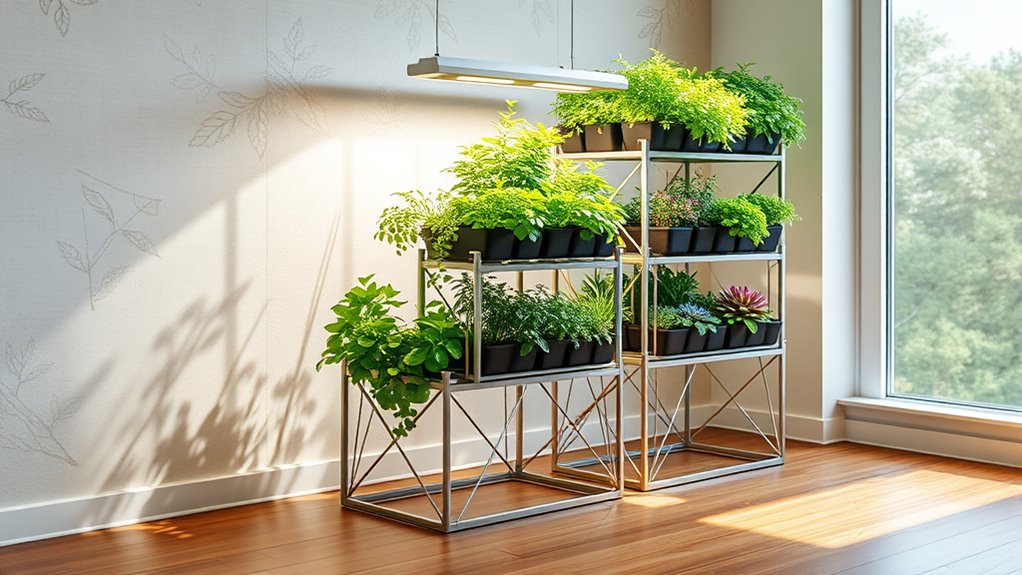
Are you looking to transform your indoor space into a lush, vibrant oasis? If so, exploring the latest indoor garden design trends can help you create a stunning and functional environment. One of the most exciting developments is the rise of hydroponic setups, which allow you to grow plants without soil, using nutrient-rich water instead. These systems are perfect for indoor spaces because they maximize efficiency, reduce mess, and make plant care more manageable. Hydroponic setups can be customized to fit your space, whether you want a small countertop herb garden or a large, integrated system that supplies fresh greens year-round. They also promote faster growth and higher yields, making them ideal for anyone serious about indoor gardening. As part of this trend, vertical farming has gained significant popularity, especially for those limited on space. Vertical farming involves stacking plant beds or containers vertically, utilizing wall space to grow a multitude of plants in a compact area. It’s a smart solution for urban dwellers who want to maximize their greenery without sacrificing valuable floor space. With vertical farms, you can create a living wall of herbs, vegetables, or decorative plants, turning an otherwise plain wall into a lush, living artwork. Many modern indoor garden designs incorporate modular, easy-to-install vertical farming units that blend seamlessly into your home’s aesthetic. These systems often come with integrated lighting, watering, and nutrient delivery, simplifying maintenance and ensuring your plants thrive. Beyond practicality, vertical farming also adds a striking visual element to your interior, giving your space a fresh, modern vibe. As the trend continues to evolve, designers are experimenting with innovative materials and sleek, minimalist structures that complement contemporary interiors. They’re also integrating smart technology, allowing you to monitor and control lighting, humidity, and watering remotely via smartphone apps. This blend of functionality and style keeps indoor gardens both beautiful and effortless to maintain. Additionally, the trend toward eco-friendly and sustainable designs influences these systems, with many incorporating recycled materials and energy-efficient LED lighting. Whether you’re looking to grow fresh herbs, colorful flowers, or even small fruiting plants, these modern indoor garden systems offer flexibility and sophistication. They empower you to bring nature indoors, improve air quality, and create a peaceful, inviting atmosphere. As these trends continue to develop, expect even more innovative, space-saving, and aesthetically pleasing options that make indoor gardening accessible and enjoyable for everyone. Incorporating a dedicated growing space like these systems can also help you optimize your indoor environment for plant health and growth.
Frequently Asked Questions
What Are Eco-Friendly Materials for Indoor Garden Systems?
You can choose eco-friendly materials like sustainable options such as bamboo, recycled plastics, and reclaimed wood for your indoor garden system. Biodegradable options like coconut coir and compostable plant containers also work well. These materials help reduce your environmental impact while maintaining a stylish and functional garden. By opting for sustainable and biodegradable materials, you’re making a positive difference for the planet while enjoying your indoor green space.
How Do Smart Technology Integrations Enhance Indoor Gardens?
Smart technology simplifies and amplifies your indoor garden experience by automating watering and enabling remote monitoring. With automated watering, your plants receive precise hydration, preventing over- or underwatering. Remote monitoring allows you to manage your garden from anywhere, ensuring ideal growth and health. This integration transforms your space into a smart, sustainable sanctuary, saving time and effort while strengthening your connection to nature.
What Maintenance Is Required for Modern Indoor Garden Designs?
You need to regularly check your indoor garden’s watering routines to keep plants healthy without overwatering. Make certain proper drainage and adjust watering based on plant needs. Pest management is also essential; inspect plants frequently and remove pests promptly. Keep your garden clean, prune dead leaves, and consider natural pest controls. With consistent maintenance, your modern indoor garden stays vibrant, thriving, and easy to care for.
Which Plants Thrive Best in Urban Indoor Environments?
Think of your indoor space as a quiet harbor where resilient plants thrive. Succulent varieties and low light plants are symbols of adaptability, making them perfect for urban environments. These hardy species flourish with minimal sunlight and watering, reflecting your ability to nurture beauty in constrained conditions. By choosing these plants, you create a calming oasis that symbolizes strength and serenity amid city life’s hustle.
How Can Indoor Gardens Improve Indoor Air Quality?
Indoor gardens improve air quality by acting as natural air filters, promoting air purification and natural air filtration. As you care for your plants, they absorb toxins like formaldehyde and benzene, releasing oxygen and humidity. This process helps reduce indoor pollutants, making your space healthier. Incorporating a variety of plants ensures better air circulation and cleaner indoor air, creating a more invigorating and breathable environment for you to enjoy.
Conclusion
As you explore these indoor garden design trends, you’ll find your space subtly transformed into a lush retreat that whispers serenity. Embrace these fresh ideas, and you’ll discover a world where nature’s touch gently elevates your everyday life. With each plant and detail, your environment quietly becomes more inviting and inspiring, inviting you to relax and reconnect. Let these trends guide you—your perfect indoor oasis is just a few thoughtful choices away.