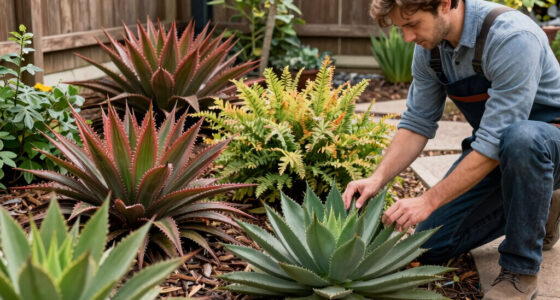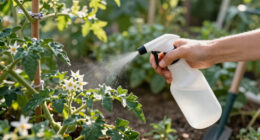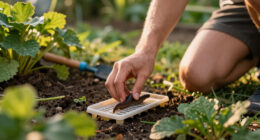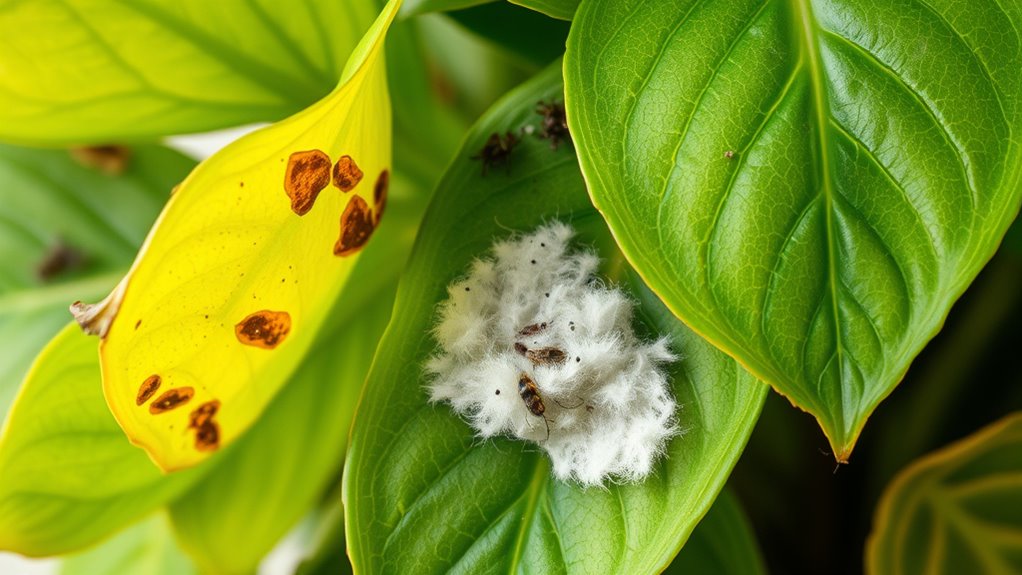

To identify common indoor plant diseases, look for discolored, spotted, or wilting leaves, fuzzy growths, or mold patches. Fungal infections thrive in moist, poorly ventilated spaces, often caused by overwatering or high humidity. To treat them, isolate affected plants, remove infected parts with sterilized tools, and apply suitable fungicides or organic remedies like neem oil. Good air circulation and proper watering help prevent future issues—your plants will thank you for the extra care.
Key Takeaways
- Recognize early signs like discolored leaves, spots, or mold to identify potential plant diseases.
- Fungal infections thrive in high humidity, poor airflow, and overwatering conditions.
- Isolate affected plants and remove infected parts promptly to prevent disease spread.
- Use appropriate fungicides or organic remedies like neem oil for treatment, following application instructions.
- Maintain proper ventilation, avoid overwatering, and keep leaves clean to prevent future infections.
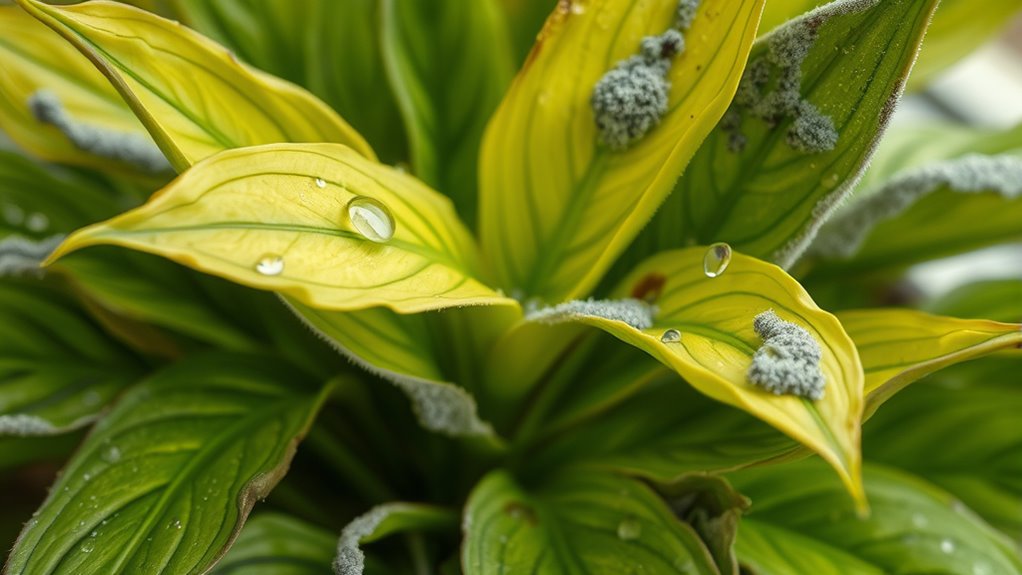
Indoor plant diseases can quickly turn your green oasis into a struggle if you’re not careful. Recognizing the early signs of trouble is vital to keeping your plants healthy and vibrant. When you notice plant disease symptoms such as discolored leaves, spots, wilting, or unusual growths, it’s often a sign that your plant is battling an underlying issue. Many of these symptoms are caused by fungal infections, which thrive in the warm, humid environments typical of indoor spaces. Fungal infections can manifest as powdery mildew, black spots, moldy patches, or fuzzy growths on leaves, stems, or roots. Spotting these signs early allows you to take immediate action before the problem spreads or causes irreversible damage.
Fungal infections are among the most common culprits behind indoor plant diseases. They tend to develop when moisture levels are high, airflow is poor, or plants are overwatered. Once you identify plant disease symptoms consistent with fungal infections, it’s vital to act swiftly. First, isolate the affected plant to prevent the spread to your other greenery. Carefully remove and discard any heavily infected leaves or stems, using sterilized scissors or pruning shears. This step minimizes the fungal spores that could contaminate your healthy plants.
Fungal infections thrive in high moisture and poor airflow; isolate affected plants and remove infected parts promptly.
Next, improve air circulation around your plants, and avoid overwatering, as excess moisture fuels fungal growth. Applying fungicidal treatments designed for indoor plants can help eliminate the infection. Look for organic options, such as neem oil or a baking soda solution, which are less harsh but still effective. Be sure to follow the instructions on the product label for proper application and dosage. Regular monitoring after treatment is essential to catch any recurrence early. Additionally, using air purifiers can help reduce airborne spores and improve overall indoor air quality, further supporting plant health.
Prevention plays a key role in managing fungal infections and other plant diseases. Ensure your plants are in well-ventilated areas with appropriate humidity levels. Water only when the top inch of soil feels dry, and avoid splashing water onto leaves, which can promote fungal growth. Keep your plant’s foliage clean by gently wiping leaves with a damp cloth to remove dust and potential spores. Healthy, stress-free plants are less susceptible to disease, so provide proper lighting, watering, and nutrients.
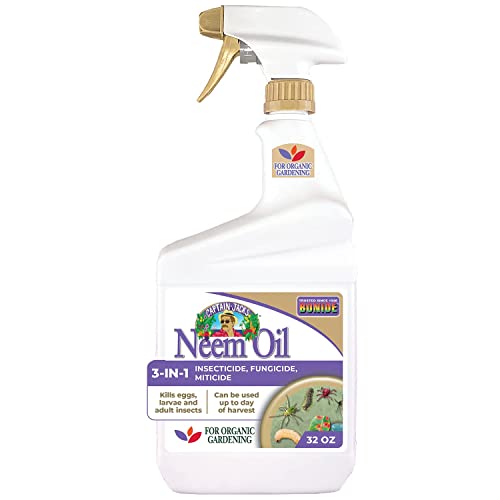
Bonide Captain Jack's Neem Oil, 32 oz Ready-to-Use Spray, Multi-Purpose Fungicide, Insecticide and Miticide for Organic Gardening
MULTI-PURPOSE BUG KILLER – Bonide Neem Oil is a perfect pest control solution for any garden dealing with…
As an affiliate, we earn on qualifying purchases.
As an affiliate, we earn on qualifying purchases.
Frequently Asked Questions
How Can I Prevent Indoor Plant Diseases From Spreading?
To prevent indoor plant diseases from spreading, you should sterilize your soil before planting and avoid overwatering. Make certain proper airflow around your plants to reduce humidity and prevent fungal growth. Regularly inspect your plants for early signs of disease, and isolate any infected ones immediately. Keep your tools clean and disinfected after use. These steps help maintain healthy plants and limit disease spread indoors.
Are There Natural Remedies for Treating Plant Diseases Indoors?
You can try gentle, natural solutions for indoor plant ailments. For houseplant pest control, neem oil and insecticidal soaps work well without harsh chemicals. Organic fungicide options like cinnamon or baking soda help combat mold and mildew. These remedies are safe for your plants and environment, offering a nurturing approach to plant care. Regularly inspect your plants, and use these natural methods to keep them healthy and vibrant.
Which Indoor Plants Are Most Resistant to Common Diseases?
You should choose disease-resistant plants like snake plants, pothos, and spider plants, as they’re known for being hardy indoor species. These hardy indoor species resist common diseases better than more delicate varieties, making them ideal for low-maintenance setups. By selecting disease resistant plants, you reduce your chances of dealing with issues, keeping your indoor garden healthier and thriving with less effort.
How Often Should I Inspect My Indoor Plants for Diseases?
Think of your indoor plants as tiny health detectives, needing regular check-ups. You should inspect your plants weekly to catch plant disease symptoms early. Use inspection techniques like examining leaves for spots, discoloration, or wilting, and checking stems and soil for mold or pests. Consistent inspections help you spot issues before they spread, keeping your plants healthy and vibrant. Regular vigilance is your best defense against indoor plant diseases.
Can Overwatering Cause Specific Indoor Plant Diseases?
Yes, overwatering can cause indoor plant diseases. When you overwater, you might notice symptoms like yellowing leaves, wilting, or soft, mushy stems. These are signs of overwatering symptoms that often lead to indoor plant rot, especially root rot. Consistently soggy soil creates a perfect environment for fungal growth, damaging roots and spreading disease. To prevent this, guarantee proper watering practices and good drainage.

BioAdvanced 3-in-1 Insect, Disease, and Plant Mite Control Spray – Insecticide, Fungicide & Miticide – Ready-to-Use – Prevents Pests and Diseases – Up to 14 Days Protection – 24 fl oz Bottle
3-IN-1 PLANT CARE: 3-In-1 Insect, Disease & Plant Mite Control provides insect control, disease control, and plant mite…
As an affiliate, we earn on qualifying purchases.
As an affiliate, we earn on qualifying purchases.
Conclusion
By learning to spot and treat common indoor plant diseases, you’re turning your home into a lush oasis. Think of your plants as your indoor garden’s heartbeat—when they’re healthy, everything thrives. With a keen eye and quick action, you can prevent diseases from spreading like wildfire. Remember, caring for your plants isn’t just a task; it’s nurturing a little slice of nature’s magic right inside your home. Keep tending, and your indoor jungle will flourish beautifully.

Rattlesnake Calathea Live Plant – Air Purifier, Colorful House Plant, Ideal for Home Decor and Room Decor – Rattlesnake for Indoor Plants, Calathea Lancifolia Prayer Plant
Air Purifying Rattlesnake Calathea: Perfect addition to your living room decor, office decor, or garden decor. This live…
As an affiliate, we earn on qualifying purchases.
As an affiliate, we earn on qualifying purchases.

VIVOSUN 6.5 Inch Gardening Scissors Hand Pruner Pruning Shear with Straight Stainless Steel Blades Orange 1-Pack
Reduce Hand Strain: These micro tip snips are made to reduces hand fatigue which makes them great for…
As an affiliate, we earn on qualifying purchases.
As an affiliate, we earn on qualifying purchases.